
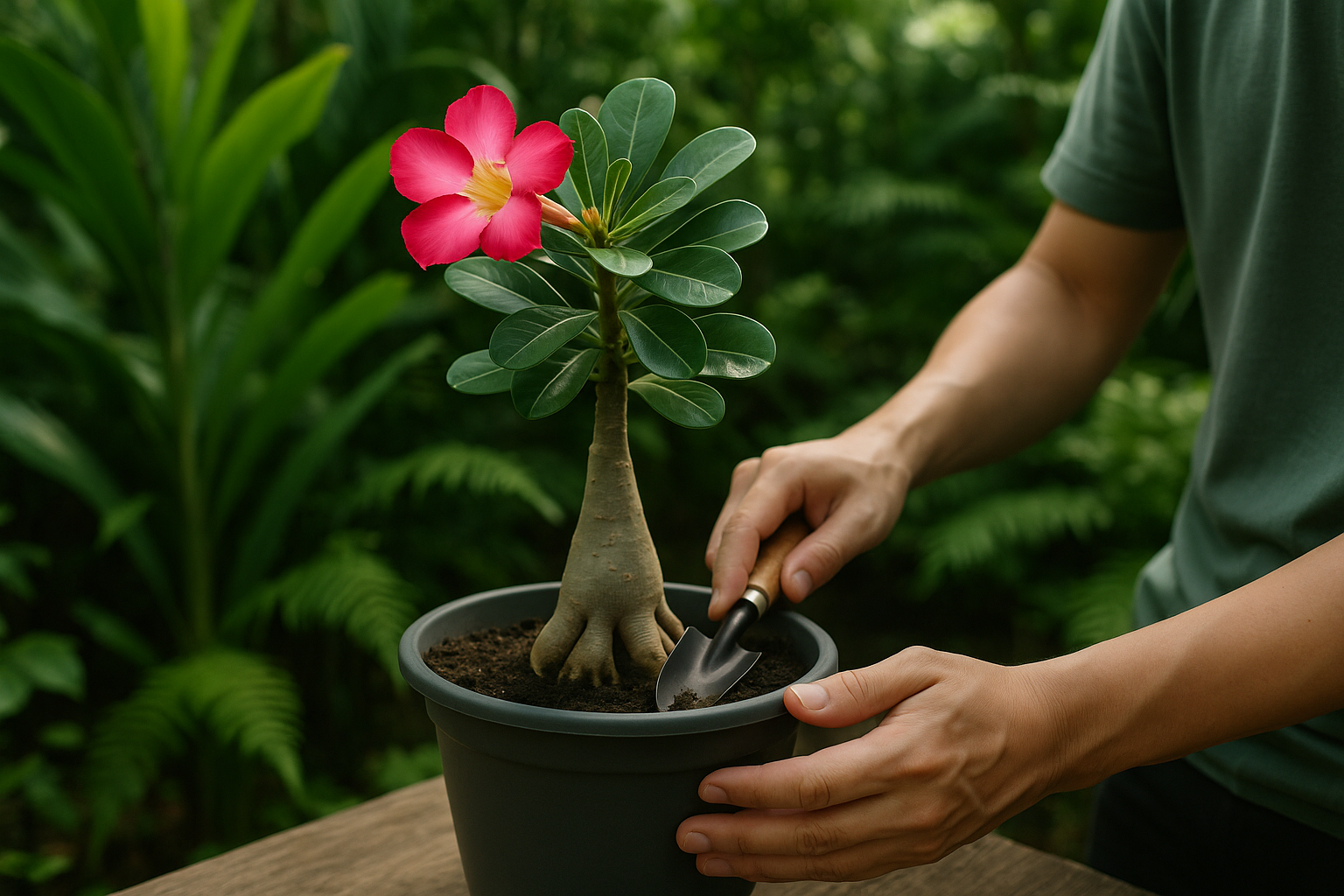
Adenium care comes down to one golden rule: this is a desert plant living in a tropical climate. The desert rose, with its swollen trunk (caudex) and bright trumpet flowers, is a favourite in Singapore for sunny balconies and gardens, but our humidity and rain can quickly cause rot if you treat it like an ordinary tropical.
This guide is for anyone growing or hoping to grow a healthy, flowering adenium. We’ll cover light, watering, soil, feeding, pruning and the problems that catch people out in our wet climate.
Understanding the desert rose
Adeniums store water in that thick caudex and stems, which lets them survive dry spells. In their native arid regions they get blazing sun and infrequent water. To keep one happy here, you recreate those conditions as far as you can: maximum sun, fast-draining soil, and restraint with the watering can.
Light: give it as much sun as possible
Adeniums need full, direct sun to flower well, ideally six hours or more a day. They are perfect for hot, exposed spots that would scorch other plants, such as a west-facing balcony or a rooftop. In too little light they grow soft, leggy and rarely bloom. If yours isn’t flowering, lack of sun is the most common reason.
Watering: where most adeniums die
More desert roses are killed by overwatering than anything else, especially in Singapore. The fat caudex stores water, so frequent watering, on top of our humidity and rain, leads to root and stem rot.
How to water correctly
- Water thoroughly, then let the soil dry out almost completely before watering again.
- In hot, sunny weather that might be every few days; in cool, wet spells, much less.
- Always check the soil first rather than watering on a fixed schedule.
- Never let the pot sit in a saucer of water, and move it under cover during prolonged monsoon rain.
Soil and potting
Drainage is everything. Use a gritty, fast-draining mix, not ordinary potting soil that stays soggy. Many growers blend potting mix with plenty of coarse sand, perlite or fine gravel. Choose a pot with large drainage holes; terracotta helps because it breathes and dries faster. Adeniums actually flower better when slightly pot-bound, so don’t rush to over-pot.
Feeding for flowers
During active growth, feed lightly with a balanced fertiliser, switching to one higher in phosphorus and potassium to encourage blooms. Don’t overfeed; lush, forced growth at the expense of flowers and a firm caudex is not the goal. A diluted liquid feed every few weeks in the growing period is plenty.
Pruning and shaping
Pruning keeps adeniums bushy and encourages more flowering tips. Trim leggy branches with a clean, sharp blade; the plant branches out from below the cut. Many enthusiasts also prune to develop a fatter caudex and a bonsai-like shape. The milky sap is mildly toxic and can irritate skin and eyes, so wash your hands after pruning and keep it away from children and pets.
A Singapore angle: beating humidity and rain
Our climate is the opposite of the adenium’s native home, so the main job is keeping roots from staying wet. The plants that thrive here are usually on bright balconies or rooftops where they get sun and shelter from constant downpours, in very free-draining pots that the gardener waters sparingly.
Adeniums make excellent feature plants for hot, exposed spots, which is why they often appear in our outdoor landscape designs for sunny courtyards and rooftop gardens. For built-in beds, well-drained planter boxes and soft-scaping let you give them the gritty, free-draining root zone they need without the risk of waterlogging.
Common problems
- Soft, mushy stem or caudex: rot from overwatering or poor drainage. Cut away affected tissue and let it dry; severe cases may be lost.
- Yellow dropping leaves: often overwatering, or natural leaf drop in cooler, wetter weather.
- No flowers: usually too little sun; move to a brighter spot.
- Pests: mealybug, aphids and spider mites; treat early and check new growth.
Frequently asked questions
How often should I water an adenium in Singapore?
Less than you’d think. Let the soil dry out almost completely between waterings, which in hot weather may mean every few days and in wet, cool spells much less. Overwatering in our humid climate is the leading cause of desert rose deaths.
Why won’t my desert rose flower?
Insufficient sunlight is the usual culprit. Adeniums need full, direct sun for several hours a day to bloom. Too much nitrogen-heavy fertiliser can also push leaves at the expense of flowers, so move it into brighter light and switch to a bloom-friendly feed.
What soil is best for adeniums?
A gritty, very free-draining mix made from potting soil blended with coarse sand, perlite or fine gravel. The roots must never sit in soggy soil, so good drainage and a pot with large holes are essential in our rainy climate.
Is the desert rose poisonous?
Its milky sap is mildly toxic and can irritate skin and eyes, and it should not be eaten. Wash your hands after pruning and keep the plant out of reach of young children and pets, but it’s perfectly safe to grow with sensible handling.
Love striking, sun-loving plants like the desert rose? We can incorporate adeniums and other heat-tolerant feature plants into a garden, balcony or rooftop designed for Singapore’s conditions. Get in touch for a consultation and we’ll help you build a space that thrives in the sun.