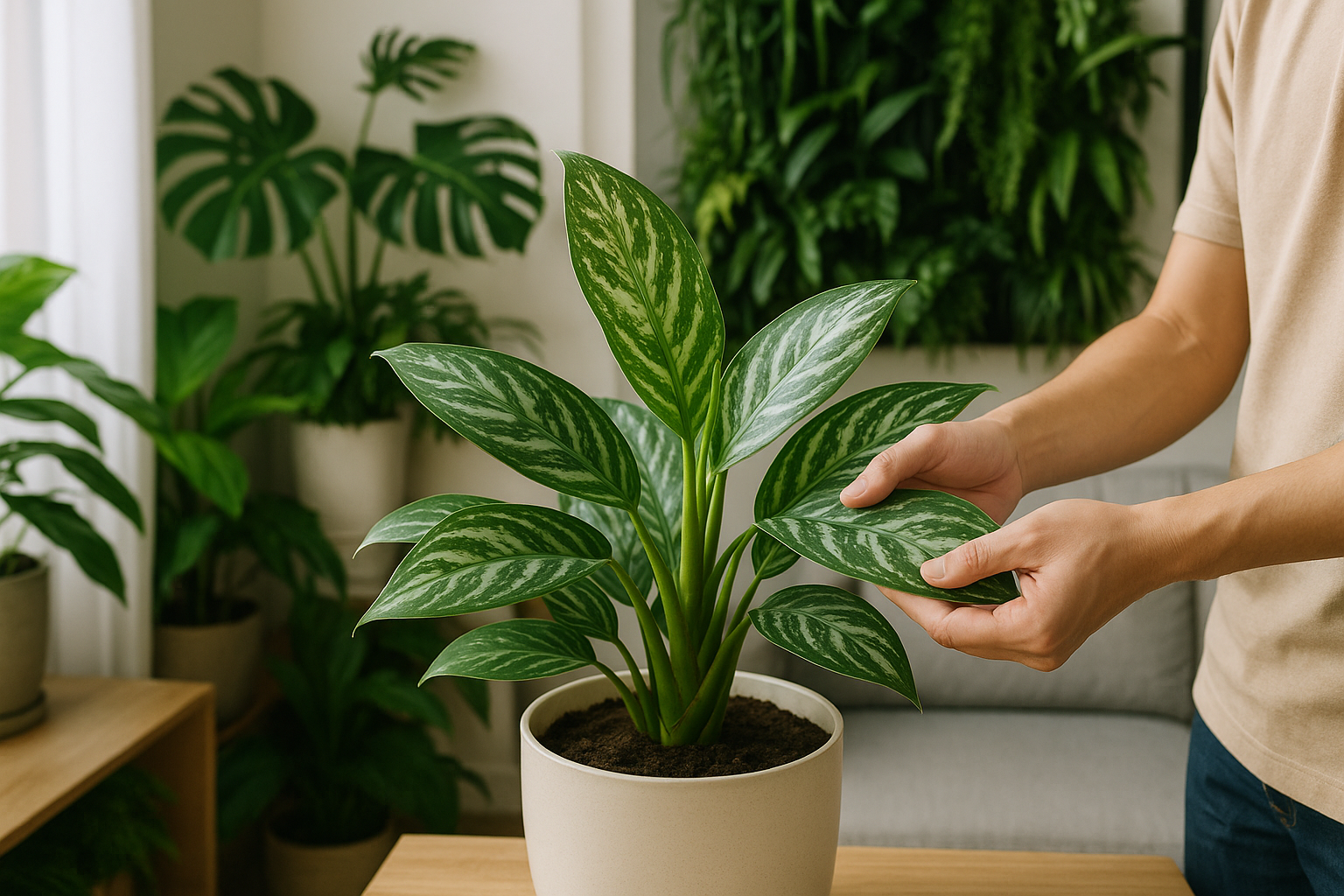
Aglaonema care is wonderfully undemanding, which is why the Chinese evergreen is a favourite for homes, offices and lobbies across Singapore. These plants offer some of the most beautiful foliage you can grow indoors — silvers, deep greens, pinks and reds splashed across broad leaves — yet they tolerate conditions that would defeat fussier houseplants. If you have ever killed a plant by neglect, the aglaonema is your second chance.
This guide is for anyone who wants vibrant, healthy Chinese evergreens with minimal effort. We will cover light (including why colour matters here), watering, soil and feeding, the few problems that do crop up, and why this plant is so well suited to local interiors.
Light depends on the colour
Here is the one rule worth remembering: the greener the leaf, the lower the light it tolerates; the more colour (pink, red, cream or heavy silver), the more light it needs. Deep green aglaonemas are famously shade-tolerant and cope happily in dim corners and offices with little natural light. The brightly coloured varieties, however, need bright indirect light to keep their colour rich — in too much shade, the pinks and reds fade towards green.
None of them want harsh direct sun, which scorches and bleaches the leaves. Bright, filtered light keeps the colourful types looking their best, while the green types are your go-to for genuinely low-light spots.
Watering: when in doubt, wait
Aglaonemas like their soil to dry out partly between waterings and are far more forgiving of being a touch too dry than too wet. Let the top few centimetres of soil dry, then water thoroughly and let it drain. The fastest way to harm one is to keep it constantly soggy, which rots the roots.
- Water when the top 2–4cm of soil is dry.
- Soak thoroughly, then empty the saucer.
- Water less in lower light and in air-conditioned rooms.
- When unsure, wait a day — they handle slight dryness far better than waterlogging.
Soil, pots and feeding
A standard, well-draining houseplant mix suits aglaonemas well. Adding a little perlite or bark improves aeration and stops the soil staying sodden. Always use a pot with drainage holes — decorative cover pots are fine as long as water is not allowed to pool at the bottom.
These are slow, steady growers, so they need little feeding. A balanced houseplant fertiliser at half strength every month or two during the warmer growing period is plenty. Repotting is infrequent — every couple of years, or when the plant is clearly pot-bound, moving up just one size.
Pruning, cleaning and propagation
Maintenance is minimal. Remove the occasional yellow or tired lower leaf by cutting it cleanly at the base. Wipe the broad leaves with a damp cloth now and then — dust builds up on those large surfaces and dulls both the look and the plant’s ability to photosynthesise.
If a plant gets tall and bare at the base over the years, you can refresh it by dividing clumps when repotting, or by taking stem cuttings. Mature aglaonemas naturally produce offsets, making division the easiest way to multiply them.
Common problems and quick fixes
Yellow leaves
Most often overwatering. Let the soil dry more between waterings and check drainage. The occasional yellow leaf at the very bottom is just normal ageing.
Brown leaf tips or edges
Usually dry air in air-conditioned rooms, or sometimes sensitivity to minerals in tap water. A little extra humidity helps.
Faded colour
Colourful varieties losing their pink or red are telling you they need more (indirect) light.
Scorched, pale patches
Too much direct sun. Move the plant out of direct light.
The Singapore angle: built for our offices and lobbies
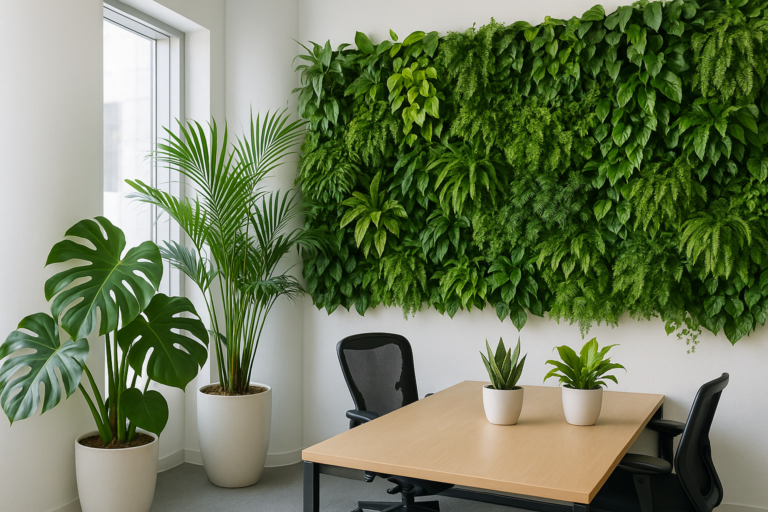
Few plants suit Singapore interiors as neatly as the aglaonema. The deep-green varieties are exceptionally tolerant of the low light found in offices, corridors and inward-facing condo units, and the warm, humid climate keeps them comfortable without any extra effort. They are a staple of professional interior planting for good reason — reliable, handsome and low-maintenance.
The main local watch-point is air-conditioning. Constant aircon dries the air and can chill plants, occasionally causing brown leaf tips on the more sensitive coloured types. Keeping them out of the direct draught of a vent and giving the leaves an occasional wipe goes a long way. For businesses and condos wanting greenery that looks good and stays alive in real-world office light, our indoor landscaping service specifies hardy plants like aglaonema and maintains them on a regular schedule.
Frequently asked questions
Can aglaonema grow in low light?
The deep-green varieties are among the best houseplants for low light and cope well in dim offices and corridors. Brightly coloured varieties need more light to keep their colour, so they are better suited to bright, indirect positions. None want harsh direct sun.
How often should I water a Chinese evergreen?
Water when the top few centimetres of soil have dried out, which indoors often works out to roughly once a week, though less in low light and air-conditioning. Aglaonemas tolerate slight dryness far better than waterlogging, so when in doubt, wait a day rather than overwatering.
Why are my aglaonema leaves turning yellow?
The usual cause is overwatering or roots sitting in water. Let the soil dry more between waterings and make sure the pot drains freely. An occasional yellow leaf at the base of the plant is simply normal ageing and nothing to worry about.
Is aglaonema a good office plant in Singapore?
Yes, it is one of the best. It tolerates the low light common in offices, handles our warm climate easily and needs little care. Keeping it away from direct air-conditioning draughts and wiping the leaves occasionally keeps it looking its best.
If you want striking, fuss-free greenery for your home, office or building lobby — and someone to keep it thriving — we can help. Explore our indoor landscaping service, take a look at our green wall work, or get in touch for a quote.