
Air plants are a brilliant fit for Singapore living: they grow without soil, take up almost no space, and our humid climate suits them naturally. If you have ever wanted greenery on a shelf, a wall or a tabletop without the mess of pots, these soil-free Tillandsia are worth a serious look.
This guide is for Singapore homeowners, renters and office plant-keepers curious about air plants. You’ll learn the best varieties to start with, exactly how to water and display them, and how to keep them thriving in our warm, humid conditions.
What are air plants?
Air plants are members of the Tillandsia genus, which in the wild perch on tree branches and rocks rather than in soil. They draw moisture and nutrients through tiny scales on their leaves rather than through roots, which are used mainly to anchor the plant. That is what lets you display them almost anywhere.
The best air plants to start with
- Tillandsia ionantha — small, tough and colours up beautifully; an ideal beginner plant.
- Tillandsia xerographica — a striking, silvery, sculptural specimen that makes a centrepiece.
- Tillandsia caput-medusae — curling, snake-like leaves that add character.
- Tillandsia bulbosa — a bulbous base with wild, tentacle-like foliage.
- Tillandsia stricta — fast-growing, free-flowering and forgiving.
Greener, softer-leaved species generally want more frequent watering, while the silvery, fuzzy-leaved ones are more drought-tolerant.
How to water air plants
Despite the name, air plants do need watering — they simply take it through their leaves. The two main methods are misting and soaking.
Soaking
- Submerge the plant in room-temperature water for around 20 to 30 minutes.
- Shake off the excess and turn it upside down to drain.
- Let it dry fully within a few hours, ideally somewhere with good airflow.
Misting
Between soaks, a light misting tops up moisture. On its own, misting is rarely enough — soaking does the real work. The single most important rule is to let an air plant dry out completely after watering; trapped water sitting in the base is what rots them.
The Singapore factor: humidity works in your favour
Air plants come from humid tropical and subtropical regions, so Singapore’s climate is close to their natural home. Our high humidity means they generally need less frequent soaking than they would in a drier country, and many do well with a soak every week or so plus the odd mist.
The complication, as ever, is air-conditioning. A cool, dry, air-conditioned room pulls moisture from the leaves and may call for slightly more frequent watering, while a naturally humid, breezy spot needs less. Good airflow is also essential — in our warm, damp conditions, an air plant left wet in a still, enclosed spot can rot quickly. Bright, indirect light and a bit of moving air keep them happiest.
Light and feeding
Give air plants bright, indirect light — near a window but out of harsh direct sun, which can scorch and dry them out. They tolerate moderate light indoors, though growth and colour are best in brighter spots. Feeding is optional: a specialist Tillandsia or low-strength fertiliser added to the soak water once a month or so encourages growth and flowering.
Displaying air plants creatively
Because they need no soil, air plants open up display ideas no potted plant can match:
- Mounted on driftwood, cork bark or framed wall pieces.
- Sitting in shallow dishes, shells or open glass terrariums (never sealed, which traps moisture).
- Tucked into a living wall or among other mounted greenery.
- Grouped on a shelf as a low-effort cluster.
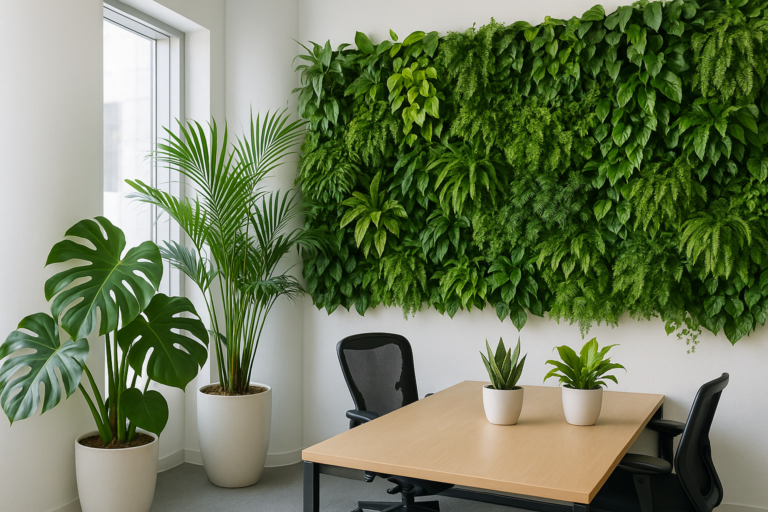
For a bolder statement, air plants combine beautifully with a planted green wall or vertical garden, and our indoor landscaping team can build them into a cohesive interior scheme.
Frequently asked questions
How often should I water air plants in Singapore?
A thorough soak roughly once a week suits most air plants here, with occasional misting in between. Because our climate is humid, you often need less than overseas guides suggest — but in a dry, air-conditioned room you may need to soak a little more often.
Do air plants really not need soil?
Correct. Tillandsia absorb moisture and nutrients through their leaves, using their roots only to anchor themselves. That is what lets you mount or display them without any pot or soil at all.
Why is my air plant rotting?
Rot is almost always caused by water trapped in the base after watering. Always shake off excess, turn the plant upside down to drain, and let it dry fully in a spot with good airflow. Avoid sealed containers that hold moisture.
Where should I place air plants at home?
In bright, indirect light with some air movement — near a window but out of harsh direct sun. Keep them out of the direct draught of an air-con vent, which dries them quickly.
Curious about adding soil-free greenery or a living wall to your space? Our team designs and installs air plant displays, green walls and indoor planting across Singapore. Explore our indoor landscaping services or get in touch to plan your display.