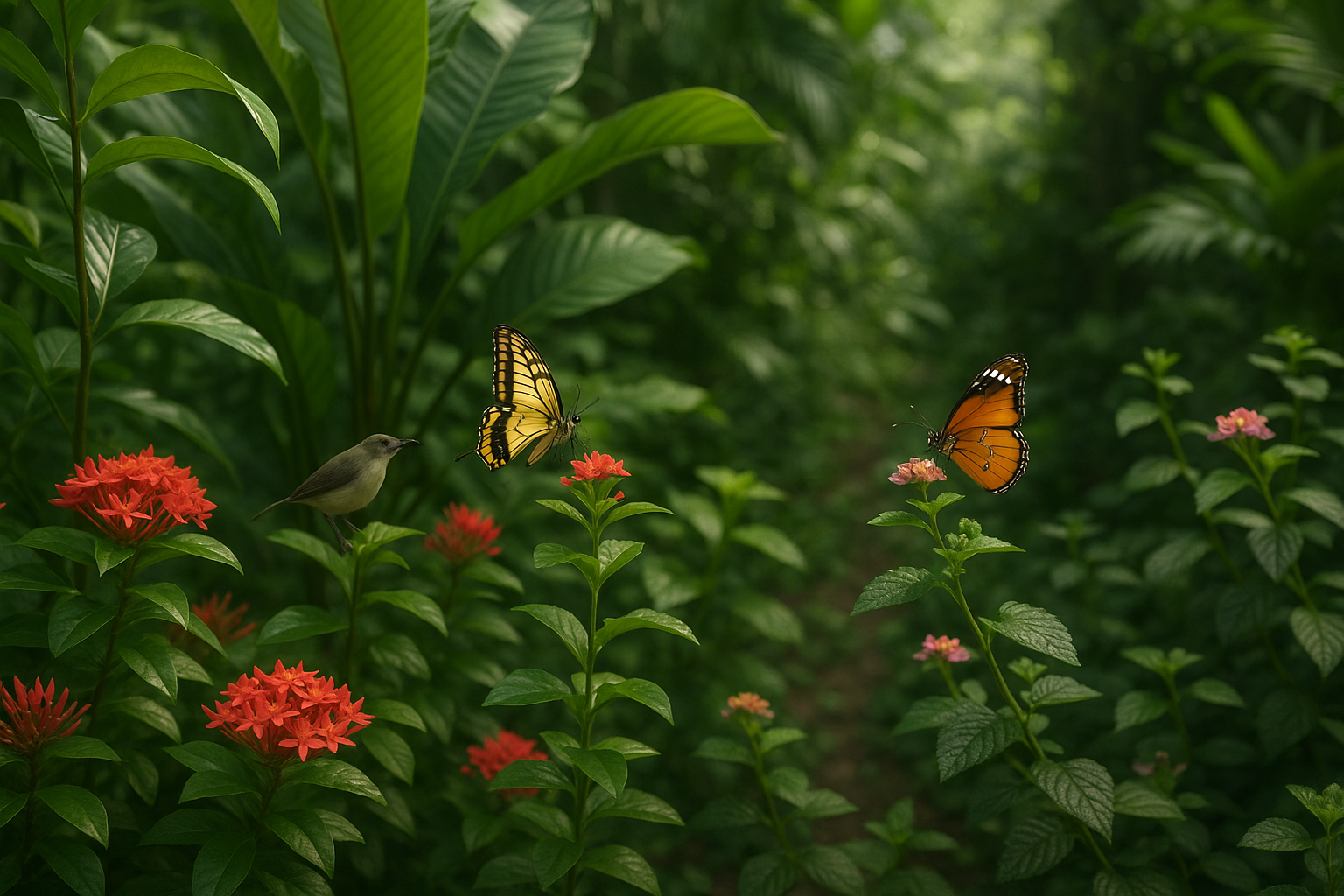
A well-planned butterfly garden in Singapore can turn even a small balcony or condo planter into a living, fluttering display. With our warm climate and year-round growing season, the right mix of nectar and host plants will draw butterflies, sunbirds and other small wildlife within weeks rather than months.
This guide is for homeowners, gardeners and facility managers who want greenery that does more than look pretty. You’ll learn which plants attract pollinators here, how to combine them, and how to keep a butterfly-friendly garden thriving in our heat and humidity.
Why butterflies and birds need two kinds of plants
A common mistake is planting only flowers for colour. Butterflies actually need two distinct things, and a garden that provides both will hold them for far longer.
- Nectar plants feed adult butterflies and many nectar-feeding birds. These are your flowering performers.
- Host plants are where female butterflies lay eggs, and where caterpillars feed. Without host plants you get visitors; with them you get residents that breed in your garden.
The trade-off with host plants is that caterpillars will chew the leaves, sometimes heavily. That nibbled look is a sign of success, not pest damage, so site host plants where a little leaf loss won’t bother you.
Best nectar plants for a Singapore butterfly garden
These flowering plants thrive in our climate and produce nectar that butterflies favour. Most enjoy full to partial sun.
Reliable nectar performers
- Lantana — clusters of small flowers in mixed colours; one of the most dependable butterfly magnets.
- Pentas (Egyptian star cluster) — long-flowering, available in red, pink and white; excellent in planters.
- Ixora — a tropical staple that flowers heavily and tolerates trimming into hedges.
- Snakeweed (Stachytarpheta) — tall blue-purple spikes that butterflies adore; grows almost anywhere.
- Buttercup bush (Turnera) — opens bright yellow flowers each morning, good for sunny edges.
Best host plants for caterpillars
Host plants are specific to butterfly species, so a varied selection invites a wider range of visitors.
- Lime, curry leaf and other citrus — host the lime butterfly and common Mormon.
- Crown flower (Calotropis) — the classic host for the plain tiger.
- Passionflower vine — hosts the leopard lacewing and tawny coster; also gives you a quick screen.
- Wild cinnamon and laurel family plants — host swallowtails.
- Rattlepod (Crotalaria) — favoured by several blue and tiger species.
Plants that also attract birds
Many of the same plants that suit butterflies will bring in birds, especially nectar-feeding sunbirds and fruit-eaters.
- Heliconia and torch ginger — tubular flowers that sunbirds probe for nectar.
- Banana and dwarf banana — flowers and fruit attract a range of birds.
- Singapore rhododendron (Melastoma) — purple berries that birds eat readily.
- Fruiting figs and small native trees — magnets for bulbuls, koels and other species where space allows.
A shallow, regularly cleaned water dish gives birds somewhere to drink and bathe. Keep it scrubbed and topped up; standing water that sits stagnant can breed mosquitoes, which we cover below.
The Singapore angle: climate, space and mosquitoes
Our climate is a gift for a butterfly garden — plants flower year-round, so there is no off-season. The flip side is fast growth, so expect to trim nectar shrubs like ixora and lantana regularly to keep them flowering rather than running to leaf.
Most of us garden in tight spaces: condo balconies, landed side-yards, or shared estate planters under an MCST. Butterfly gardens scale down well. A few pots of pentas, a passionflower on a trellis and one lime plant can be enough to start attracting visitors in a corridor or balcony.
Mosquitoes are the one real concern. Avoid plants that trap water in their leaf bases, empty saucers after watering, and never let a bird dish go stagnant. If you are adding a water feature, build in proper circulation. Our team can advise on planting that supports wildlife without inviting pests, as part of a wider outdoor landscape and construction scheme.
Designing the planting for best results
A few simple design choices make a big difference to how many butterflies and birds you draw.
- Plant in groups. A drift of one nectar plant is easier for butterflies to find than single scattered plants.
- Mix heights. Combine ground-level flowers, mid-height shrubs and a climber or small tree for layered habitat.
- Choose sunny, sheltered spots. Butterflies are most active in warmth but dislike strong wind; a sun-facing corner protected from gusts is ideal.
- Avoid broad-spectrum pesticides. Sprays that kill pests will kill caterpillars and beneficial insects too. Tolerate some leaf damage instead.
If you want a larger, structured wildlife garden — perhaps with a flowering hedge, a vine-clad pergola and a planted border — it’s worth integrating it into a proper design so the plants suit your soil, light and maintenance budget. A vertical element such as a green wall or vertical garden can pack a lot of nectar plants into a small footprint.
Keeping a butterfly garden healthy
Maintenance is light but consistent. Deadhead spent flowers on pentas and lantana to keep blooms coming. Feed flowering shrubs with a balanced fertiliser every few weeks during heavy growth. Watch for ants farming aphids on tender shoots — a strong jet of water usually clears them without chemicals.
Replace tired host plants periodically, especially citrus that has been stripped by caterpillars; a fresh plant in rotation keeps the cycle going. If part of the garden falls into shade as nearby trees grow, move sun-loving nectar plants to brighter spots.
Frequently asked questions
How long before butterflies appear in a new garden?
Often within a couple of weeks once nectar plants are flowering, especially if there are existing gardens or greenery nearby. Adding host plants encourages butterflies to lay eggs, so you’ll start seeing caterpillars and a resident population over the following month or two.
Can I create a butterfly garden on a condo balcony?
Yes. A balcony with reasonable sun can support pots of pentas, lantana and a climbing passionflower, plus one host plant such as lime. Check with your MCST or managing agent about any rules on planters and water features before you start.
Will a butterfly garden attract pests?
Caterpillars chewing host-plant leaves are expected and harmless to the rest of your garden. The main thing to manage is standing water, which can breed mosquitoes — keep saucers empty and any water dish clean.
Do I need a big garden to attract birds?
No. Sunbirds will visit even a few heliconia or banana plants on a balcony. Fruit-eating birds need a little more, ideally a fruiting shrub or small tree, so they suit landed gardens and estate planting better.
Ready to turn your space into a thriving butterfly garden in Singapore? Whether it’s a balcony refresh or a full wildlife-friendly garden design, our team can plan the right plants for your light, soil and lifestyle. Get in touch for a consultation or explore our outdoor landscape services to get started.