
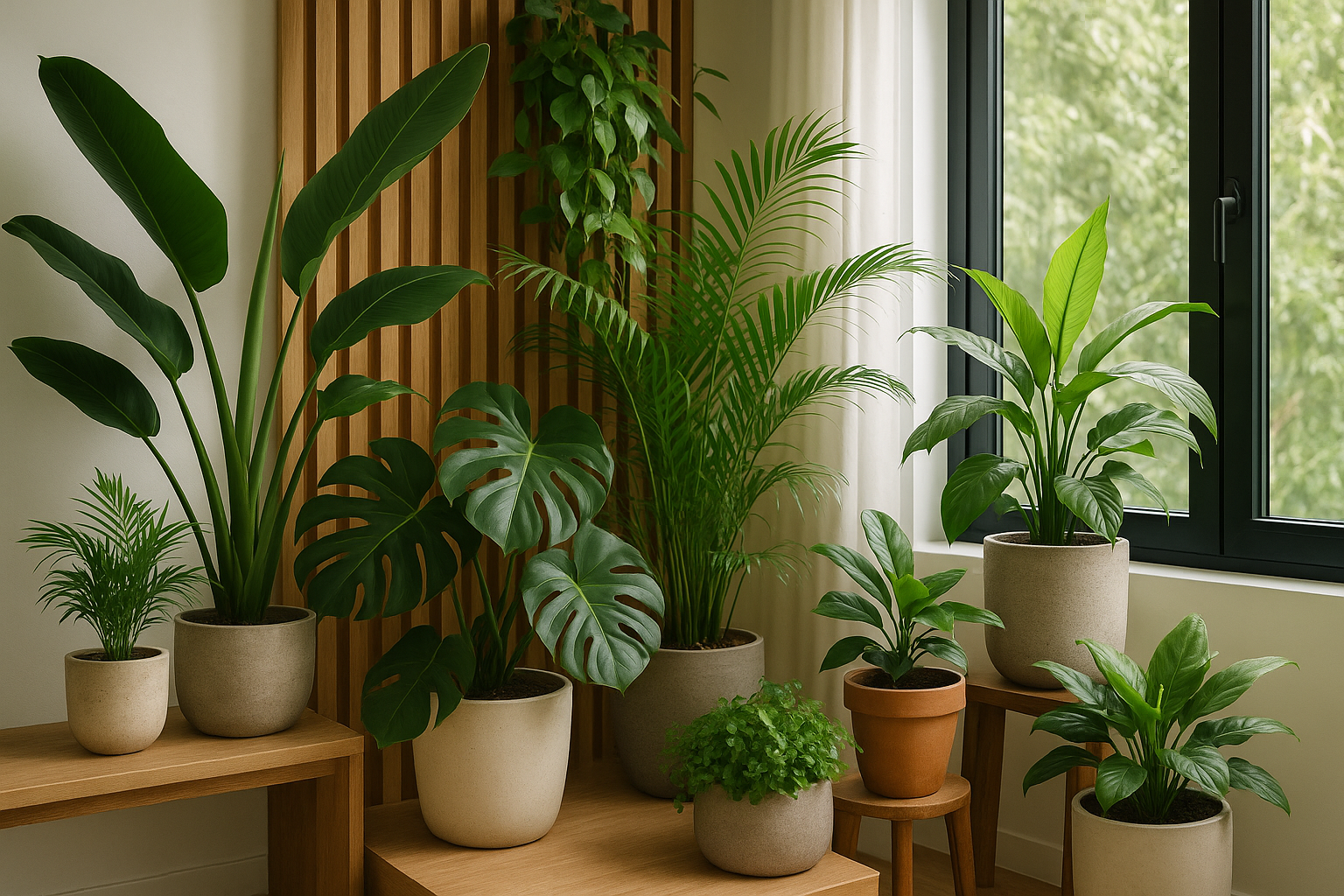
Choosing the right indoor plant pots in Singapore is about far more than matching your sofa — the pot directly affects whether your plant thrives or slowly rots. Get the size, material and drainage right and a plant will reward you for years; get them wrong and even a hardy species can struggle in our humid, air-conditioned homes.
This guide explains how to choose pots and planters for indoor plants: the size to pick, which materials suit which conditions, why drainage matters most, and a few clever tricks for keeping things tidy. It’s written for anyone growing greenery in an HDB flat, condo or office.
Why the pot matters more than you’d think
A pot is your plant’s home. It controls how much soil and water the roots have access to, how fast that soil dries, and how well excess water escapes. The two biggest mistakes are choosing a pot that’s far too large and choosing one with no drainage. Both lead to the same outcome — soggy soil and root rot — which is the most common way indoor plants die in Singapore homes.
Getting the size right
It’s tempting to give a plant lots of room to grow, but a pot that’s too big holds more soil than the roots can use. That soil stays wet for too long, suffocating the roots.
Sizing rules of thumb
- When repotting, go up just one size — a pot two to three centimetres wider than the current one is plenty.
- The plant should look roughly proportionate to its pot, not swimming in it.
- Repot when roots circle the bottom or poke out of the drainage holes, not on a fixed schedule.
- Top-heavy plants need a wider, heavier base to avoid toppling.
Choosing the right material
Each material behaves differently — which matters in our climate.
Terracotta (unglazed clay)
Porous, so it lets soil breathe and dry out faster. Excellent for plants that hate wet feet, like succulents and snake plants, and a good insurance policy against overwatering. The trade-off is it dries quickly, so thirsty plants need more frequent watering.
Glazed ceramic
Attractive and widely available, retaining moisture longer than terracotta. Great for plants that like steady moisture — just make sure it has a drainage hole.
Plastic and fibreglass
Lightweight, affordable and good at holding moisture, which suits moisture-loving plants and large pots you may want to move. Quality fibreglass planters can look premium while staying light.
Concrete and metal
Stylish and durable for statement plants, but heavy (concrete) or prone to heating up (metal in direct sun). Best for stable indoor positions.
Drainage: the non-negotiable
If you take one thing from this guide, make it this: indoor pots need a way for excess water to escape. A pot with no drainage hole traps water at the bottom, where roots sit and rot.
- Always choose pots with drainage holes wherever possible.
- Use a saucer to catch runoff, and empty it so the pot never stands in water.
- Love a pot with no hole? Use the cachepot trick (below) instead of planting directly into it.
- Skip the gravel-at-the-bottom myth — it doesn’t replace a real drainage hole and can actually trap water higher in the pot.
The same principle scales up to outdoor planters and beds; our guide to drainage and our planter boxes and soft-scaping service apply the same thinking to larger built-in planters around the home.
The cachepot trick and styling tips
A favourite designer technique: keep the plant in a plain plastic nursery pot with good drainage, then slip that inside a decorative outer pot (the cachepot). You get the look you want while keeping proper drainage — and you can lift the inner pot out to water it at the sink and let it drain fully before returning it. It also makes swapping displays effortless.
For a cohesive look, repeat a material or colour across a group of pots and vary the heights. Matching planters tie a room together far more than a mismatched collection.
The Singapore angle: humidity and air con
Singapore’s conditions shape the smart choice. In air-conditioned rooms, the air is dry but cool, so soil can stay damp longer than you’d expect — leaning towards faster-draining pots like terracotta helps prevent overwatering. In humid, unconditioned spaces, drainage matters even more because soil dries slowly and fungal problems thrive in stagnant moisture. Either way, free-draining pots and the cachepot approach keep roots healthy. For offices and larger interiors, coordinated planters chosen for the conditions are part of good indoor landscaping.
Frequently asked questions
Do indoor plant pots really need drainage holes?
Yes — drainage is the single most important feature. Without a hole, excess water collects at the bottom and roots rot, which is the most common cause of indoor plant death. If you love a pot with no hole, use it as a decorative outer cover and keep the plant in a draining nursery pot inside.
What size pot should I choose for an indoor plant?
Pick a pot only slightly larger than the root ball — about two to three centimetres wider when repotting. A pot that’s too big holds excess wet soil that suffocates the roots, so resist the urge to size up dramatically.
Are terracotta or plastic pots better in Singapore?
It depends on the plant. Terracotta breathes and dries faster, which suits succulents and anything prone to overwatering — handy in our humid climate. Plastic holds moisture longer and is lighter, which suits thirsty plants and big pots you may want to move.
Can I plant directly into a decorative pot with no hole?
It’s risky, because water has nowhere to go. The safer approach is the cachepot method: keep the plant in a draining inner pot and slip it inside the decorative one. You get the look without drowning the roots.
Planning indoor greenery and want pots and planting that genuinely last? We design and supply coordinated interior planting for homes and offices across Singapore. Explore our indoor landscaping service or get in touch for tailored advice.


