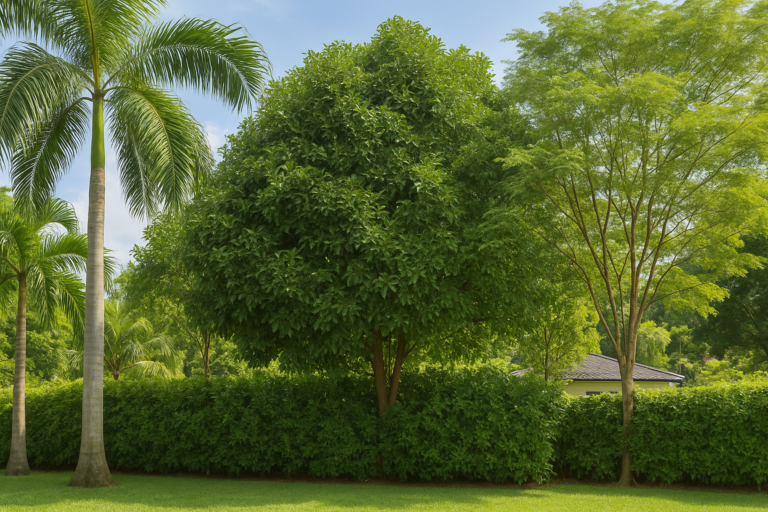

Palm trees in Singapore are almost shorthand for the tropics — and for good reason. They thrive in our heat and humidity, give instant structure and resort-like character to a garden, and many are surprisingly low-fuss once established. But “palm” covers everything from a slim feature for a courtyard to a towering specimen that needs serious space, so choosing the right one matters.
This guide walks through how to pick palms that suit your garden, the species that perform well here, and what to consider before planting. It’s written for landed homeowners and condo gardens looking to add height, screening or a striking focal point.
Why palms work so well in Singapore
Palms are native or well-adapted to tropical climates, so Singapore’s year-round warmth and rainfall suit them perfectly. They generally need little pruning beyond removing old fronds, many tolerate our intense sun, and they add vertical interest without the spreading canopy of a large shade tree. For smaller plots, that upright form is a real advantage — you get height and drama without losing too much ground space.
Matching the palm to your space
The most common mistake is buying for looks alone and ignoring the eventual size. Think about three things before you choose.
How much room you have
- Tight courtyards and planters: clumping or slow, compact palms that stay in scale.
- Mid-sized gardens: single-trunk feature palms with a clean, sculptural look.
- Large landed plots: tall specimens that can be a true centrepiece — just keep them clear of overhead lines and boundaries.
Sun or shade
Some palms revel in full, direct sun; others prefer dappled light and can scorch in an exposed spot. Match the species to the actual conditions of the position, not the look you’re after.
Single feature or screening
Clumping palms make excellent living screens for privacy along a boundary, while a solitary specimen palm works better as a standalone focal point near an entrance, pool or seating area.
Popular palms for Singapore gardens
Rather than a long catalogue, here are the categories most gardens draw from:
- Feature specimen palms — bold, single-trunk forms that anchor a design. Best where they have room and can be uplit at night.
- Clumping palms — multi-stemmed and dense, ideal for screening, softening fences or filling a corner.
- Fan palms — large, dramatic fan-shaped fronds for a strong architectural statement.
- Compact and understorey palms — smaller growers happy in shade or planters, good for courtyards and condo balconies.
Because the right choice depends on your exact conditions and how big you want the palm to get, it’s worth getting species recommendations as part of the design rather than picking off a nursery shelf. Our outdoor landscape design and build team selects palms to suit each garden’s light, soil and scale.
The Singapore angle: planting, drainage and the long game
Two local factors shape success. First, drainage: our heavy tropical downpours can waterlog poorly drained ground, and few palms tolerate constantly soggy roots. If your soil holds water, sort the drainage before planting. Second, the long game — palms get tall. A young palm that looks perfect by the patio today may, in years, drop heavy fronds onto a roof, car or walkway, or grow into overhead clearance. Choose for the mature size and the safe distance from structures and boundaries.
One more practical point in a dense city: large established palms can be moved rather than removed if you’re reworking a garden. If you have a valued specimen in the wrong place, our tree upgrading and transplanting service can often relocate it instead of felling it.
Care and maintenance
Most palms are refreshingly low-maintenance once established. The basics:
- Water regularly while young; established palms are more drought-tolerant.
- Feed with a balanced fertiliser suited to palms — nutrient deficiencies show up clearly in yellowing or spotted fronds.
- Remove only dead or badly damaged fronds; over-trimming a palm weakens it.
- Keep an eye on tall specimens for safety — frond and fruit drop can be a hazard over paths and parking.
What it costs
Cost depends almost entirely on size. A small potted palm is inexpensive; a mature, instant-impact specimen — plus delivery, craning and planting — runs much higher. As a rough guide, supply-and-plant for a modest palm is in the low hundreds, while large feature specimens can reach well into the thousands. Treat figures as indicative; a site visit gives an accurate number. Folding palm planting into a wider landscaping project usually delivers a more cohesive result than buying one tree at a time.
Frequently asked questions
Which palm trees are best for small Singapore gardens?
Compact clumping palms and smaller understorey palms suit tight spaces and planters, because they stay in scale and don’t outgrow a courtyard or balcony. Avoid tall single-trunk specimens in small plots — they look great young but quickly become too large and create maintenance and clearance issues.
Do palm trees need a lot of maintenance?
Generally no. Once established, most palms need only occasional removal of dead fronds, regular feeding and a check on safety for tall types. They’re among the lower-maintenance ways to add height and tropical character to a Singapore garden.
How far should I plant a palm from my house?
Far enough that the mature palm — and its falling fronds and fruit — won’t reach the roof, gutters, walkways or parking, and clear of any overhead lines and boundaries. The right distance depends on the species’ eventual size, so plan around mature dimensions, not the young plant.
Can I move an established palm to another part of my garden?
Often yes. Many palms transplant well with proper preparation and equipment, which makes them good candidates if you’re redesigning a space and want to keep a mature specimen. Have it assessed first to confirm it’s a sensible move.
Want palms that look right today and stay right for years? Get the species and positioning planned properly. Talk to our landscape team or request a consultation and quote, and we’ll help you choose palms that thrive in your garden’s conditions — and supply, plant and care for them.