Dry season watering is one of those jobs that looks simple until your lawn browns off and your shrubs start to wilt by mid-morning. Even in famously wet Singapore, we get stretches — often around February and the inter-monsoon lulls — where the rain simply stops for weeks and the sun does the rest. Get your watering right during these spells and your garden barely notices; get it wrong and you can lose plants you have nurtured for years.
This guide is for homeowners and condo gardeners who want their greenery to ride out hot, rain-free periods without waste or guesswork. We will cover timing, how much to water, deep versus shallow watering, and the plants that need the most attention when the taps are doing all the work.
Why dry spells hit Singapore gardens harder than you would think
Our plants are conditioned to near-constant moisture. Roots tend to sit shallow because they rarely need to chase water down. When a dry, sunny spell arrives, that shallow root system is exactly the problem — the top few centimetres of soil bake out fast, and plants used to easy water start to stress within days.
High temperatures and strong sun also drive up evaporation. Water you apply at the wrong time of day can be gone before roots ever reach it. The aim during the dry season is to put water where roots actually are, at a time when it will soak in rather than steam off.
The best time of day to water
Water early — ideally between 6am and 9am. The air is cooler, wind is light, and the soil has all day to draw moisture down to the roots. Morning watering also lets foliage dry quickly, which matters in our humidity because wet leaves overnight invite fungal problems.
If mornings are impossible, late afternoon (after about 5pm, once the worst heat has passed) is the next best option. Avoid watering at midday — much of it evaporates and droplets on leaves can scorch in strong sun. And avoid heavy watering at dusk where you can, since foliage that stays wet all night is asking for disease.
A quick timing checklist
- Best: early morning, 6–9am.
- Acceptable: late afternoon, after the heat breaks.
- Avoid: midday sun and late, soggy evenings.
Water deeply, not often
The single most useful habit for the dry season is to water deeply and less frequently rather than a little every day. Light daily sprinkles only wet the surface, which trains roots to stay shallow — exactly where they are most vulnerable when it is hot. A good soak that reaches down encourages roots to grow deeper, where the soil stays cooler and moister for longer.
For lawns, aim to wet the soil to roughly 10–15cm. A simple test: water for a set time, then push a screwdriver or thin rod into the turf. If it slides in easily to that depth, you have watered enough. For beds and shrubs, water slowly at the base until the soil is moist a hand’s depth down, then let it dry out a little before the next soak.
How much, roughly
- Lawns: a deep soak every two to three days in a dry spell usually beats daily sprinkling.
- Shrubs and beds: soak the root zone, then allow the surface to dry before watering again.
- Pots and planters: these dry out fastest — they may need water daily, sometimes twice on the hottest days.
Don’t forget your trees
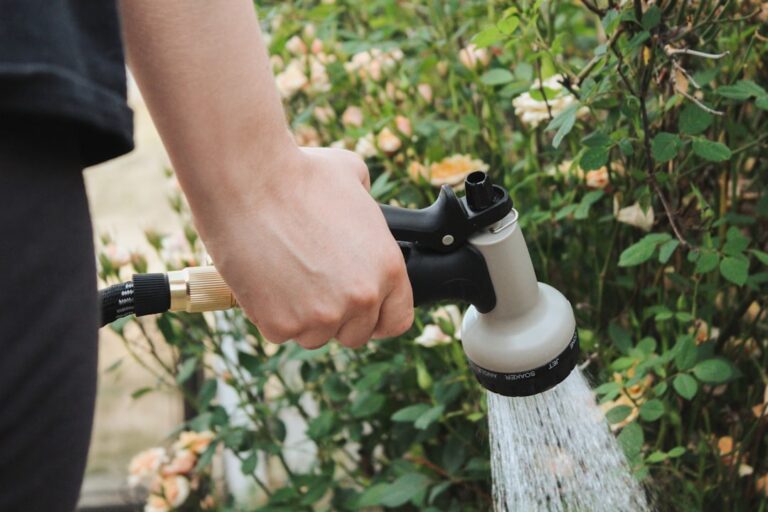
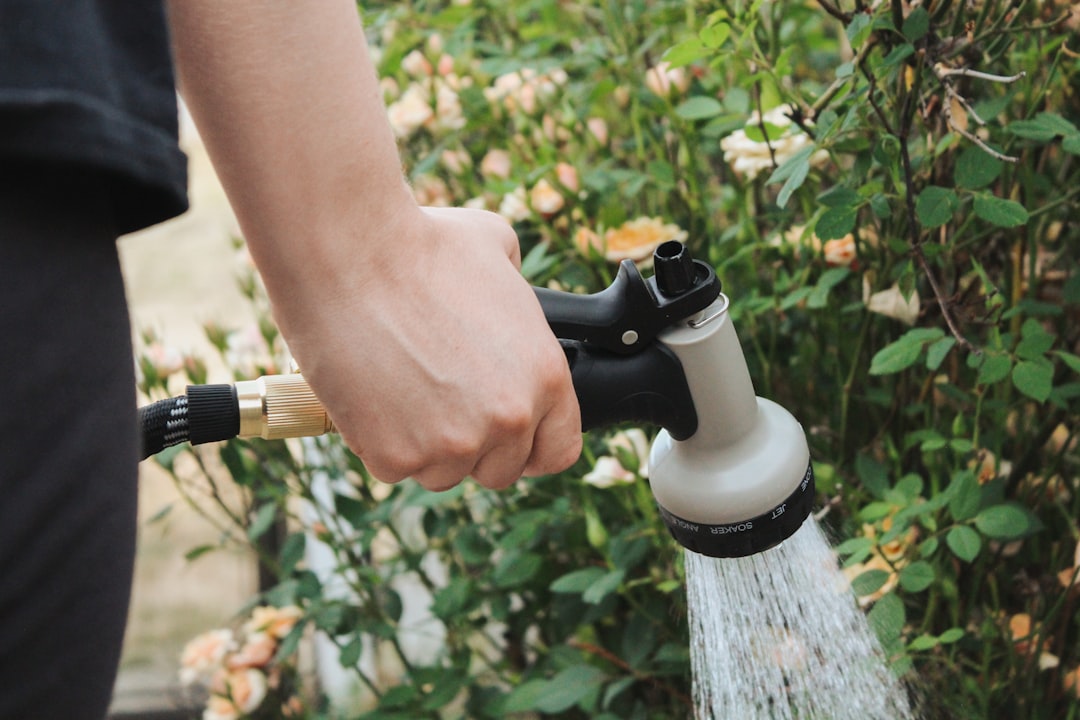
Established trees are often overlooked because they look unbothered, but young and newly planted trees can suffer badly in a dry spell. Water them slowly and deeply at the edge of the canopy — the “drip line” — rather than right against the trunk, since that is where the active feeder roots sit. A slow trickle from a hose for several minutes, allowing the water to sink in, does far more good than a quick blast.
A layer of mulch around the base (kept clear of the trunk itself) makes a real difference, slowing evaporation and keeping the root zone cooler. If you have larger or valuable specimens that are struggling, it is worth getting professional eyes on them — our tree care and transplanting team can advise on watering and recovery before stress turns into long-term decline.
Smart watering: mulch, pots and irrigation
You can cut your watering workload sharply with a few simple measures. Mulch (bark, leaf litter or compost) over beds reduces evaporation and suppresses weeds that compete for moisture. Grouping pots together and moving the thirstiest into morning sun and afternoon shade reduces stress. And topping up beds with compost improves the soil’s ability to hold water in the first place.
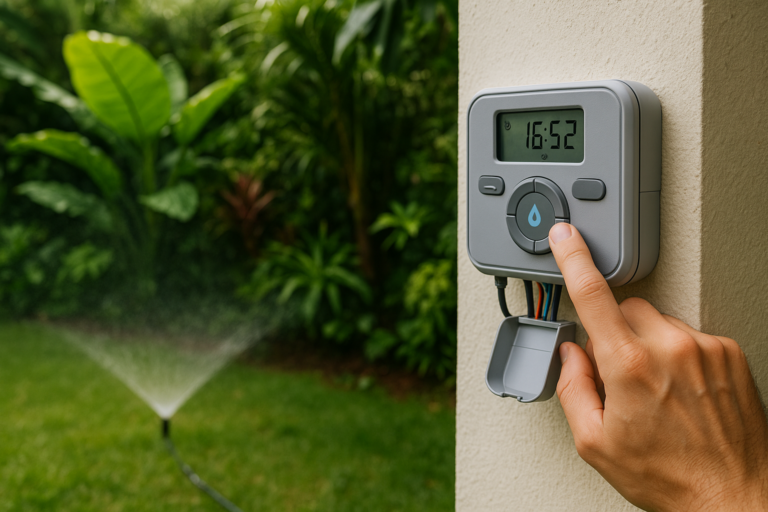
For anyone tired of dragging hoses around during every dry spell, a properly designed irrigation system pays for itself in convenience and plant health. Drip lines deliver water straight to the roots with very little waste, and a timer set for the early morning takes the discipline out of your hands. If you are weighing this up, our irrigation services page explains how drip and automated systems are planned for Singapore gardens, and you can see the broader picture across our landscape maintenance work.
Signs you are watering too much or too little
- Too little: wilting that does not recover overnight, browning leaf tips, footprints staying flat on the lawn.
- Too much: constantly soggy soil, yellowing leaves, mushy stems, and a sour smell at the base — common when drainage is poor.
The Singapore angle: humidity, soil and strata living
Even during a dry spell, our humidity stays high, so foliage dries slowly. That is why morning watering matters more here than in drier climates — you want leaves dry before night. Our soils, often heavy and compacted in newer estates, can also shed water if they have dried hard, so a slow, patient soak that lets water penetrate beats a fast flood that runs straight off.
Condo and strata residents have their own constraints: balcony and rooftop containers dry out very fast in wind and reflected heat, and you may be sharing irrigation points or working within MCST rules on hose use. Self-watering planters, good potting mix and morning routines make container gardens far more resilient when the rain disappears.
Frequently asked questions
How often should I water during a dry spell in Singapore?
Rather than a fixed schedule, water by how the soil feels. For lawns and beds, a deep soak every two to three days usually keeps things healthy, while pots and balcony containers often need water daily or even twice a day in strong sun. Always check the soil a few centimetres down before watering again — if it is still moist, wait.
Is it bad to water in the evening?
A light evening top-up is fine if mornings are impossible, but avoid soaking foliage late at night. Leaves that stay wet through our humid nights are more prone to fungal disease. Early morning remains the best time because the water soaks in and the foliage dries during the day.
Should I water my lawn every day when it is hot?
Daily light watering trains grass roots to stay shallow, which makes the lawn more vulnerable, not less. A deeper soak every couple of days encourages roots to grow down where the soil holds moisture longer. If your lawn already looks stressed, a thorough soak followed by a couple of dry days is usually better than a daily sprinkle.
How do I keep potted plants alive when I travel during a dry spell?
Move pots into morning sun and afternoon shade, group them together to raise humidity, water deeply before you leave, and add mulch on top of the soil. Self-watering reservoirs or a simple drip system on a timer are the most reliable solutions for longer trips.
If a dry spell keeps catching your garden out — or you would rather hand watering over to a system that just works — we can help. Talk to us about irrigation and watering solutions, or get in touch for a quote and we will tailor a plan to your garden, plants and property type.