
Few plants suit a living wall as well as ferns. The best ferns for a vertical garden bring soft, layered, jungle-like texture that turns a flat wall into something alive — and many of them naturally grow on tree trunks and cliff faces, so growing upright is exactly what they are built for. In Singapore’s warm, humid climate, they are some of the most reliable green wall plants you can choose.
This guide is for anyone planning or planting a green wall at home or in a commercial space. You will learn which fern species perform best vertically, how to position them, and how to water and maintain them so the wall stays lush rather than patchy.
Why ferns work so well on green walls
Ferns evolved for shaded, humid forest floors and trunks — conditions a vertical garden often recreates, especially indoors or on a sheltered facade. They like indirect light, steady moisture and high humidity, all of which a well-designed green wall provides. Their arching, finely-divided fronds also read beautifully at eye level, giving the dense, cascading look people want from a living wall.
Many ferns are epiphytic or lithophytic in the wild — growing on trees or rock rather than soil — so they adapt naturally to the shallow growing pockets of a vertical system.
The best ferns for a vertical garden
Some ferns suit vertical growing far better than others. These are the dependable performers in our climate.
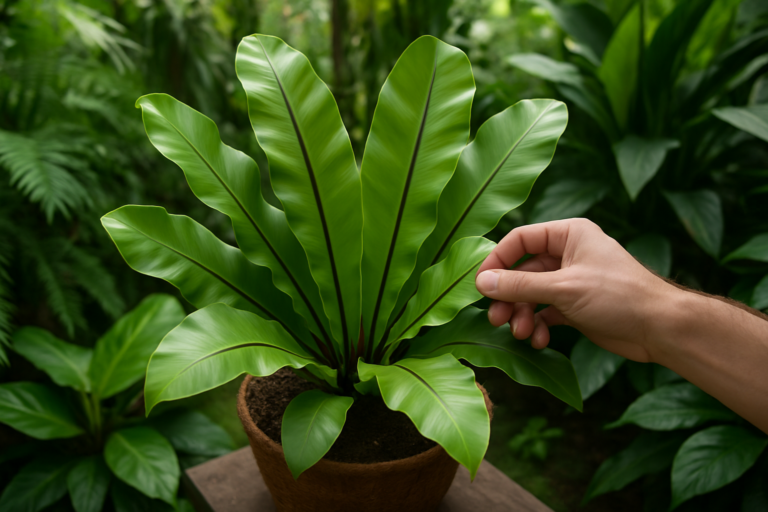
Bird’s nest fern
A clump of broad, glossy, upright fronds forming a rosette. Bold, architectural and very tough, it copes with lower light and is a striking feature among finer-textured plants. Naturally epiphytic, so it takes to walls easily.
Boston fern and sword ferns
The classic cascading fern, with long arching fronds that spill down beautifully — ideal for the look of a “waterfall” of green. They want consistent moisture and good humidity, which a green wall irrigation system supplies.
Rabbit’s foot and hare’s foot ferns
Named for their furry creeping rhizomes, these spread across a surface and trail attractively, knitting a wall together over time.
Maidenhair fern
Delicate, lacy fronds on fine black stems. Gorgeous up close but thirsty and sensitive to drying out, so best on consistently moist, sheltered walls rather than exposed ones.
Staghorn and elkhorn ferns
Dramatic epiphytic ferns with antler-shaped fronds. More of a feature accent than a mass planting, but unbeatable for impact mounted on a wall.
Other reliable choices
- Button fern — neat, rounded leaflets, a tidy filler.
- Asparagus fern — soft, feathery and fast (technically not a true fern, but used the same way).
Mixing ferns with other plants
A wall of only ferns can look flat in tone. The most successful vertical gardens mix fern textures with contrasting foliage:
- Combine fine ferns (maidenhair, asparagus) with bold ones (bird’s nest, staghorn) for depth.
- Add coloured foliage such as coleus, begonia or peperomia to break up the green.
- Use trailing plants like pothos or syngonium to soften edges and fill gaps.
Designing a balanced plant palette is part of what we do when we build a green wall or vertical garden — the right mix keeps a wall looking full and varied through the year.
Light, watering and humidity
Ferns are shade-lovers, which makes them ideal for the many walls that get bright but indirect light rather than full sun.
Light
Bright, indirect light is the sweet spot. Direct tropical sun scorches most ferns, so south- and west-facing exposed walls need shade-tolerant choices or some screening. Indoor walls often need supplementary grow lights if they are far from windows.
Watering
Consistent moisture is non-negotiable for ferns — they wilt and crisp quickly if they dry out. On a vertical garden this almost always means an automated irrigation system, because hand-watering a wall evenly is impractical. Even, regular delivery keeps every pocket moist without waterlogging the lower rows.
Humidity
Singapore’s high ambient humidity is a real advantage here — outdoor and naturally-ventilated walls rarely need extra. Air-conditioned indoor walls are drier and may need misting or a system that keeps humidity up.
A Singapore angle: green walls in a tropical city
Singapore’s climate is close to ideal for fern-based vertical gardens. The constant warmth and humidity mean ferns thrive outdoors with far less effort than in temperate cities, and our culture of greening buildings — from condo facades to office lobbies and car park screens — means green walls are everywhere. The main local considerations are managing strong direct sun on exposed facades, keeping drainage and irrigation reliable through heavy rain, and routine upkeep so fast tropical growth stays tidy. A maintained wall stays lush; a neglected one goes patchy quickly, so ongoing landscape maintenance is part of the plan.
Frequently asked questions
Which ferns are best for a vertical garden in Singapore?
Bird’s nest fern, Boston and sword ferns, rabbit’s foot fern and staghorn fern are all excellent and well suited to our climate. Bird’s nest and staghorn make bold features, the cascading sword ferns give that lush trailing look, and maidenhair adds delicacy where the wall stays consistently moist.
Do ferns on a green wall need a lot of watering?
Yes — ferns must not dry out, so a green wall planted with ferns needs consistent, even moisture, which almost always means an automated irrigation system. Hand-watering rarely keeps a whole wall evenly damp. Singapore’s natural humidity helps outdoors, but indoor air-conditioned walls need extra attention.
Can ferns grow on a sunny wall?
Most ferns scorch in direct tropical sun, so a bright but shaded or indirectly-lit wall is far better. If your wall faces strong afternoon sun, either add screening or choose the toughest, most sun-tolerant ferns and combine them with other heat-tolerant foliage.
How do I stop a fern wall looking patchy?
Patchiness comes from uneven watering, too much or too little light, and lack of maintenance. Use reliable irrigation, match species to the light each part of the wall gets, and trim, feed and replace plants as part of regular upkeep so growth stays dense and even.
Thinking about a living wall for your home, office or development? We design, build and maintain planted vertical gardens that actually last. Explore our green wall services or contact us to discuss your space and the right plant palette.