Grow lights for indoor plants are the quiet secret behind every lush interior that has no business looking so green. Many Singapore homes and offices have rooms that get almost no usable daylight, yet people still want plants in them. The good news is that the right artificial lighting can keep foliage thriving in places where it would otherwise sulk, stretch and slowly die. This guide explains when you actually need a grow light, how to choose one, and how to use it well.
It is written for homeowners and office managers, not hobbyist growers, so the focus is on practical, good-looking solutions rather than technical overkill.
Do your plants even need a grow light?
Plants make food from light. In a room with bright, indirect daylight near a window, most indoor species manage fine. The problems start deeper inside the room, away from windows, or in spaces that rely on artificial light all day.
Watch for these signs that a plant is starving for light:
- New growth is small, pale and far apart on long, stretched stems.
- The plant leans hard towards the nearest window.
- Variegated leaves lose their pattern and turn plain green.
- Lower leaves drop and the plant thins out over time.
If you see these in a dim corner, a grow light will often turn things around within weeks.
Daylight is not as bright as it looks
Our eyes adjust so well that a room can feel perfectly bright to us while delivering very little light to a plant. A spot two or three metres from a window, or shaded by a balcony or neighbouring block, can be far dimmer than it appears. This is why so many “easy” plants quietly decline indoors. A grow light removes the guesswork by giving the plant a reliable, measurable dose of light every day.
Choosing the right grow light
You do not need anything exotic. For homes and offices, modern LED grow lights are efficient, cool-running and long-lasting. Focus on a few practical points.
Full-spectrum LEDs
Look for full-spectrum LEDs, which provide the range of light plants use for healthy growth. Many newer fixtures produce a natural white light rather than the old purple-pink glow, so they look at home in a living room or reception.
Match the fixture to the look you want
- Spotlights and track heads: discreet and great for highlighting a single feature plant or a small cluster.
- Clip-on or stem lamps: flexible and affordable for a desk plant or a shelf.
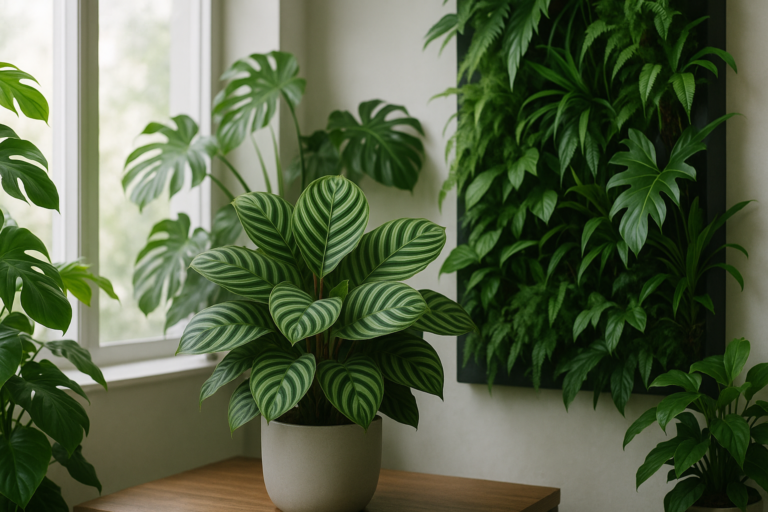
- Linear bars and panels: ideal above a plant shelf, a green wall or a row of pots.
Brightness and distance
Brighter is not always better. Most foliage plants are happiest with moderate light, so a powerful light placed too close can scorch leaves, while a weak one placed too far does nothing. As a rule, a low-light foliage plant can sit further from the fixture, while a brighter-loving plant should be closer. Adjust if leaves bleach or, conversely, keep stretching.
How long to run grow lights
Plants need a daily rhythm of light and dark, so leaving a grow light on around the clock does more harm than good. For most foliage plants, around 10 to 12 hours a day works well. The simplest way to get this right is a plug-in timer or a smart plug, so the light switches on and off automatically and you never have to think about it. Match the schedule roughly to daytime so the room still feels natural.
Best plants for low-light rooms
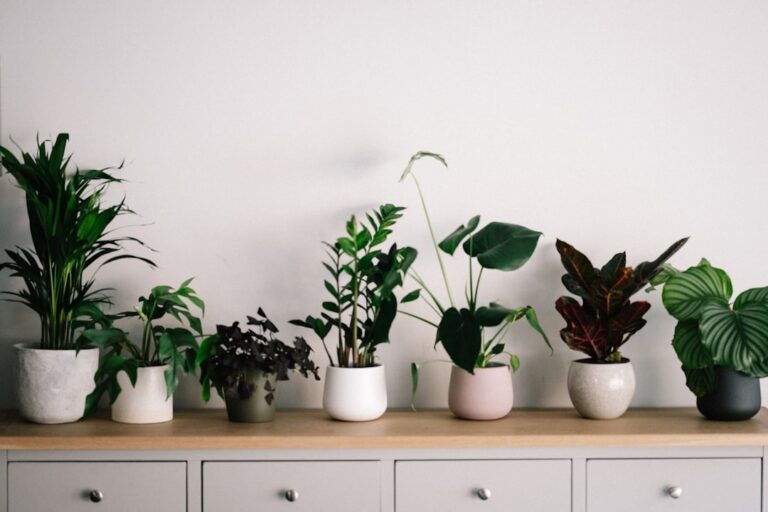
Pairing a grow light with a genuinely shade-tolerant plant gives the best results. Reliable performers for dim Singapore interiors include:
- ZZ plant, which tolerates real neglect and gloom.
- Snake plant, near-indestructible and architectural.
- Pothos and philodendron, fast and forgiving trailers.
- Aglaonema, prized for colourful foliage in low light.
- Cast iron plant, true to its name.
- Ferns, which enjoy our humidity and cope with shade.
Even these benefit from supplementary light in a truly dark room, but they will not punish you for slightly imperfect conditions.
The Singapore angle
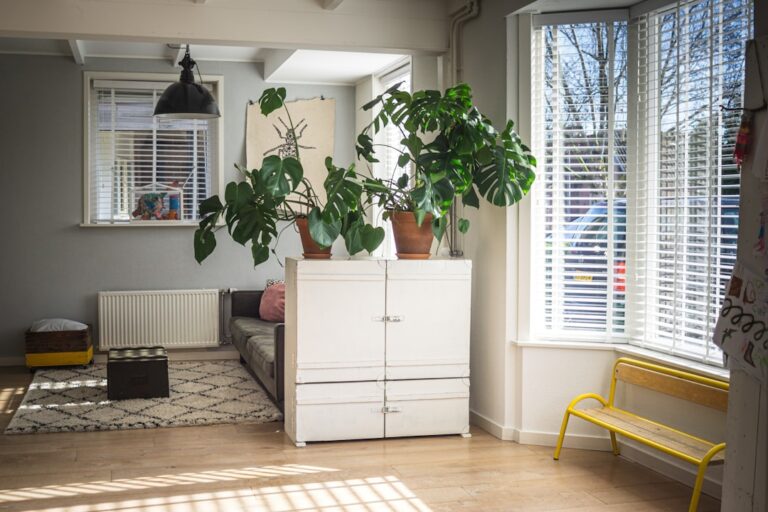
Singapore’s living spaces create a particular lighting challenge. Many HDB and condominium units have deep floor plans, balconies that shade interiors, and windows that face neighbouring blocks rather than open sky. Add heavy curtains and tinted glass and a surprising number of rooms are functionally low-light, even at midday.
Our climate helps in one way, though: the warmth and humidity that foliage plants love are already there. Lighting is usually the one missing ingredient. For offices, grow lighting also lets you place greenery in lobbies and meeting rooms that get no daylight at all, supporting the kind of biophilic, plant-rich interiors that have become popular here. When we design indoor landscaping schemes, lighting is planned alongside the plants from the outset, and the same thinking goes into every green wall we install indoors.
Frequently asked questions
Can a normal ceiling light keep plants alive?
Generally no. Standard room lighting is designed for human comfort, not for plant growth, and it lacks the intensity and spectrum plants need. A dedicated full-spectrum grow light is far more effective, even if the room already feels bright to you.
How many hours a day should I run grow lights?
Around 10 to 12 hours a day suits most foliage plants. Use a timer so the light runs on a consistent schedule and the plant still gets a proper period of darkness, which it needs to grow normally.
Will grow lights raise my electricity bill a lot?
Modern LED grow lights are efficient and use little power compared with older bulbs, especially for a few household plants. Running them on a timer keeps usage sensible, so the impact on your bill is usually modest.
Do grow lights get hot enough to harm plants?
LED grow lights run fairly cool, so heat is rarely an issue. The bigger risk is light intensity: placed too close, a strong light can bleach or scorch leaves. If you see pale patches, simply move the fixture further away.
If you want striking, healthy greenery in rooms that daylight forgot, we can specify the plants, lighting and care to make it work. Discover our indoor landscaping services or get in touch for advice tailored to your space.