Propagating houseplants is one of the most satisfying skills a plant lover can learn — and one of the cheapest ways to fill a home with greenery. Instead of buying new plants, you take cuttings or divisions from the ones you already own and grow them into more. In Singapore’s warm, humid climate, many houseplants root quickly and reliably, so it is a great place to start. This guide walks you through the main methods, what to use them on, and how to give your cuttings the best chance.
Whether you want a fuller pothos, free plants to gift, or to rescue a leggy plant by starting fresh, you will find a method here to suit. We will keep it practical and beginner-friendly throughout.
Why propagate at all?
There are good reasons beyond saving money.
- Free plants. One healthy plant can become several over time.
- Fuller pots. Rooting cuttings back into the parent pot makes a sparse plant look lush.
- Rejuvenation. Leggy, bare-stemmed plants can be started anew from fresh cuttings.
- Sharing. Cuttings make thoughtful, personal gifts.
- Insurance. If a parent plant declines, a rooted cutting carries it on.
The main propagation methods
Most houseplants are propagated by one of four approaches. Match the method to the plant.
Stem cuttings
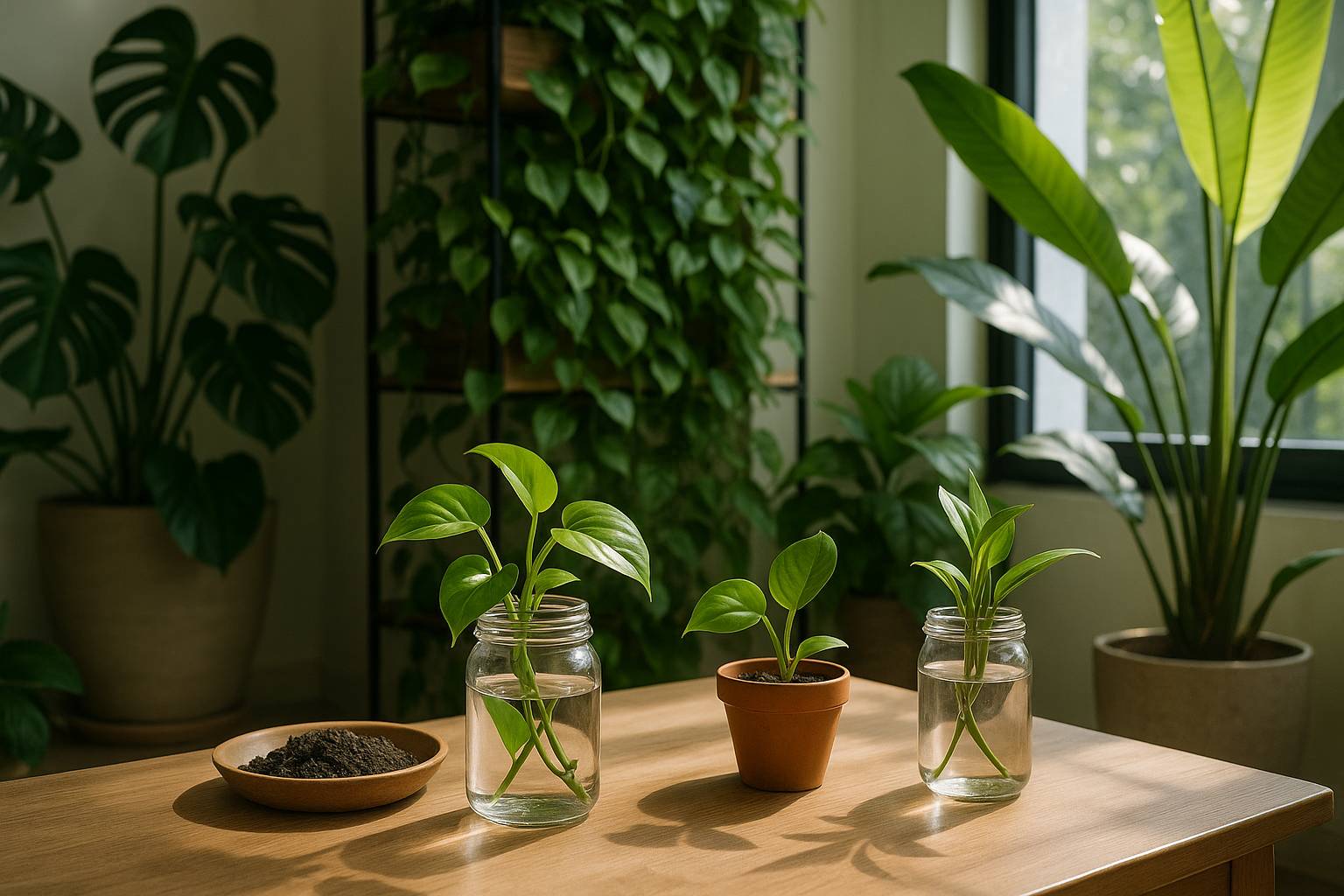
The most common method, ideal for trailing and vining plants like pothos, philodendron and tradescantia. Snip a healthy stem just below a node — the small bump where leaves and roots emerge — remove the lowest leaf, and root it in water or moist soil. The node is where the new roots will form, so every cutting must include one.
Leaf cuttings
Suited to succulents, snake plants and begonias. Depending on the plant, you either lay a whole leaf on soil, push a leaf section into moist mix, or let a fallen leaf callous over before planting. These are slower than stem cuttings and need patience.
Division
The fastest, most reliable method for clumping plants like peace lilies, ZZ plants, ferns and calatheas. At repotting time, gently tease the root ball into sections, each with its own roots and shoots, and pot them separately. You get instant, established new plants.
Offsets and plantlets
Some plants do the work for you. Spider plants throw out baby plantlets on runners, and many succulents produce offsets at the base. Simply detach these once they have small roots and pot them up.
Water versus soil propagation
For stem cuttings, you can root in water or directly in soil. Both work; each has trade-offs.
- Water propagation lets you watch roots develop, which is satisfying and reassuring. Change the water weekly and pot up once roots are a few centimetres long. Water-grown roots adapt slightly when moved to soil, so do not let them get too long first.
- Soil propagation skips the transition shock and grows soil-ready roots from the start, but you cannot see progress, so resist tugging to check. Keep the mix lightly moist and humid.
The Singapore climate angle
Our climate is genuinely an advantage for propagation. The consistent warmth means cuttings root year-round without the seasonal slowdown growers in cooler countries face, and the high ambient humidity helps prevent cuttings from drying out before they form roots. That said, two local factors are worth managing. First, the same warmth and humidity that speed rooting also encourage mould and rot, so keep water clean, use free-draining mix and do not let cut surfaces sit soggy. Second, many homes run air-conditioning, which is cool and dry — cuttings root faster in a warmer, more humid spot, so a bright bathroom, kitchen or sheltered balcony often beats a chilly bedroom.
If you find yourself with more plants than windowsills, propagation is also how living displays are built up affordably. Our indoor landscaping team grows on and arranges plants for homes, offices and commercial spaces across Singapore, and the same principles scale up to fill a green wall or vertical garden with healthy, established greenery.
Tips for success
- Use clean, sharp tools to make neat cuts and avoid spreading disease.
- Take cuttings from healthy growth, not stressed or diseased stems.
- Always include a node on stem cuttings — without it, no roots.
- Provide bright, indirect light, never harsh sun, which stresses delicate cuttings.
- Keep humidity up for fussier plants by loosely covering with a clear bag or propagating in a humid room.
- Be patient. Some root in a week, others take a month or more. Resist constant fiddling.
Frequently asked questions
How long do houseplant cuttings take to root?
It varies widely by plant and method. Fast rooters like pothos and tradescantia can show roots in one to two weeks, while leaf cuttings of snake plants or ZZ plants may take many weeks or months. Singapore’s warmth generally speeds things up, but patience is part of the process.
Is it better to propagate in water or soil?
Both work well for stem cuttings. Water lets you watch roots form and is great for beginners, but the roots must adjust when moved to soil. Soil propagation grows hardier, soil-ready roots from the start but hides progress. For most easy plants, either is fine — pick what you find more reassuring.
Why are my cuttings rotting instead of rooting?
Rot usually comes from stale water, soggy soil or a cut surface kept too wet, all of which our humidity encourages. Change propagation water weekly, use free-draining mix, take cuttings from healthy stems, and give them bright, indirect light and good airflow to keep them sweet.
Which houseplants are easiest to propagate for beginners?
Pothos, philodendron, spider plants, tradescantia and many succulents are very forgiving. Pothos and spider plants in particular root almost effortlessly, making them ideal first attempts before you move on to slower leaf and division methods.
Want a home or workplace filled with thriving, well-chosen greenery without the trial and error? Our indoor landscaping service selects, grows on, installs and maintains plants suited to your space across Singapore. Get in touch and we will help your green collection flourish.