
Landed home landscaping in Singapore is one of the most rewarding investments you can make in a property — a well-designed garden lifts the look of the house, creates usable outdoor living space and adds real value. But a blank or tired garden can feel overwhelming. Where do you even begin?
This guide lays out a sensible starting point: how to plan, what to prioritise, the local rules to be aware of, and how to budget. It’s written for owners of terrace, semi-detached and bungalow homes who want to get the approach right before spending money.
Start with how you’ll use the space
Before a single plant goes in, get clear on how you actually want to live in the garden. The most beautiful design is wasted if it doesn’t suit your life. Ask:
- Do you want a space for entertaining, dining and gatherings?
- A safe, open area for children or pets?
- A quiet, green retreat to unwind in?
- Low-maintenance greenery, or are you a keen gardener?
- Privacy from neighbours and the street?
Your answers shape everything that follows — the layout, the balance of lawn versus paving, and how much planting you take on. A good landscape design and build process always starts here, not with a plant list.
Get the foundations right first
The unglamorous groundwork is what makes a landed garden last. It’s expensive and disruptive to retrofit, so handle it at the start.
Drainage
Singapore’s heavy rain makes drainage critical. Poor drainage leads to waterlogged lawns, dying plants, mosquito breeding and damaged paving. Assessing and, if needed, installing proper drainage works early saves expensive problems later.
Levels and structure
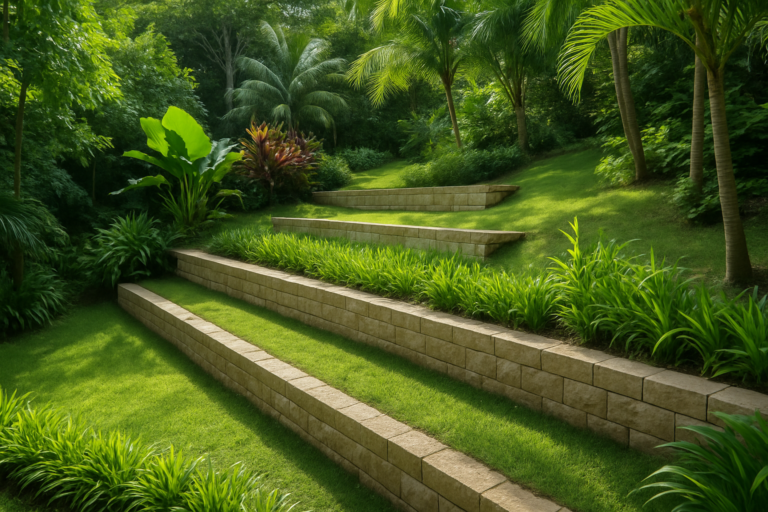
Sloping plots may need retaining walls or terracing to create usable, stable areas. Getting levels right underpins everything built on top.
Soil
Healthy soil is the difference between plants that struggle and plants that thrive. Improving or replacing poor soil before planting pays off for years.
Layer the design: hard and soft landscaping
A good landed garden balances built elements with planting.
Hard landscaping
Paving, decking, paths, driveways, walls and features create the structure and usable surfaces of the garden. A run of timber decking off the living room, a paved entertaining area or a clean driveway sets the framework. These civil and hardscape works form the bones of the design.
Soft landscaping
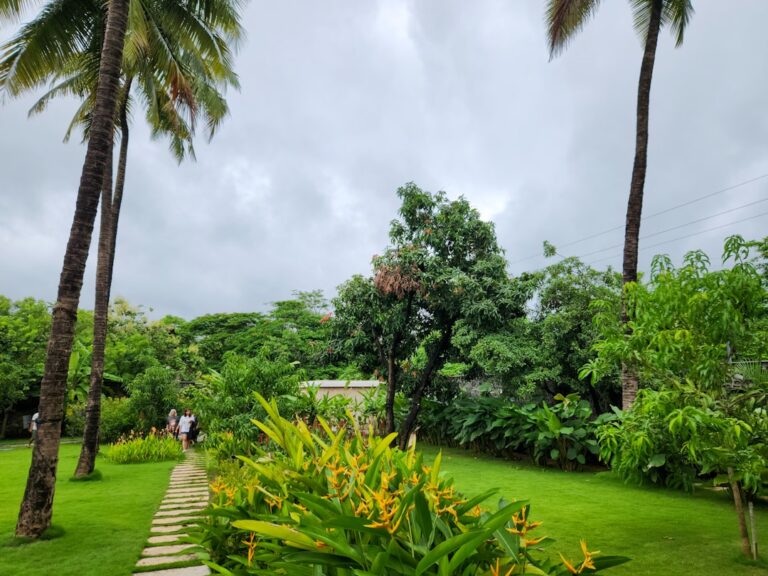
Trees, shrubs, hedges, turf and feature plants bring the garden to life, provide shade and privacy, and soften the hard surfaces. Trees in particular are worth planning carefully — they’re the longest-lived elements and define the garden’s character for decades.
The Singapore angle: rules, climate and neighbours
Landed homeowners have more freedom than condo or HDB residents, but there are still things to mind. Larger trees and certain works may need approval — particularly anything affecting public land, drains or trees with conservation status — so check before major tree removal or planting. Boundary issues matter too: hedges, trees and structures near the line are a common source of neighbour disputes, so plan with the boundary in mind.
The climate shapes the planting. Choose species that genuinely thrive in our heat, humidity and rain rather than fighting the conditions, and remember that fast growth means real ongoing maintenance. Designing with upkeep in mind — and budgeting for regular landscape maintenance — keeps a landed garden looking sharp rather than slowly running wild.
Phase it if you need to
A full landed garden can be a significant project, and you don’t have to do it all at once. The key is to plan the whole design first, then build in phases so each stage joins up cleanly with the next. Doing the groundwork — drainage, levels, structure — first, then hard landscaping, then planting, is usually the most logical sequence. What you should avoid is a series of unplanned, piecemeal fixes that don’t add up to a coherent garden.
What it costs
Landed gardens span a wide range. A planting-led refresh might be a few thousand dollars, while a full design and build with extensive hardscape, structures, mature trees and features runs into the tens of thousands and beyond. The big variables are scope, materials, site conditions and finish. As a rough guide, budget generously for groundwork and drainage — it’s the part people regret skimping on. A site visit gives a realistic figure for your specific plot.
Frequently asked questions
Where should I start with landscaping a landed home?
Start with how you want to use the garden, then get the foundations right — drainage, levels and soil — before any planting or hard landscaping. Plan the whole design first, even if you build it in phases. Beginning with a clear brief and solid groundwork avoids expensive reworks later.
Do I need approval to landscape my landed garden?
Routine planting and minor works generally don’t need approval, but larger tree removal, work affecting public land or drains, and certain structures may. Trees with conservation status are protected. When in doubt, check before you start — a good contractor will flag what’s required and handle approvals.
How long does a landed garden project take?
It depends entirely on scope. A planting refresh can be done in days; a full design and build with groundwork, hard landscaping and structures takes weeks to months. Weather, approvals and material lead times all play a part. Your contractor should give you a realistic programme up front.
Should I hire a designer or just a contractor?
For anything beyond a simple refresh, a design-led approach pays off — a coherent plan ties the whole garden together and prevents costly mistakes. Using one accountable team for design, build and maintenance avoids the gaps and finger-pointing that happen when you split the work across separate parties.
Ready to transform your landed garden but not sure where to begin? A consultation is the best first step. Talk to our landscape design and build team or request a site visit and quote, and we’ll help you plan a garden that suits how you live — and build it properly from the ground up.