Most struggling gardens aren’t the victim of bad luck — they’re the result of a few avoidable garden maintenance mistakes repeated week after week. In Singapore’s fast-growing, high-rainfall climate, small errors add up quickly, leaving plants yellow, leggy or dead long before their time.
The good news is that nearly all of these mistakes are easy to fix once you know what they are. This guide covers the ten most common errors we see in Singapore gardens, why they cause problems, and exactly how to put them right so your garden stays healthy and looks after itself with less effort.
Watering and drainage mistakes
More gardens are killed by water than by drought in Singapore. These three errors account for a huge share of the dead and yellowing plants we’re called out to look at.
1. Overwatering
The single most common killer. People assume our heat means plants always need water, then drown the roots, starving them of oxygen and causing rot. More plants die from too much water than too little.
The fix: check the soil before watering — stick a finger in, and water only when the top few centimetres feel dry. Ease off during rainy spells, and make sure pots and beds drain freely.
2. Poor drainage
Closely linked to overwatering. In a climate of heavy downpours, soil that can’t drain stays waterlogged, rotting roots and breeding fungal problems. Lingering puddles and soggy patches are the tell-tale signs.
The fix: improve soil structure with compost and coarse sand, and for persistent waterlogging, install proper drainage works to channel water away. No plant survives sitting in water.
3. Wrong watering, wrong time
Watering at midday, when much evaporates before reaching the roots, or watering lightly and often, which encourages shallow, weak roots that can’t cope with dry spells.
The fix: water deeply but less frequently, in the early morning or evening, to encourage deep, resilient roots. An automated irrigation system handles timing and consistency for you.
Cutting and pruning mistakes
How you cut grass and plants matters as much as how often. Get it wrong and you stress the very plants you’re trying to tidy.
4. Cutting the grass too short
Scalping the lawn stresses the grass, exposes soil to weeds and invites it to dry out and yellow. People do it hoping to mow less often, but it backfires and the lawn thins out.
The fix: mow more regularly and remove only the top third of the blade each time. Slightly longer grass is healthier, greener and more weed-resistant.
5. Bad pruning (or none at all)
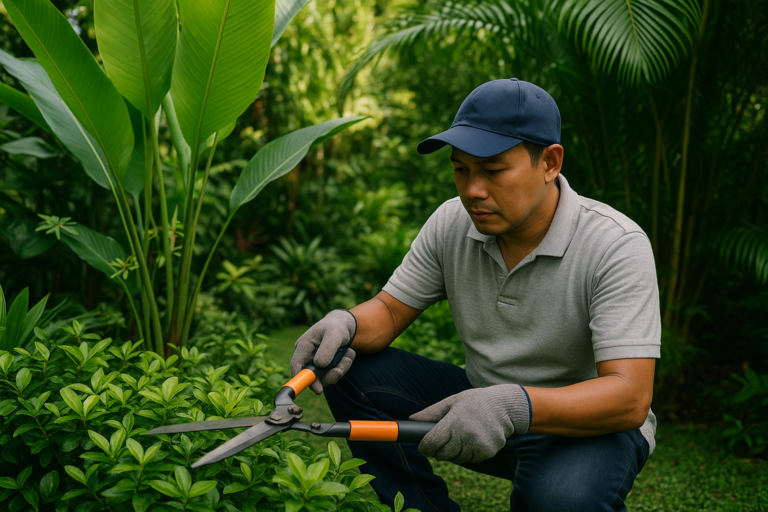
Two extremes cause trouble: hacking plants back hard at the wrong time, which shocks them, or never pruning, which leaves them leggy and overgrown. Topping trees — cutting the crown flat — is especially damaging.
The fix: prune lightly and regularly to shape, and leave large trees to professionals. Proper tree pruning by certified arborists keeps trees safe and healthy; bad cuts can ruin or even kill them.
Soil and planting mistakes
A surprising number of garden problems start below ground or with the wrong plant in the wrong place — both quietly set you up to fail.
6. Ignoring soil health
Treating soil as just something to stand plants in. Over time, nutrients deplete — especially with our heavy rain leaching them away — and plants slowly weaken and yellow.
The fix: top up beds with compost once or twice a year, mulch the surface to feed the soil as it breaks down, and feed plants appropriately. Healthy soil is the foundation of everything.
7. The wrong plant in the wrong place
Putting a shade-lover in full sun, a sun-lover in deep shade, or a thirsty plant next to a drought-tolerant one. The plant struggles no matter how much care it gets.
The fix: match each plant to its spot — sun, shade and water needs — and group plants with similar requirements together so one watering routine suits them all.
8. Overcrowding
Planting too close for an instant full look, then watching plants compete for light, water and nutrients while poor air circulation invites disease in our humidity.
The fix: space plants for their mature size, not their nursery size. It looks sparse at first but grows into a far healthier, fuller garden.
Routine and upkeep mistakes
The final two are about habits rather than technique — and in our fast-growing climate, habits are what make or break a garden.
9. Letting weeds get ahead
In Singapore’s growing conditions, weeds explode. Leave them and they steal nutrients, set seed and become a much bigger job within weeks.
The fix: weed little and often rather than in occasional marathons, and mulch beds generously to suppress weeds before they start. Prevention beats cure.
10. Neglecting regular upkeep
The biggest mistake of all: leaving the garden alone until it’s overgrown, then trying to fix everything at once. In our fast-growing climate, a garden left for a month becomes a major job.
The fix: little and often. A consistent maintenance routine keeps everything in check with far less total effort. Our landscape maintenance service keeps gardens healthy with regular, tailored visits.
The Singapore angle: why these mistakes hit harder here
Every one of these mistakes is amplified by our climate. The heat tempts people to overwater; the heavy rain drowns badly drained beds and washes nutrients from the soil; the constant warmth and moisture make plants and weeds grow explosively, so neglect snowballs fast. A garden that might coast for a month in a temperate country can deteriorate noticeably in a fortnight here.
That’s also why consistency matters more in Singapore than almost anywhere. A garden checked and tended regularly — even briefly — stays healthy and easy, while one left alone becomes a costly rescue project. The smartest approach is to design for easy care from the start, then maintain little and often. If keeping up is a struggle, regular professional maintenance is usually cheaper than repeatedly replacing failed plants and reviving an overgrown garden.
Frequently asked questions
What is the most common garden maintenance mistake?
Overwatering, by a wide margin. In Singapore’s heat people assume plants always need water, then drown the roots and cause rot. More plants die from too much water and poor drainage than from drought. Always check the soil before watering.
How often should I maintain my garden in Singapore?
Little and often beats occasional marathons. Light, regular attention — weeding, mowing and checking plants every week or two — keeps a garden healthy with far less total effort than letting it become overgrown and then rescuing it.
Why do my plants keep dying despite my care?
Often it’s the wrong care rather than too little — overwatering, poor drainage, or the wrong plant in the wrong spot. Check that each plant suits its position, that the soil drains, and that you water deeply only when the soil is dry.
Is it worth hiring help for garden maintenance?
For most properties, yes. Fast tropical growth, pruning safety and proper plant care make regular professional maintenance worthwhile — and it protects the money you’ve already invested in the garden by preventing the slow decline these mistakes cause.
Tired of fighting a losing battle with your garden? Let us keep it healthy and looking its best with regular, tailored care that prevents these mistakes before they start. Discover our landscape maintenance service or get in touch for a maintenance plan to suit your garden.