Choosing patio materials in Singapore comes down to a few honest trade-offs: how hot the surface gets underfoot, how it handles relentless rain and humidity, how slippery it becomes when wet, how much upkeep you’re willing to do, and of course cost. Timber, concrete and stone each win on some of these and lose on others. This guide compares them head to head so you can pick the surface that fits your home, your budget and our climate.
Whether you’re planning a small landed courtyard, a condo PES or a generous entertaining terrace, the right material makes the space more usable and far cheaper to live with over time.
The four things that actually matter here
Before comparing materials, get clear on the criteria that decide success in Singapore:
- Heat underfoot: dark, dense surfaces in full sun can get uncomfortably hot for bare feet.
- Slip resistance: everything gets wet here, so wet grip is non-negotiable.
- Drainage and movement: heavy rain plus reactive ground means falls and joints matter.
- Maintenance: humidity grows algae fast and timber needs periodic care.
Timber decking
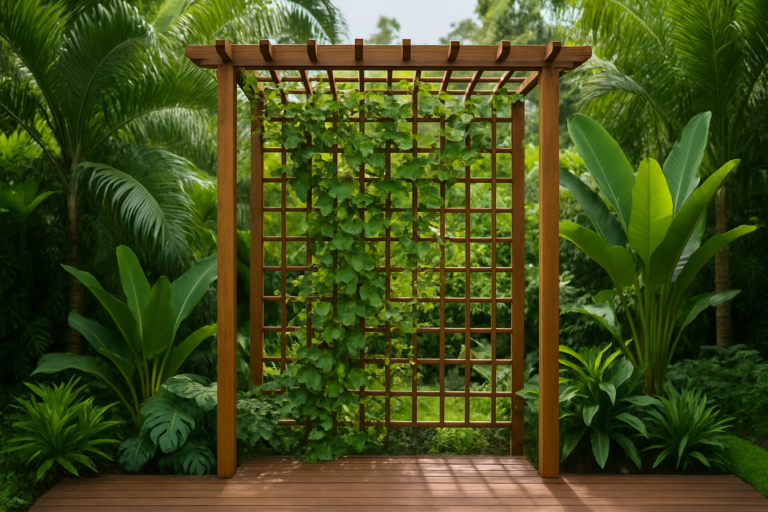
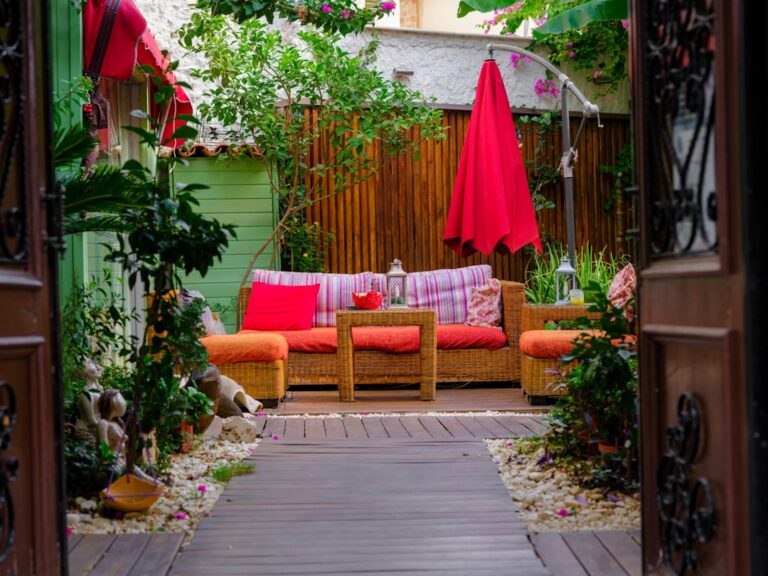
Warm, natural and comfortable underfoot, timber suits relaxed, resort-style gardens. Dense tropical hardwoods like chengal and balau perform well outdoors here, and composite decking offers a lower-maintenance alternative.
- Pros: stays cooler than dark stone, feels good barefoot, looks natural, easy to lift for access to services beneath.
- Cons: hardwood needs periodic oiling to keep colour; any timber can grow slippery in shade; substructure and ventilation must be right.
Timber is often the best choice for raised areas, pool decks and platforms over uneven ground. See our timber decking and structures work for what’s possible.
Concrete
Concrete is the workhorse — versatile, durable and cost-effective, with finishes ranging from smooth trowelled to brushed, exposed-aggregate, stamped or polished.
- Pros: hard-wearing, seamless looks, flexible finishes and colours, generally lower material cost, very low maintenance.
- Cons: can crack if not jointed and laid properly; smooth finishes get slippery when wet; light colours show grime, dark ones get hot.
A brushed or lightly textured finish gives good wet grip. Proper sub-base preparation, reinforcement and control joints are what keep concrete from cracking — this is squarely civil and hardscape work, not a DIY pour.
Stone and porcelain pavers
Natural stone (granite, sandstone, basalt) and porcelain pavers give a premium, characterful finish. Porcelain in particular has become a favourite for its consistency and anti-slip options.
- Pros: beautiful and durable, huge range of looks, anti-slip porcelain is excellent around pools, can be laid on pedestals for drainage.
- Cons: higher material and laying cost; some natural stones stain or need sealing; dark stone gets hot; quality of laying is critical.
Side-by-side summary
- Coolest underfoot: timber and pale porcelain; avoid dark dense stone in full western sun.
- Best wet grip: textured timber, brushed concrete, anti-slip porcelain.
- Lowest maintenance: concrete and porcelain; composite decking close behind.
- Most natural feel: hardwood timber, then natural stone.
- Most budget-friendly: concrete, generally.
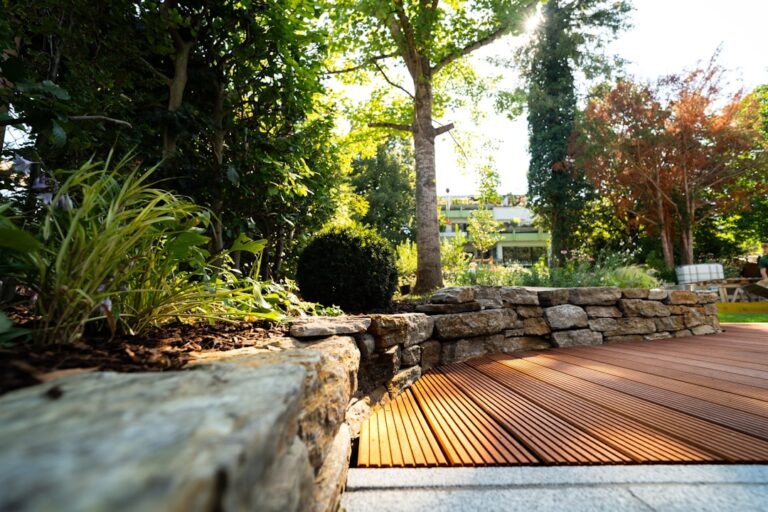
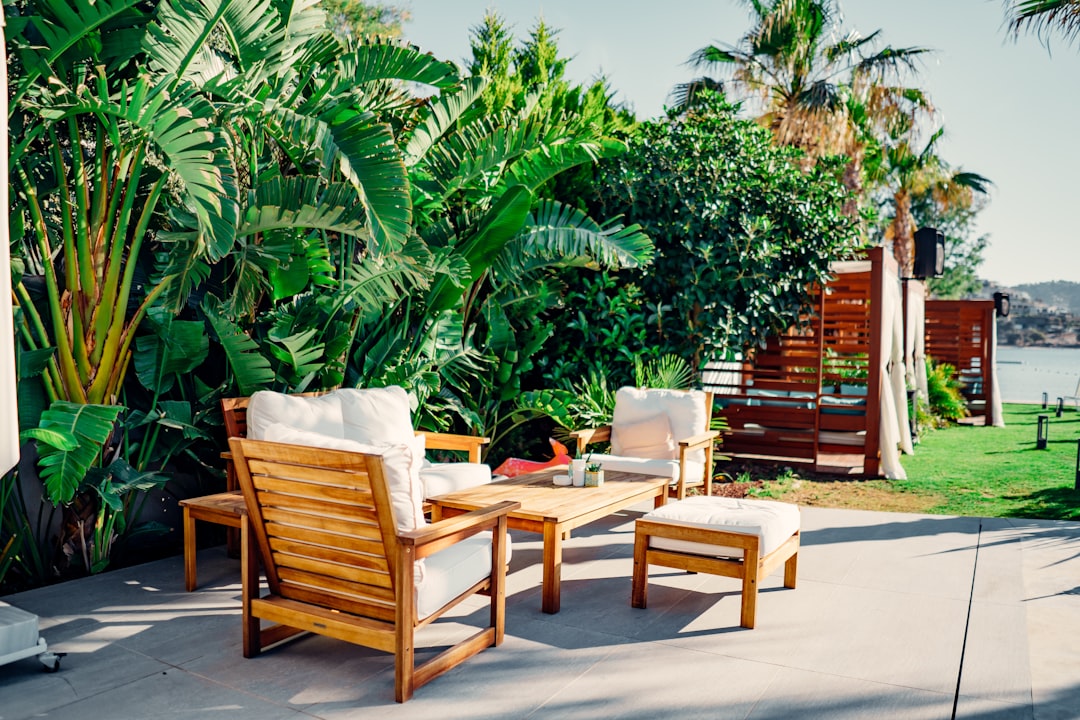
Many of the best patios mix materials — timber for the lounging zone, porcelain or concrete for the dining area, stone as a feature edge.
The Singapore angle
Our climate should drive the decision more than fashion. The afternoon western sun is intense, so a dark stone terrace that bakes all afternoon may sit unused; timber or a paler surface stays friendlier to bare feet. Daily rain means every patio needs falls to drain and joints that cope with movement — water that ponds becomes a slip and algae problem within weeks. High humidity grows biofilm fast in shade, so shaded patios need surfaces and a cleaning routine that keep them safe. Reactive and made-up ground on many sites means the sub-base preparation matters as much as the surface you see. And for condo and strata homes, check with the MCST or managing agent on waterproofing and drainage connections before starting. We weigh all of this on a site visit rather than recommending one material for every garden.
What each costs, roughly
Treat these as broad guidance, not quotes. Concrete is usually the most economical, especially over larger areas. Hardwood timber and good composite sit in a middle-to-upper band once the substructure is included. Natural stone and quality porcelain are typically the premium options, with laying labour a big part of the figure. Across all of them, the unseen work — sub-base, falls, drainage, joints — protects your investment, so it’s the wrong place to economise. A proper measure and quote will be far more accurate than any per-square-metre rule of thumb.
Frequently asked questions
Which patio material stays coolest in Singapore?
Timber decking and pale-coloured porcelain or concrete stay more comfortable underfoot than dark, dense natural stone, which can get very hot in full afternoon sun. If the patio bakes in the western sun, lean toward lighter or timber surfaces.
Will a concrete patio crack in our climate?
Properly laid concrete with a sound sub-base, correct reinforcement and control joints resists cracking well. Cracking usually comes from poor preparation or missing joints. It’s worth having concrete laid as proper hardscape work rather than as a quick pour.
What’s the most low-maintenance patio surface?
Concrete and porcelain are the lowest-maintenance options, needing little more than regular cleaning. Composite decking is close behind. Natural hardwood is lovely but needs periodic oiling to keep its colour.
Can I mix materials on one patio?
Yes, and it often looks best. A common approach is timber for lounging zones and concrete or porcelain for dining and high-traffic areas, with stone as a feature. The key is coordinating levels, falls and drainage across the materials.
Not sure which patio material suits your garden and our climate? We design and build patios across Singapore in timber, concrete and stone, with the groundwork done properly. Explore our civil and hardscape works or get in touch for a site visit and quote.