Philodendron care is about as forgiving as houseplant care gets, which is exactly why these plants are everywhere — trailing off shelves, climbing moss poles and filling bare corners with glossy leaves. From the easy heart-leaf philodendron to dramatic climbers and bold self-heading types, the genus offers something for every space and every level of plant experience. Best of all, they genuinely enjoy Singapore’s warm, humid air.
This guide is for anyone who wants their philodendrons to grow lush and full rather than thin and leggy. We will cover light, watering, support for climbers, feeding and pruning, and the common problems that crop up — most of which are easy to fix once you know what you are looking at.
Light: bright, indirect and flexible
Philodendrons are tropical understorey plants, so they thrive in bright, indirect light. A position near a window with filtered light, or a couple of metres back from a bright one, keeps them growing steadily with good-sized leaves.
They are more tolerant of lower light than many houseplants, which is part of their appeal — they will survive in a dimmer corner. But “survive” is not “thrive”: in low light, growth slows, stems stretch and leaves shrink and space out. Avoid harsh direct sun, which scorches the foliage. If your philodendron is getting leggy with small leaves, more light is almost always the answer.
Watering the right amount
Philodendrons like to dry out a little between waterings. The reliable approach is to let the top few centimetres of soil dry, then water thoroughly until it runs from the drainage holes, and tip away any excess from the saucer. Overwatering — leaving the roots in constantly wet soil — is the most common way people harm these plants.
- Check first: push a finger into the soil; water only when the top 2–3cm is dry.
- Water fully: soak until it drains, rather than little and often.
- Never waterlog: empty saucers and use a pot with drainage.
- Ease off in dim, cool spots: plants in air-conditioning and lower light drink less.
Support for climbing types
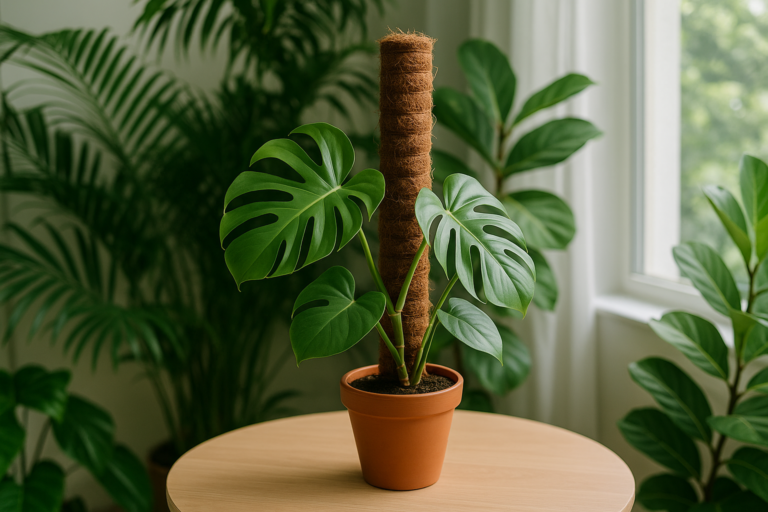
Many of the most striking philodendrons are natural climbers. In the wild they scramble up tree trunks, and given something to climb indoors they reward you with bigger, more mature leaves. A moss pole, coir pole or trellis gives the aerial roots something to grip and encourages that upward, fuller growth.
Keep a moss pole lightly moist so the aerial roots attach to it, and tie in new growth loosely until it takes hold. Trailing types like heart-leaf philodendron are happy left to cascade from a shelf or hanging pot — pinch the tips now and then to keep them bushy rather than stringy.
Feeding, soil and repotting
Use a well-draining, airy houseplant mix — something with bark or perlite worked through it so the roots get oxygen and the soil does not stay sodden. During the active growing months, feed with a balanced houseplant fertiliser at the recommended (or slightly reduced) strength, roughly monthly. Philodendrons are vigorous, so they appreciate regular feeding when in growth.
Repot every year or two, or when roots start circling the pot or poking out of the drainage holes. Move up just one pot size — too large a pot holds excess wet soil around the roots. Spring into the warmer part of the year is a fine time, but in our consistent climate philodendrons grow year-round, so timing is forgiving.
Common problems and quick fixes
Yellow leaves
Usually overwatering. Let the soil dry more between waterings and check the pot drains freely. An occasional yellow older leaf at the base is normal ageing.
Brown leaf tips
Often dry air or, less commonly here, inconsistent watering. In heavily air-conditioned rooms, a little extra humidity helps.
Leggy, small-leaved growth
Too little light. Move it brighter (still indirect) and give climbers a pole to encourage bigger leaves.
Pale, washed-out leaves
Can indicate too much direct sun or a need for feeding. Shift out of harsh light and feed during the growing months.
The Singapore angle: a plant that loves our climate
Philodendrons are tropical natives, so Singapore’s warmth and humidity suit them beautifully — they often grow faster and fuller here than in temperate homes. That vigour means more frequent pinching, tying-in and the occasional repot, but it also means quick, rewarding results.
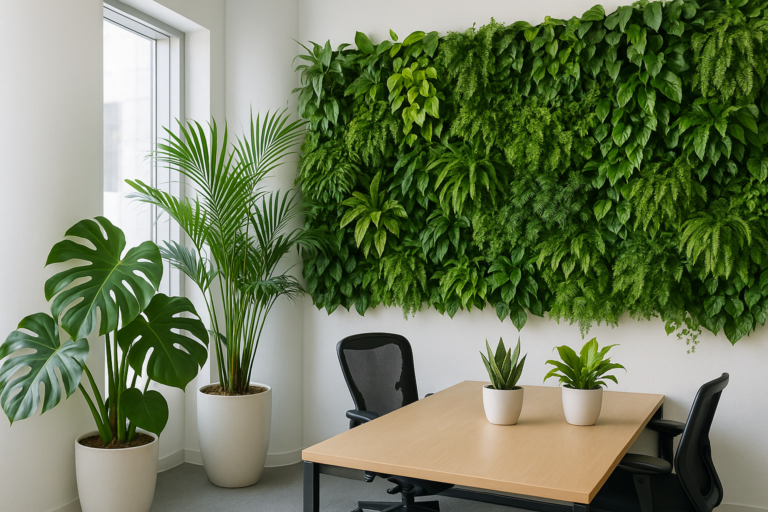
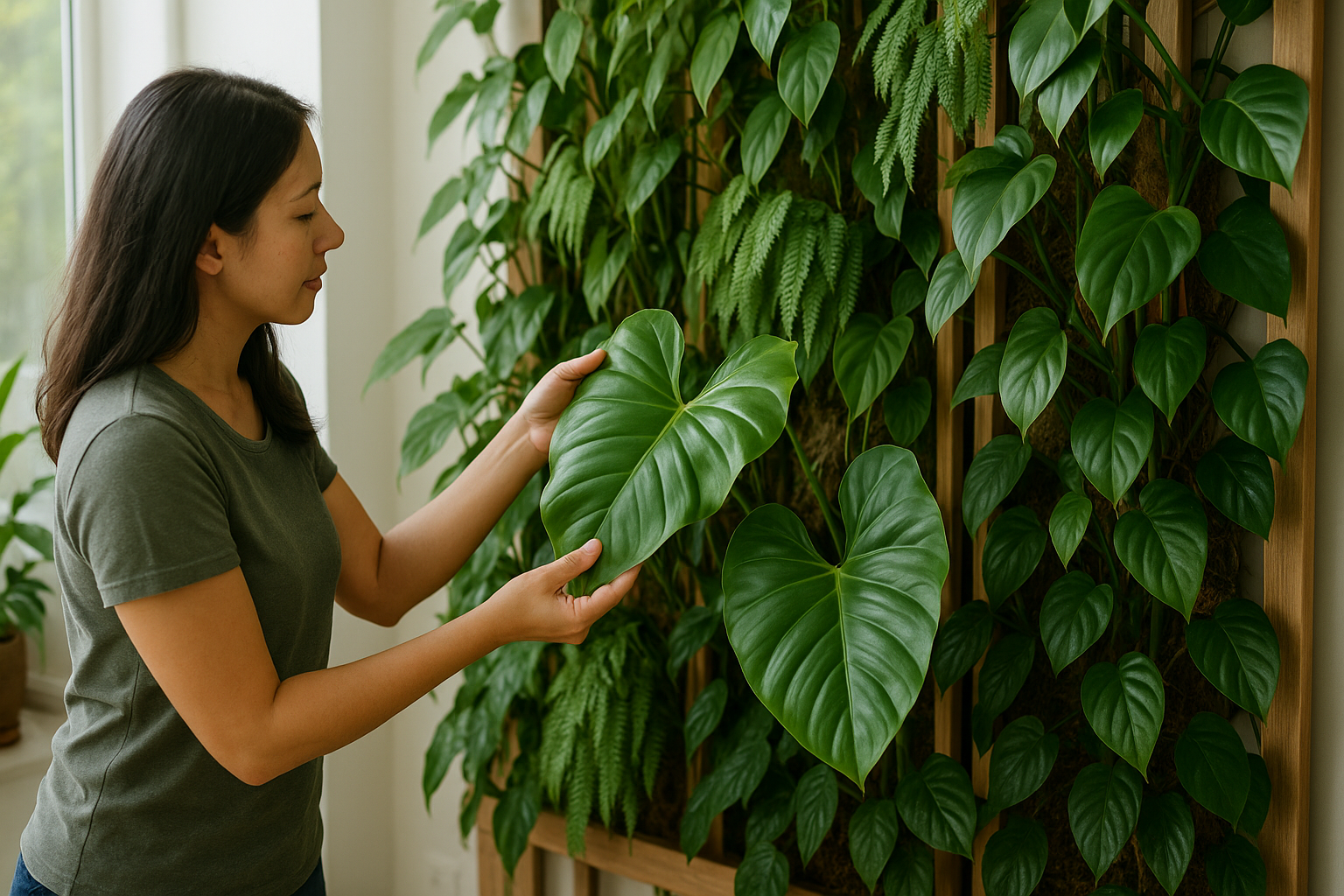
The main local consideration is, again, air-conditioning. Heavily air-conditioned rooms are drier and cooler than these plants prefer, slowing growth and crisping leaf tips. A philodendron struggling in an icy bedroom will often transform in a warmer, naturally lit living area or near a kitchen window. Climbing philodendrons also make superb material for indoor green features and living walls — our indoor landscaping and green wall teams use hardy climbers like these to create lush vertical greenery that holds up in Singapore interiors.
Frequently asked questions
How often should I water a philodendron in Singapore?
Water when the top 2–3cm of soil has dried out, which indoors often means roughly once a week — though air-conditioning, light and pot size all affect this. The key is to check the soil rather than water on a fixed day. They prefer to dry out slightly rather than stay constantly wet.
Why is my philodendron leggy with small leaves?
This is almost always too little light. Move it to a brighter spot with indirect light, and if it is a climbing type, give it a moss pole or trellis. Climbing support encourages the plant to produce larger, more mature leaves.
Do philodendrons need a moss pole?
Trailing types do not, but climbing philodendrons grow fuller and develop bigger leaves with support. A moss or coir pole lets the aerial roots attach and mimics how they climb trees in the wild. Keep the pole lightly moist to encourage the roots to grip.
Are philodendrons easy for beginners?
Yes, they are among the most forgiving houseplants and thrive in Singapore’s climate. Give them bright indirect light, water when the top of the soil dries, and avoid leaving them waterlogged, and they largely look after themselves.
Want lush, low-fuss greenery indoors — or a living wall of climbing foliage that actually thrives in our climate? Explore our indoor landscaping and vertical garden services, or contact us for plant advice and a quote.