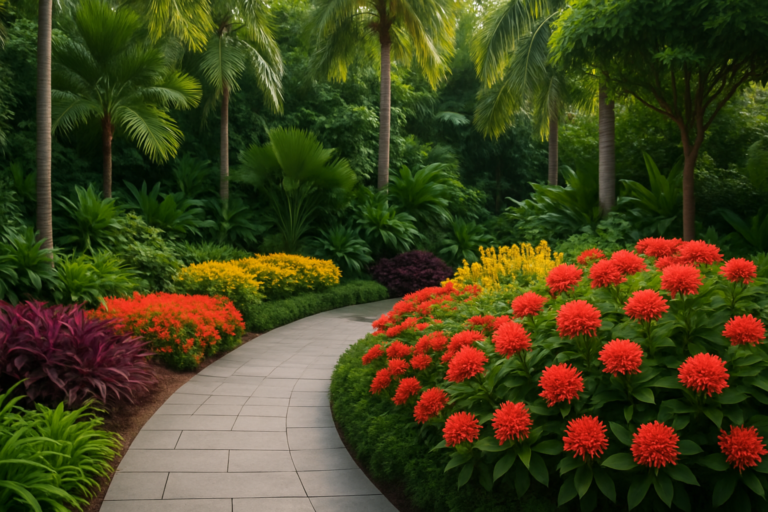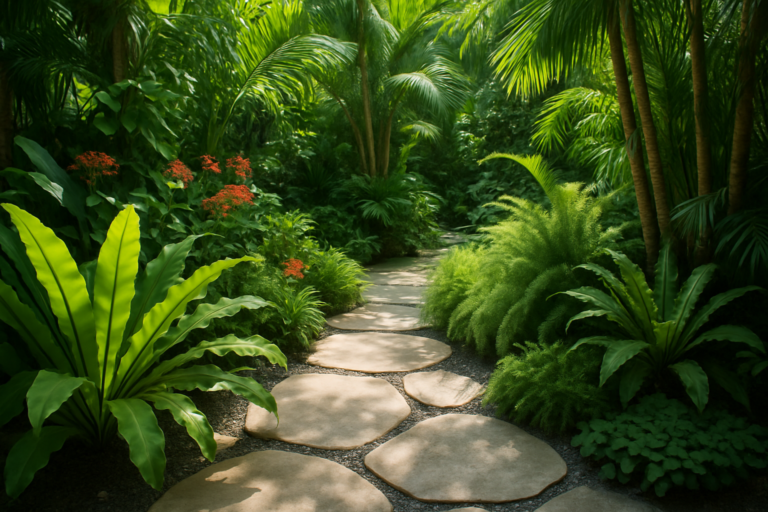
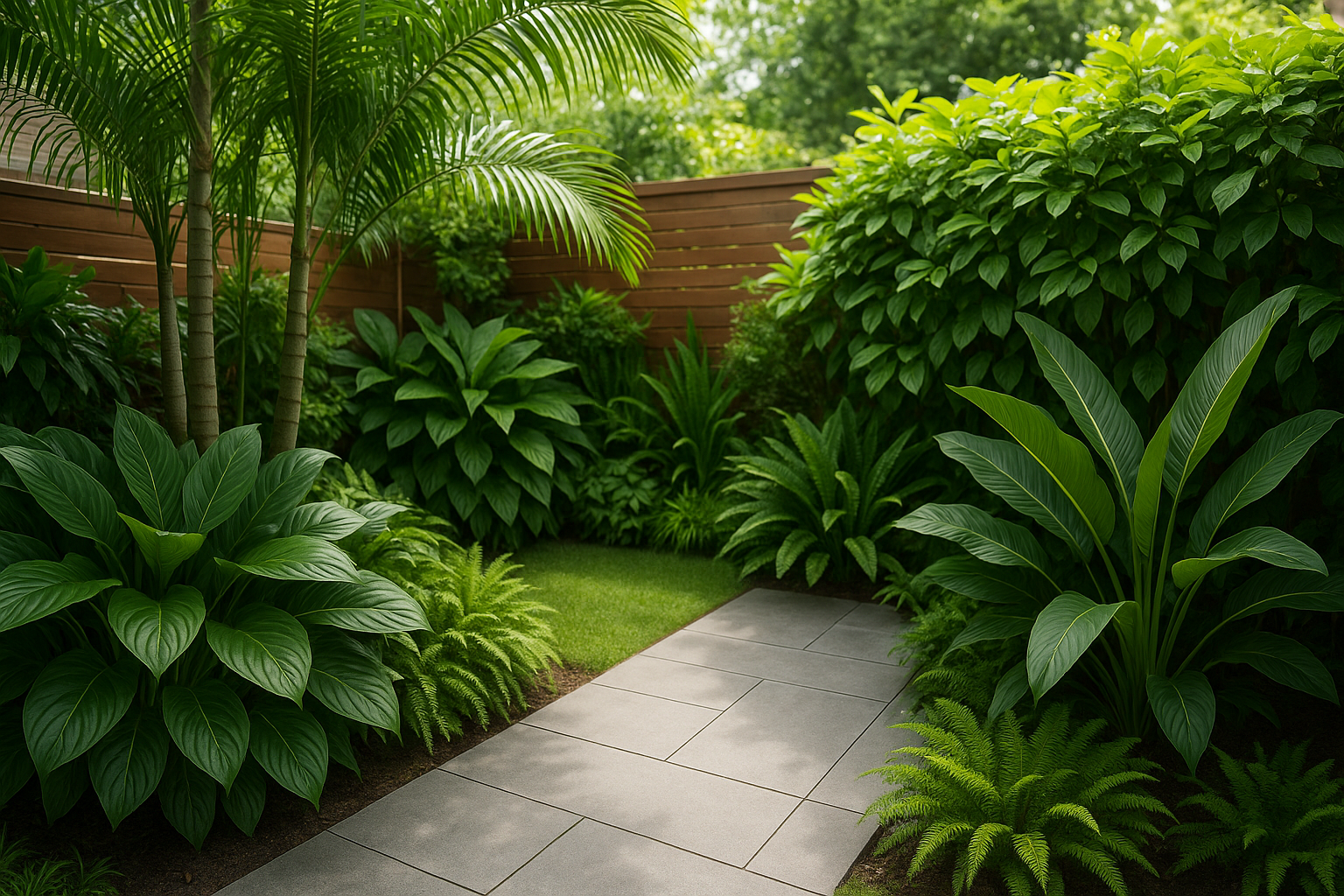
Private garden design is about turning an overlooked, exposed outdoor space into a secluded retreat — somewhere you can relax without feeling watched from every window. In Singapore’s dense housing, where condominiums tower over landed homes and neighbours sit close on every side, privacy is one of the most common things people ask us to solve. This guide covers the ideas and techniques that work.
We will look at how to read your privacy problem, the planting and structures that screen well, layering for a natural feel, and the local realities of designing for seclusion here.
Start by reading the problem
Good privacy design begins with understanding exactly where you are exposed and from where. Stand in the spots you actually use — the patio, the dining area, the pool — and look up and out. The solution differs depending on the sightline.
- Eye-level overlooking from a neighbour’s ground floor or a passing walkway needs screening at around two metres.
- Overlooking from above — high-rise windows or a neighbour’s upper storey — needs height, often a tree canopy or a tall structure with overhead cover.
- General openness rather than a specific watcher may just need a sense of enclosure to feel comfortable.
Matching the fix to the actual sightline saves you from over-building or planting the wrong thing in the wrong place.
Planting for privacy
Plants are the most natural way to screen, softening boundaries while adding greenery and shade.
Hedges and screening shrubs
A dense evergreen hedge is the classic boundary screen — formal if clipped, relaxed if left looser. In our climate, fast-growing screening shrubs fill in quickly, though that speed means regular trimming to keep them neat and at the right height.
Trees and tall planting
For overlooking from above, a well-placed tree or tall palm raises the screen into the canopy where you need it, casting useful shade as a bonus. Choose species that suit the space and won’t outgrow it. Our tree planting and upgrading service can help select and establish the right specimen, including more mature stock where you want privacy sooner.
Climbers and green screens
Climbing plants on a trellis or a planted green wall give a lush vertical screen in a narrow footprint — ideal where there is no room for a hedge. A green wall or vertical garden turns a bare boundary or wall into a living screen.
Structures and built screening
Where you need instant, reliable privacy, built elements do the job and can look superb.
- Slatted timber screens filter views and breeze while looking contemporary; pair with climbers for softness.
- Pergolas and overhead structures block sightlines from above and create a defined, sheltered retreat.
- Feature walls and fencing give a solid boundary you can render, clad or plant against.
Our timber decking and structures team builds screens, pergolas and slatted features, while civil and hardscape works covers walls and harder boundary elements.
Layer for a natural, finished feel
The most convincing private gardens never rely on a single tall fence — that reads as defensive and can feel boxed-in. Instead, layer the screening: a structure or hedge at the boundary, mid-height planting in front, and a tree raising cover above. The eye reads green depth rather than a barrier, and the space feels like a garden you have chosen to enclose, not a yard you have walled off.
The Singapore angle
Privacy is a particular challenge here because of how close and how tall our housing is. Landed homes often sit beside or beneath condominium blocks, so overlooking can come from many storeys up — which is why height and overhead cover matter as much as boundary screening. The tropical climate helps: planting grows fast and lush, so green screens establish quickly. The flip side is upkeep, since fast growth means regular trimming to keep screens dense and tidy.
There are practical limits too. Boundary structures and fences may have height and setback considerations, and on condominium grounds any works typically need MCST or managing-agent approval. Large screening trees can also affect neighbours and may need approval if significant. It is worth confirming what is allowed before building or planting along a boundary — something we routinely check as part of a design.
Bringing it together
The best results come from designing privacy into the whole garden rather than bolting on a fence after the fact. Our outdoor landscape and construction team plans screening, planting and structures together so the space feels secluded and beautiful. Browse our projects to see how private retreats can be carved out of overlooked spaces.
Frequently asked questions
What is the fastest way to make a garden private?
Built screens — slatted timber, a pergola or a feature wall — give instant, reliable privacy on day one. Pairing them with planting then softens the look over time. If you can wait, fast-growing hedges and green walls fill in quickly in our climate.
How do I screen out a high-rise overlooking my garden?
Boundary screening alone won’t help against windows several storeys up. You need height and overhead cover — a well-placed tree canopy or a pergola over the area you use most — to break those downward sightlines. Layering planting at different heights makes it feel natural.
Are there rules about boundary fences and screens in Singapore?
There can be limits on height and placement, and on condominium grounds works usually need MCST or managing-agent approval. Rather than assume, it is best to check what applies to your property before building along a boundary — we handle this as part of planning a job.
Will privacy planting block all my light and breeze?
It doesn’t have to. Slatted screens and the right plant choices filter views while letting light and air through, and layered planting screens selectively rather than walling everything off. Good design keeps the garden private and still bright and breezy.
Want a garden that feels like a private retreat rather than a fishbowl? Talk to our design and build team or get in touch through our contact page for tailored privacy solutions.