Rental garden maintenance is one of those grey areas that trips up tenants and landlords alike. You want the outdoor space to look good and not cost you a deposit, but you may not want to invest in a garden you do not own. This guide sets out who is usually responsible, how to keep a rented garden tidy without overcommitting, and how to avoid disputes when the lease ends.
It is written for tenants renting landed homes or ground-floor units with a garden, and for landlords who want their property kept in good order between tenancies. We cover responsibilities, low-effort upkeep and the smart way to share the load.
Who is responsible for the garden?
The first thing to settle is what your tenancy agreement actually says. Garden responsibility varies and is often vaguely worded, so check before assuming. As a general guide:
- Routine upkeep — mowing, weeding, watering and keeping things tidy — usually falls to the tenant who has day-to-day use of the garden.
- Major works — tree pruning, replacing dead established plants, drainage and structural repairs — are typically the landlord’s responsibility.
- Anything ambiguous is worth clarifying in writing at the start, so there are no arguments at the end.
If the lease is silent on the garden, raise it early. A short written agreement on who does what — and who pays for a gardener if one is engaged — saves a lot of friction later.
Document the garden at move-in
This step protects both sides. At the start of the tenancy, photograph the garden thoroughly — lawn, beds, plants, trees, paving and structures — and keep the images dated. An accurate record of the garden’s condition on day one means there is no dispute later about whether a patch was already worn or a plant already struggling. Include it in the inventory or handover report if you can.
Low-commitment ways to keep it tidy
If you are renting, the smart approach is to keep the garden neat and healthy without sinking money into permanent changes you cannot take with you. Focus on upkeep rather than redesign.
Keep the basics under control
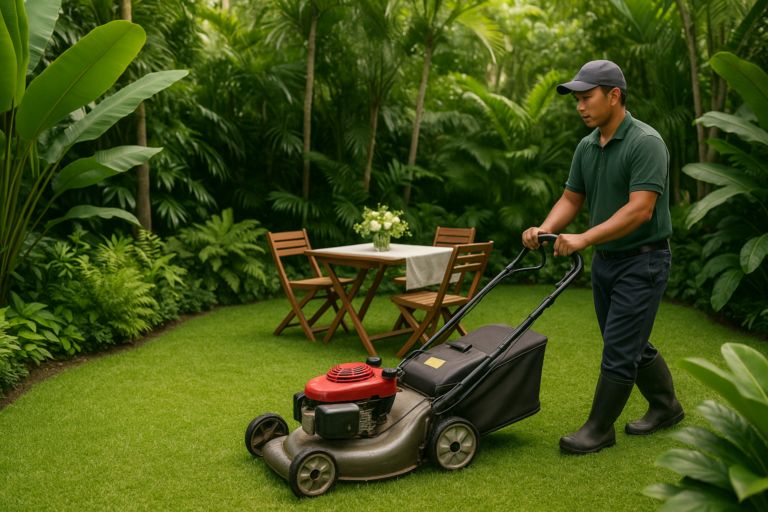
- Mow the lawn regularly so it stays dense and weed-free rather than letting it get away from you.
- Pull weeds while they are small — far easier than tackling an overgrown bed before an inspection.
- Sweep paths and patios and clear leaf litter, which makes the whole space look cared for.
- Keep drains and gullies clear so heavy rain does not cause water to pool or damage.
Garden with pots, not the ground
If you want to add greenery or colour, do it in containers. Potted plants, herbs and flowers brighten the space, they are yours to take when you leave, and they make no permanent change to the landlord’s garden. This is by far the most sensible way for a tenant to enjoy a garden without complicating the lease.
Avoid permanent changes without permission
Resist the temptation to make structural changes — removing established plants, laying new paving, building beds or cutting down trees — without the landlord’s written consent. These can breach the tenancy and leave you liable for restoration. In Singapore, work on larger trees in particular may also need approval depending on the tree and location, so it is never something a tenant should arrange alone. When in doubt, ask the landlord first.
The Singapore context
Our climate makes rental gardens grow fast — lawns shoot up, weeds spread and plants put on bulk quickly in the heat and rain. That means a rented garden can go from tidy to jungle in a matter of weeks if it is ignored, so little-and-often upkeep is far easier than occasional blitzes. Heavy tropical downpours also make clear drains and good water flow important, since blocked gullies and pooling water can cause damage that becomes a dispute at handover.
For landed rentals especially, many landlords and tenants find it simplest to engage a regular gardener and agree upfront who pays. A scheduled visit keeps the garden consistently presentable, removes the argument over whose job it is, and protects the property’s condition between tenancies. Our landscape maintenance service is well suited to this, with regular visits that keep everything in order, and where trees on the property need attention our tree pruning team can handle it safely and with the right approvals.
Tips for landlords
- Spell out garden responsibilities clearly in the tenancy agreement to avoid grey areas.
- Consider including a maintenance service in the rent for larger gardens, so upkeep is guaranteed regardless of the tenant.
- Inspect the garden between tenancies and address structural or tree issues promptly, before they worsen.
- Keep your own dated photos at each handover as a record of condition.
Frequently asked questions
Is the tenant or landlord responsible for the garden?
It depends on the tenancy agreement, but as a general rule tenants handle routine upkeep like mowing, watering and weeding, while landlords cover major works such as tree pruning, drainage and replacing established plants. Always check the lease and clarify anything ambiguous in writing at the start.
Can I plant things in a rented garden?
Yes, but the safest approach is to use pots and containers, which keep your plants portable and avoid permanent changes to the landlord’s garden. Avoid removing existing plants or planting large trees in the ground without written permission, as that can cause problems at the end of the tenancy.
What happens if the garden is overgrown when I move out?
If routine upkeep was your responsibility under the lease, you may be charged for restoring an overgrown garden, which is why move-in photos and regular maintenance matter. Keeping it tidy throughout the tenancy is far cheaper than a clearance at the end.
Should a rental include a gardener?
For larger landed gardens it often makes sense, because a scheduled service keeps the property presentable and removes any dispute over responsibility. Landlords and tenants simply need to agree upfront who arranges and pays for it.
Whether you are a tenant who wants the garden kept tidy without the hassle, or a landlord protecting your property between tenancies, a regular maintenance arrangement takes the worry out of it. See how our maintenance service works or contact us for a quote and we will keep your rental garden in great shape.