Garden drainage problems rarely announce themselves all at once. They creep in — a patch of lawn that stays soggy, a bed where plants keep dying, a faint musty smell after rain. Spotting these signs early, especially in Singapore’s high-rainfall climate, can save you from drowned plants, damaged structures and an expensive overhaul down the line.
This guide walks through the clearest warning signs that your garden has a drainage issue, what each one is telling you, and what to do about it before the problem spreads.
Why early detection matters here
In our climate, drainage problems escalate fast. With heavy rain falling year-round and no dry season to let the ground recover, a minor soggy patch can become a permanent bog within months. Caught early, many issues are straightforward to fix; left to fester, they rot roots, undermine walls and breed mosquitoes. Knowing the signs lets you act before that happens.
The clear warning signs
1. Water that won’t drain away
The most obvious sign: puddles that linger for hours, or into the next day, after rain. On a healthy garden, surface water clears within an hour or two. Standing water means it has nowhere to go.
2. Soggy, spongy lawn
If walking on the grass leaves squelchy footprints or the turf feels permanently waterlogged underfoot, the soil below is saturated and can’t drain.
3. Plants dying or struggling for no clear reason
Yellowing leaves, wilting despite wet soil, and plants that simply rot away often point to waterlogged roots starved of air — not to pests or under-watering. Bare patches in beds and lawn where nothing thrives are a tell-tale sign.
4. Moss, algae and persistent damp
Moss creeping across lawn and paving, slippery green algae, and a musty smell all indicate ground that stays wet far too long.
5. Mosquitoes and standing water
Any pooling water that hangs around becomes a mosquito breeding site — a genuine concern in Singapore and a clear flag that drainage isn’t coping.
6. Erosion and silt trails
Channels carved into beds, soil washed onto paths, and silt deposits show water is running across the surface with force because it can’t soak in.
7. Damp against the house or walls
Water pooling at the base of the house, damp patches on retaining walls, or efflorescence (white powdery deposits) signal water collecting where it shouldn’t — a problem that can lead to structural damage if ignored.
What each sign is telling you
- Lingering puddles + soggy lawn → compacted or clay soil, or poor levels with no outlet.
- Plants rotting in wet soil → saturated root zone; the soil never dries out.
- Erosion and silt → surface runoff moving too fast across ground that can’t absorb it.
- Damp at walls and house → water flowing towards the structure instead of away, often a levels problem.
Reading the signs together tells you whether you’re facing a soil issue, a levels issue, a capacity issue, or a mix. That diagnosis shapes the fix.
The Singapore angle: where problems hide
Several local factors make drainage problems especially common — and easy to miss until they’re serious. Heavy clay and compacted builder’s fill across much developed land resist infiltration. Tightly packed developments can send runoff from neighbouring or higher land into your garden. And intense tropical downpours overwhelm drainage that was only ever sized for light rain.
A few things to watch for locally: damp creeping towards the house in landed properties, since chronic moisture against foundations is costly to remedy; standing water near mature trees, as waterlogged roots can destabilise established trees over time and warrant arboricultural advice; and persistent flooding in condo common areas, which is the MCST’s responsibility and should be reported to your managing agent. If several of the signs above ring true, a professional drainage assessment will pinpoint the cause quickly.
What to do when you spot the signs
- Confirm the pattern: watch the garden during and after rain — where water collects, how long it stays, which way it flows.
- Do a soak test: dig a 30cm hole, fill with water, and time the drainage. Slow draining confirms a soil or sub-surface issue.
- Check the easy stuff: clear blocked drains and gully gratings; sometimes that alone helps.
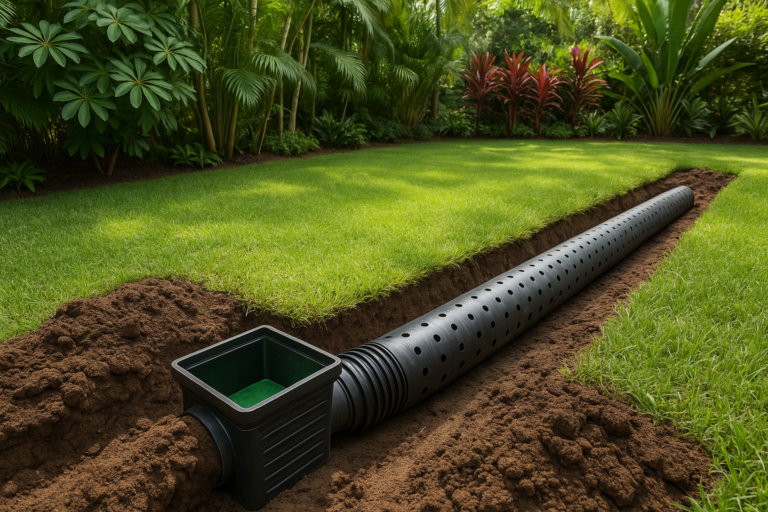
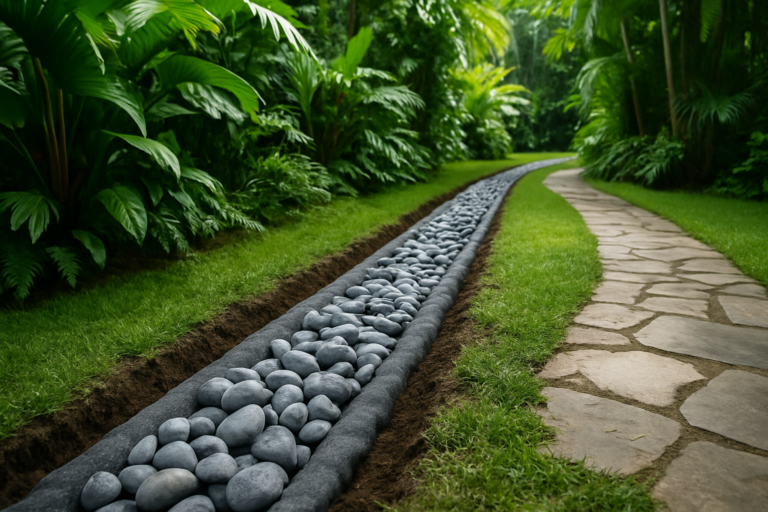
- Get an assessment if the problem persists, so the right solution — re-grading, French drains, channel drains or sub-soil drainage — is chosen rather than guessed.
Many drainage issues are fixable with the right approach, and tackling them early is far cheaper than replacing dead lawn and plants season after season — or repairing a damp-damaged wall.
Don’t ignore the small signs
The biggest mistake homeowners make is waiting until the garden is visibly flooding. By then, plants are already lost and structures may be affected. A soggy corner, a patch where grass won’t grow, a musty smell — these are early invitations to act. Address drainage now, ideally alongside any planned landscape works, and you save yourself a far bigger job later.
Frequently asked questions
How do I know if my garden has a drainage problem?
The clearest signs are water that lingers for hours after rain, a permanently soggy lawn, plants rotting in wet soil, moss and algae spreading, mosquitoes around standing water, and damp at the base of walls or the house. If you notice several of these, your garden almost certainly has a drainage issue worth investigating.
Can poor drainage damage my house?
Yes. Water collecting against the house or retaining walls can cause damp, efflorescence and, over time, structural problems and foundation issues. Damp creeping towards the building is one of the most important signs to act on quickly, as remedying water damage to a structure is far costlier than fixing the drainage.
Why are my plants dying even though the soil is wet?
Counter-intuitively, too much water is often the culprit. Waterlogged soil starves roots of the air they need, causing them to rot and the plant to yellow, wilt and die despite the wet conditions. This is a classic sign of poor drainage rather than under-watering or pests.
Should I fix drainage myself or call a professional?
Clearing blocked drains or improving a small bed’s soil is fine to try yourself. But persistent problems, damp at the house, or whole-garden waterlogging need proper diagnosis and engineered solutions. Guessing wastes money on fixes that miss the cause, so an assessment is worthwhile once the simple checks don’t solve it.
Noticing the warning signs in your own garden? Don’t wait for it to flood. We assess drainage problems across Singapore and install lasting solutions sized for our rain. Explore our drainage works service or book an assessment and we’ll get to the root of it before it spreads.