DIY tree removal looks straightforward on a weekend video, but on a real Singapore property the picture is more complicated. A small sapling in a planter is one thing; a mature angsana leaning over a shared driveway is quite another. Knowing where the line sits between a safe home job and work that needs a professional team protects your property, your neighbours and yourself.
This guide explains what you can sensibly tackle yourself, the warning signs that mean you should stop, and the local considerations — from NParks approval to MCST rules — that homeowners and facility managers often miss.
What counts as DIY tree removal?
When most people picture removing a tree, they imagine felling a large trunk. In reality, the safe DIY end of the spectrum is much smaller. As a rule of thumb, work you can reach comfortably from the ground, with no power tools and no risk to people or structures below, is the realistic limit for a homeowner.
- Pulling out seedlings and young self-sown saplings under roughly two metres.
- Trimming light, low branches with hand secateurs or loppers.
- Clearing a dead potted tree or a shrub with a shallow root ball.
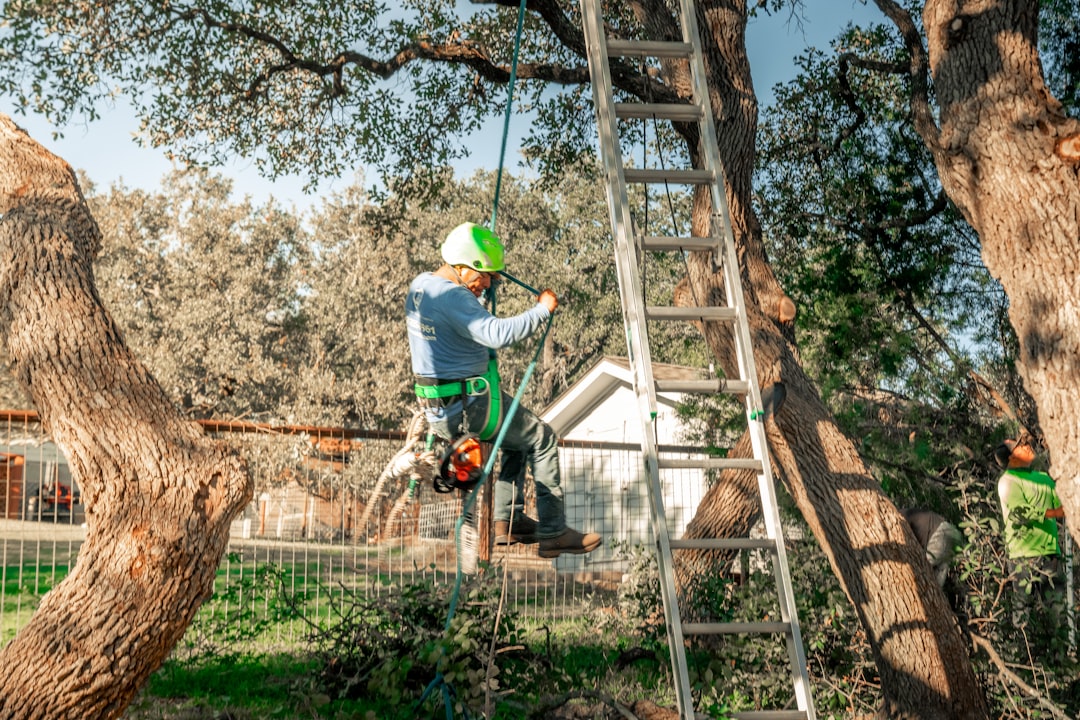
Once you need a ladder, a chainsaw, or a rope, you have moved out of DIY territory and into work that carries real injury and liability risk.
When you should call a professional
Some jobs are simply not suited to a do-it-yourself approach, no matter how capable you are with tools. Call an arborist or tree contractor if any of the following apply.
The tree is large or mature
Anything with a substantial trunk, a heavy canopy, or significant height needs controlled dismantling. Large limbs are far heavier than they look and fall unpredictably. Professionals section a tree down in pieces, often roping each cut, so nothing drops where it is not meant to.
It is near buildings, fences, cables or roads
A tree close to your house, your neighbour’s wall, an overhead line, or a public footpath leaves no margin for error. A misjudged cut can damage property you are then liable for, or worse, injure a passer-by.
The tree is dead, diseased or storm-damaged
Dead and decaying wood behaves unpredictably under a saw — branches can shatter or the trunk can split without warning. A tree that has already been weakened by rot or a storm is one of the most dangerous to handle and is firmly a job for trained hands.
The Singapore angle: approval, climate and neighbours
Singapore adds a few local layers that DIYers often overlook. Many trees here are protected, and depending on the species, location and the tree’s girth you may need approval before any removal goes ahead. As a general principle, do not assume a mature tree can simply be cut down — check whether NParks consent is required first, and keep evidence of any permission.
If you live in a condominium or strata development, the tree is almost certainly common property, which means the MCST or managing agent — not an individual owner — controls what happens to it. Removing or even heavily pruning it yourself can breach by-laws and leave you facing a reinstatement bill.
Our climate matters too. Constant heat, humidity and heavy rain mean trees grow fast and root deeply, and waterlogged ground after a downpour makes felling far less predictable. A trunk that seems stable on a dry morning can shift once the surrounding soil is saturated.
The hidden risks of DIY removal
The danger is not only the cut itself. Several risks catch people out after the felling.
- Underground services. Roots often grow around drainage, irrigation lines and cables. Digging out a stump blind can sever them.
- Property damage liability. If a falling limb cracks a neighbour’s roof or your own boundary wall, the cost can dwarf any saving.
- Stump and regrowth. Many tropical species resprout vigorously from a cut stump. Without proper stump treatment, you may be back to square one within months.
- Disposal. Green waste in volume is heavy and awkward; clearing it is often the most laborious part of the whole job.
A safer middle ground: pruning before removal
Removal is not always the answer. A tree that is outgrowing its space, casting too much shade or dropping debris can sometimes be brought back under control with proper crown reduction or thinning. Professional tree pruning can extend a tree’s useful life by years and is far less drastic — and usually less costly — than full removal. If a tree is healthy but simply too big for its current spot, transplanting may even be an option through specialist tree upgrading and transplanting services rather than losing it entirely.
What professional removal involves
When you do bring in a team, a competent job follows a clear sequence: a site assessment of the tree’s condition and surroundings, confirmation of any approval needed, controlled dismantling or felling, stump grinding or treatment, and full removal of green waste. As a rough guide, costs scale with the tree’s size, access difficulty and how close it sits to structures — a tight, awkward space with no crane access will always cost more than an open garden. Always ask for a clear, itemised quotation rather than a single lump sum.
Frequently asked questions
Do I need approval to remove a tree in my own garden?
Possibly. Many trees in Singapore are protected, and approval can hinge on the species, the location and the trunk’s girth. Before removing any established tree, check whether NParks consent is required and, if you are in a condo, whether the tree is common property controlled by the MCST. When in doubt, ask before you cut.
Is it cheaper to remove a tree myself?
It can look cheaper, but the real cost includes tool hire, safety risk, disposal of heavy green waste, and the liability if something goes wrong. For anything beyond a small sapling, the saving rarely justifies the risk, and a botched DIY job can cost more to put right.
How do I know if a tree is dangerous?
Warning signs include large dead branches, a leaning trunk that has shifted recently, cracks or cavities, fungal growth at the base, and lifting soil around the roots. Any of these on a sizeable tree warrants a professional inspection rather than a DIY attempt.
What happens to the stump after removal?
A stump can be ground down below ground level or chemically treated to prevent regrowth. Many tropical species resprout aggressively, so dealing with the stump properly is an important part of the job, not an optional extra.
If you are weighing up DIY tree removal and are not certain it is safe, get a professional assessment before you start. Our arborists can advise on whether pruning, transplanting or removal is the right call, handle any approvals, and carry the work out safely — explore our tree care services or get in touch for a site visit and quote.
When it’s a job for the pros
For anything large, leaning or near buildings, leave it to a team — we handle tree cutting and removal safely, with full site clearing.


