An all weather garden is one you can actually use whatever the sky is doing — and in Singapore, where a blazing afternoon can turn into a tropical downpour within the hour, that flexibility is the difference between a garden you enjoy daily and one you only admire from indoors. Designing for all weather means planning for our two dominant conditions, intense sun and heavy rain, so the space stays comfortable and functional year-round.
This guide covers the key principles of all-weather garden design for Singapore, from shade and shelter to drainage and durable materials, so your outdoor space earns its keep in every season.
Shade from the sun
The first enemy of an unusable garden is the sun. A space with no shade is simply too hot to sit in for much of the day, no matter how beautiful it looks. Building in proper shade is the single most effective way to extend the hours your garden is comfortable.
Built shade
- Pergolas and timber structures create permanent shaded zones and double as a focal point.
- Retractable awnings or sail shades give flexible cover that you can adjust through the day.
- Roofed patios or covered terraces offer the most reliable all-day shelter.
Natural shade
Trees and tall planting provide cooling, dappled shade and make a garden feel calmer. A well-placed shade tree can transform a sun-baked corner — though it needs the right species and ongoing care. Combining built and natural shade gives you cover that suits different times of day and different spots.
Shelter from the rain
The second factor is rain — frequent, heavy and often sudden. An all-weather garden gives you somewhere to stay dry without retreating indoors, so a passing storm does not end your evening outside.
A covered structure — a roofed terrace, a solid pergola with a weatherproof top, or a sheltered nook — lets you keep enjoying the garden through a downpour, watching the rain rather than running from it. Position these sheltered zones where you most want to sit or dine, and consider how people move between the house and the garden so they can do so without getting soaked. Quality timber decking and structures are a natural choice for building this kind of sheltered outdoor room.
The Singapore angle: drainage is everything
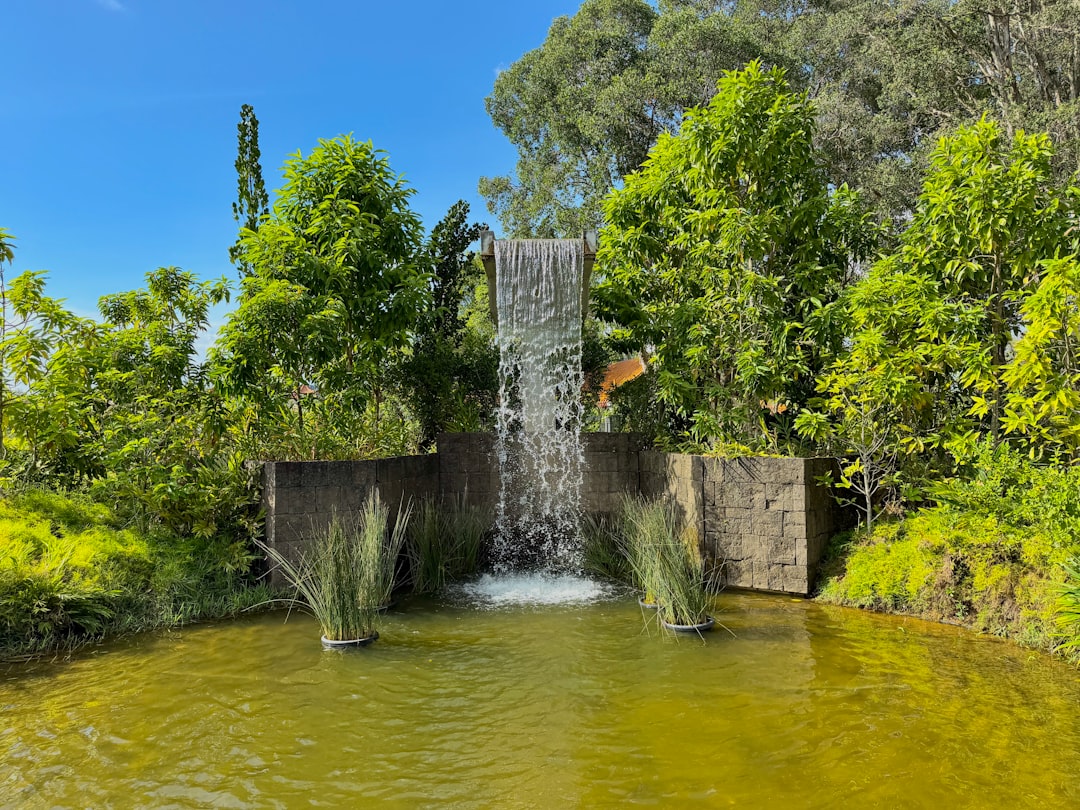
No element matters more to an all-weather garden in Singapore than drainage. With the volume of rain we get, a poorly drained garden becomes a swamp — soggy lawns, flooded paths, standing water and the mosquitoes and rot that follow. A garden you cannot walk across after rain is not an all-weather garden at all.
Designing for our rainfall means planning where water goes from the very start:
- Surfaces should shed water to where it can drain away, never towards the house.
- Lawns and beds need to drain freely so they recover quickly after a storm.
- Low spots that collect water should be addressed with proper drainage rather than left to puddle.
- Hard surfaces benefit from gentle falls and, where suitable, permeable materials that let water through.
Getting this right is specialist work. Properly engineered drainage works are the foundation that makes everything else in an all-weather garden function — without them, even the best-designed space fails after the first heavy storm.
Durable, all-weather materials
An all-weather garden also needs materials that take constant sun, rain and humidity in their stride without warping, fading badly or becoming slippery and dangerous.
- Slip resistance. Paths and decks should stay safe underfoot when wet — a key safety point given how often surfaces are rained on here.
- Weather resistance. Choose paving, decking and timber suited to constant exposure and our humidity.
- Low upkeep. Durable materials that resist mould and weathering keep maintenance manageable in our climate.
Well-specified civil and hardscape works for paving and surfaces ensure the garden stays safe and good-looking through year-round exposure.
Comfortable planting and microclimate
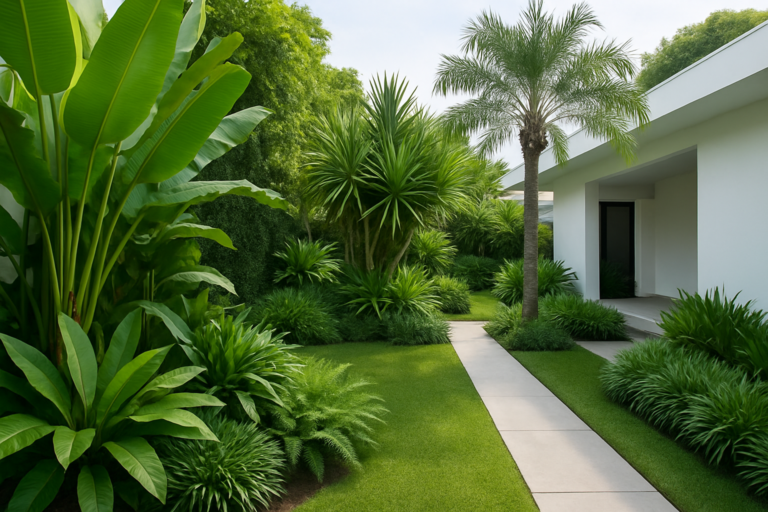
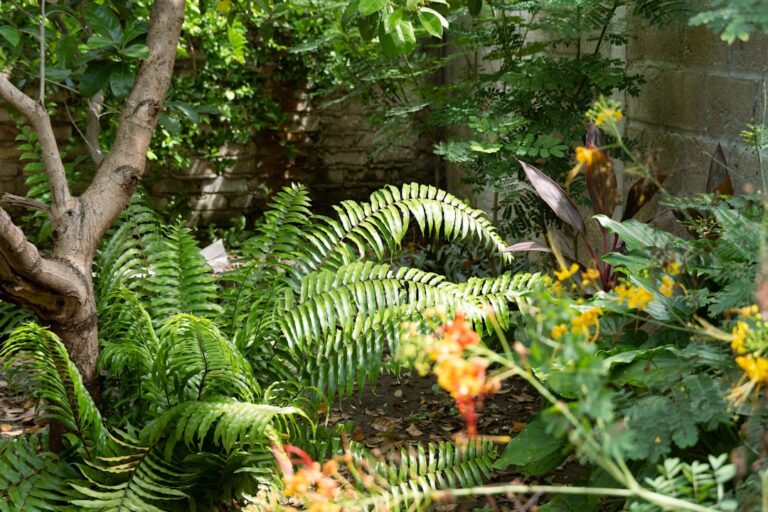
An all-weather garden feels better when the planting works with the conditions too. Trees and dense planting cool the air and soften the heat, creating pleasant microclimates in what would otherwise be exposed spots. Choose hardy, climate-suited plants that cope with both downpours and intense sun, and place lush, cooling greenery around the areas where you sit. The right planting makes a garden feel several degrees more comfortable and far more inviting in all weather.
Bringing it all together
An all-weather garden is the product of several elements working as one: built and natural shade for the sun, sheltered zones for the rain, robust drainage as the foundation, durable slip-safe materials, and cooling, hardy planting. Because these parts depend on each other — shade is useless over a flooded patio, and durable paving fails on poorly drained ground — this kind of garden rewards an integrated design. A full outdoor landscape and construction approach plans shade, shelter, drainage, surfaces and planting together so the garden truly works in every season.
Frequently asked questions
What makes a garden usable all year in Singapore?
Three things above all: shade so it is not too hot in the sun, shelter so a downpour does not chase you indoors, and excellent drainage so the garden is not waterlogged after rain. Add durable, slip-safe materials and hardy planting, and you have a space you can use whatever the weather.
How important is drainage in an all-weather garden?
It is the most important element. Given how much rain we get, a poorly drained garden floods, stays soggy and becomes unusable and unhealthy. Planning where water goes — and engineering proper drainage for low spots and hard surfaces — is the foundation everything else depends on.
What is the best way to add shade to a Singapore garden?
A combination usually works best. Built shade such as pergolas, awnings or a roofed terrace gives reliable, adjustable cover, while shade trees and tall planting provide natural, cooling shade and improve the microclimate. Together they keep the garden comfortable across different times of day.
What materials work best for all-weather outdoor areas?
Choose materials rated for constant sun, rain and humidity, that stay slip-resistant when wet and resist mould and warping. Quality paving and suitable decking and timber are good choices when properly specified and installed. Slip resistance is especially important given how frequently surfaces get rained on here.
If you want a garden you can enjoy in any weather, we can design and build one tailored to Singapore’s sun and rain — shade, shelter, drainage and durable surfaces all planned together. See our outdoor landscape and construction services or contact us to start planning.