Every garden has things you would rather not look at — the aircon condenser, the bin store, exposed pipes, a meter box or a tired boundary wall. Garden screening ideas are about hiding these eyesores neatly while keeping the space practical and good-looking. This guide covers the best ways to screen the unsightly bits of a Singapore garden without creating new problems.
We will look at what needs screening, the screening options that work, the all-important issue of airflow for aircon units, and the local factors to keep in mind. The aim is a tidy, attractive garden where the practical clutter simply disappears.
What usually needs screening
Before picking a solution, it helps to know what each item demands — some need ventilation, some need access, some just need covering.
- Aircon condenser units: noisy and bulky, and crucially they must keep breathing — airflow is non-negotiable.
- Bins and bin stores: need to be hidden but easy to reach and ventilated to avoid trapped odours.
- Pipes, meters and utility boxes: often need to stay accessible for reading or servicing.
- Tired walls and fences: not eyesores to hide so much as surfaces to dress up.
Screening options
Slatted timber and aluminium screens
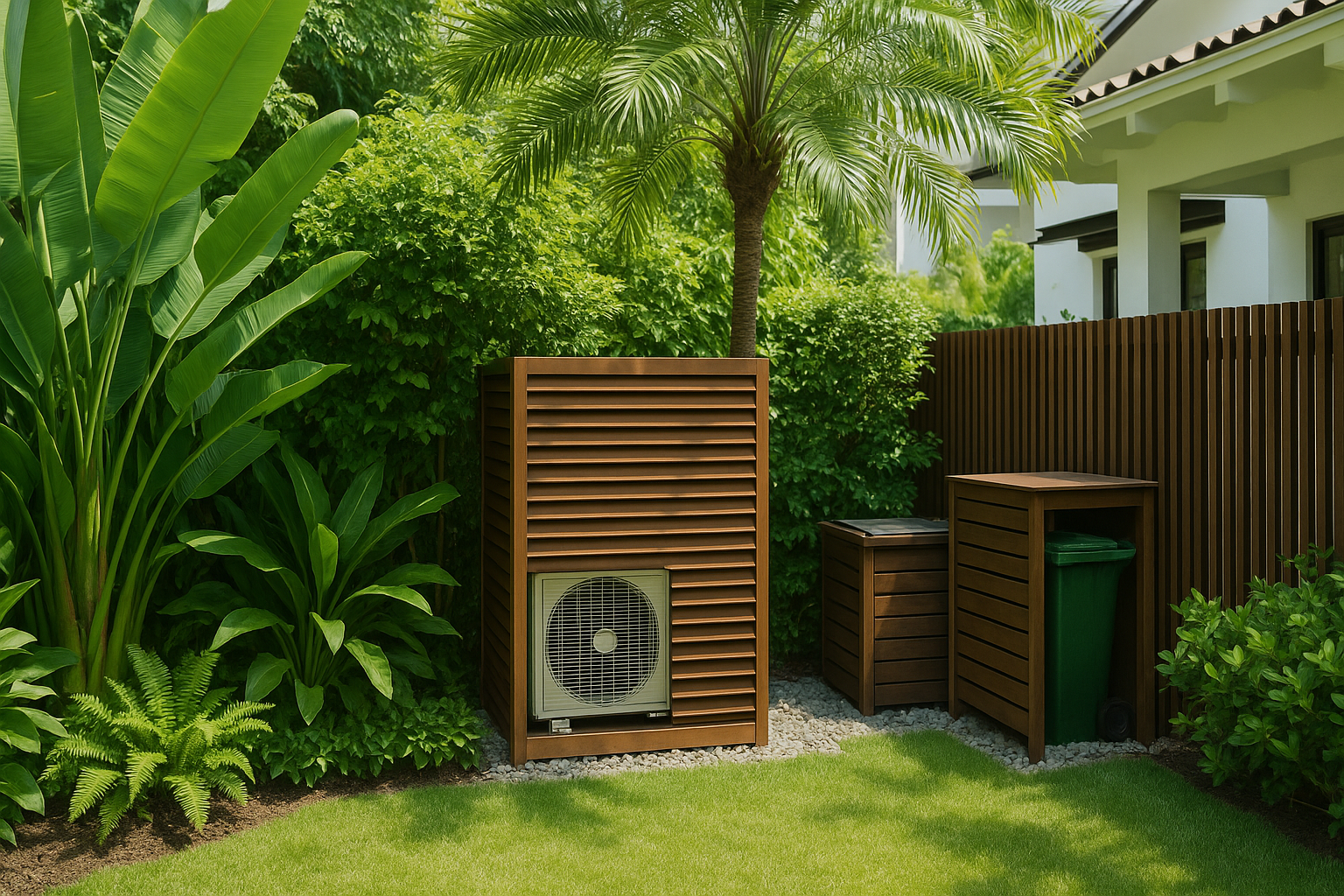
Slatted screens are the workhorse of garden screening — they hide the object while the gaps between slats let air and a little light through. That makes them perfect for aircon units, where solid enclosures would choke airflow. They look clean and contemporary, can be made to size, and can be hinged or removable where access is needed. Our timber decking and structures team builds bespoke slatted screens and enclosures.
Planting
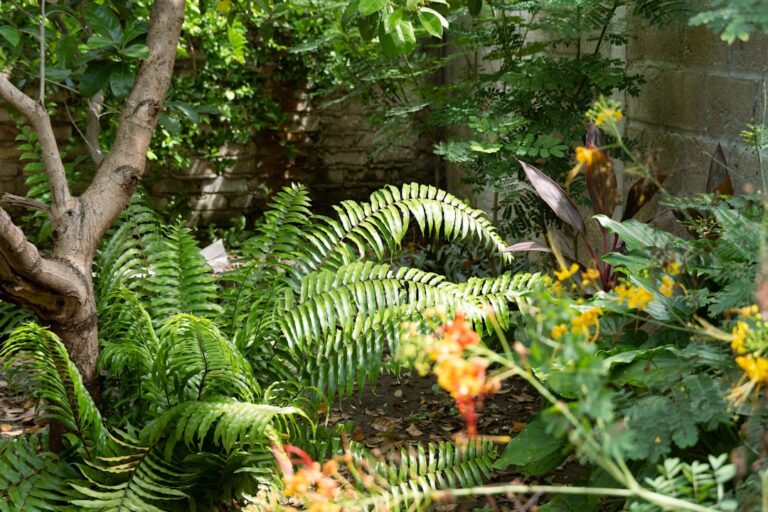
Plants are the most natural cover. A row of shrubs, ornamental grasses or a small hedge can soften or hide an eyesore while adding greenery. Keep planting far enough from aircon units that it doesn’t block the airflow, and choose species that won’t drop debris into a condenser or bin area.
Green walls and climbers
Where space is tight, go vertical. A trellis with climbers, or a planted green wall or vertical garden, turns a dull boundary or a screened utility area into a living feature. This is especially useful for dressing up a bare wall or a long, narrow run beside a building.
Built enclosures and stores
For bins, a purpose-built store — slatted or louvred for ventilation, with easy-access doors — keeps the area tidy and contained. Our civil and hardscape works team can build neat, durable enclosures that match the rest of the garden.
Match the screen to its surroundings
A screen that clashes with the rest of the garden draws the eye as much as the eyesore it was meant to hide. Pick a finish and colour that echo your decking, fencing or planting, and the screen reads as a deliberate part of the design rather than a patch-up. Repeating the same slat detail or material in more than one spot — say, the aircon screen and the bin store — ties the practical elements together and makes the garden feel considered throughout.
The golden rule for aircon units: don’t choke them
This deserves its own warning, because it is the most common screening mistake. Aircon condensers need to draw in air and expel heat freely. Box one in too tightly, or wrap it in dense planting, and it will run hot, work harder, use more electricity and risk damage. Always:
- Use slatted or louvred screening, not solid panels, around condensers.
- Leave generous clearance on all sides and above for airflow and servicing.
- Make the screen removable or hinged so technicians can reach the unit.
- Keep planting set back so foliage never blocks the vents.
A well-screened condenser is hidden, ventilated and serviceable all at once.
The Singapore angle
Screening matters here partly because so many homes have outdoor aircon condensers, and our heat makes their efficiency genuinely important — choke a unit and you feel it in both comfort and the electricity bill. The humid climate also means screening materials should be weather-tolerant and well-ventilated to resist rot, and bin areas need airflow to keep odours down in the heat.
Space is the other factor. On compact landed plots and condominium grounds, eyesores often sit right where you want the garden to look its best, so slim vertical solutions — slatted screens and green walls — earn their place. Bear in mind that on condominium properties, alterations to facades or shared areas usually need MCST or managing-agent approval, and you should keep access to meters and shared services clear. Good screening solves the eyesore without creating an airflow, access or approval headache.
Bringing it together
Screening looks best when it is designed into the garden rather than bolted on as an afterthought — matched to the materials and planting around it. Our outdoor landscape and construction team plans screening as part of the wider scheme, so utilities disappear and the garden reads as one considered space. See the difference across our projects.
Frequently asked questions
How do I hide an aircon unit without affecting it?
Use a slatted or louvred screen, never a solid box, and leave generous clearance on all sides and above for airflow and servicing. Make the screen removable or hinged so technicians can reach the unit, and keep any planting set well back from the vents.
What is the best way to hide bins in a garden?
A purpose-built store with slatted or louvred sides hides the bins while letting air through to control odours, and with easy-access doors it stays practical. A row of shrubs in front can soften it further. The key is keeping the area both concealed and easy to use.
Can plants screen eyesores instead of structures?
Yes — shrubs, grasses, hedges and climbers all screen well and add greenery. For aircon units, keep planting set back so it never blocks airflow. Where space is tight, a green wall or trellis with climbers gives vertical cover in a slim footprint.
Do I need approval to add screening in a condominium?
Often, yes — changes to facades, shared areas or external fixtures in a condominium usually need MCST or managing-agent approval, and access to meters and services must stay clear. It is best to check before installing; we factor this into planning screening work.
Want to make the unsightly bits of your garden disappear neatly? Speak with our design and build team or reach out via our contact page for tailored screening solutions.