
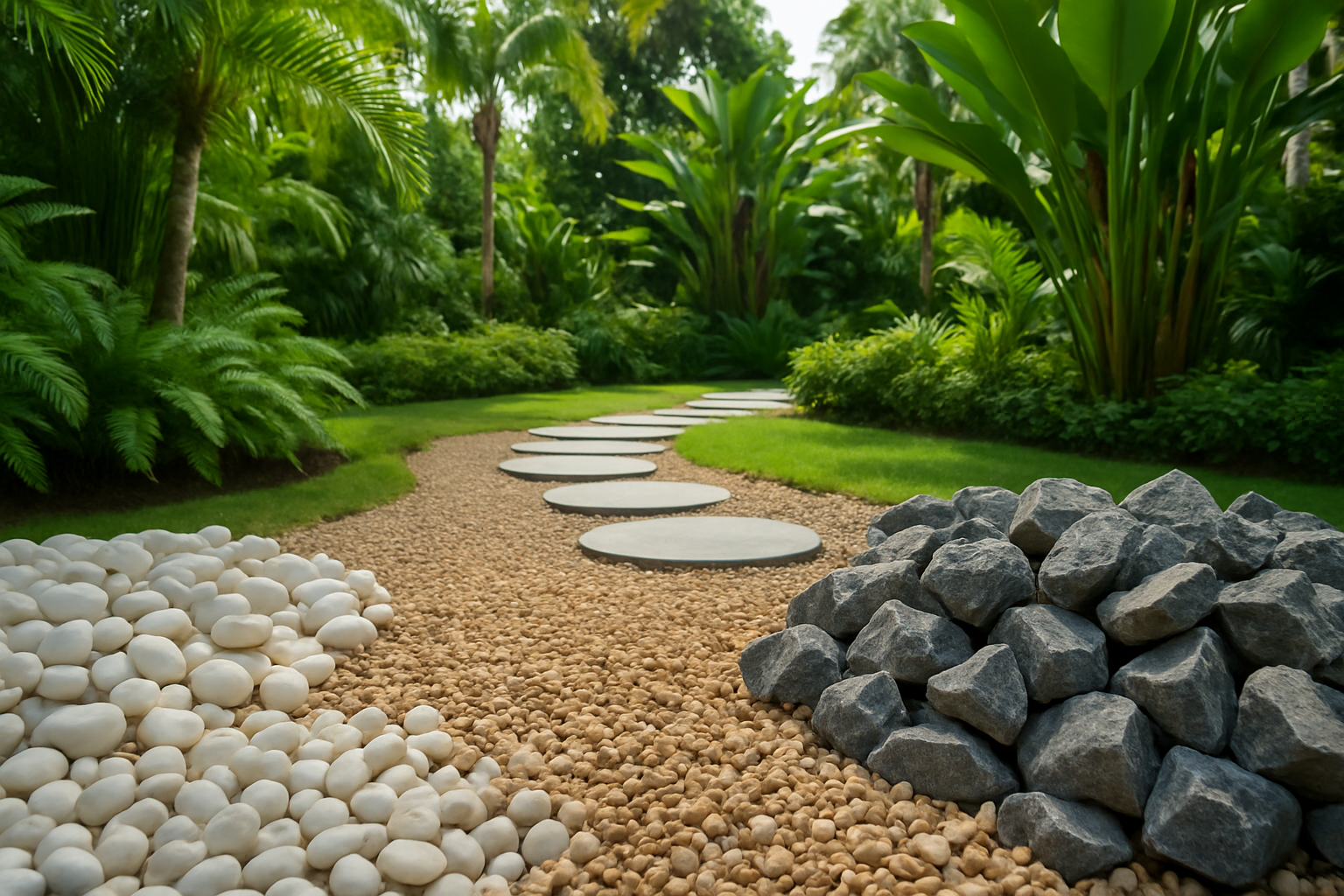
Garden pebbles in Singapore are one of the simplest, most versatile finishes you can add to an outdoor space. A bed of clean stone instantly looks tidy, suppresses weeds, helps drainage and gives a low-maintenance alternative to thirsty lawn or fussy planting. From decorative pebble mulch around shrubs to gravel paths and drainage channels, aggregates earn their place in almost every garden here.
This guide covers the main types of stone and gravel, where each works best, the practical benefits in our climate, and how to lay and look after them so they stay looking sharp.
Types of aggregate and where they suit
“Aggregate” simply means loose stone, and there is a wide range to choose from. The right one depends on the job and the look you want.
- Rounded pebbles: smooth river-washed stones, popular as decorative mulch in beds and around feature plants. Comfortable underfoot and soft-looking.
- Crushed gravel or chippings: angular stones that lock together, ideal for paths and driveways because they compact and stay put.
- Larger cobbles and feature stones: used as accents, dry stream beds, or to edge ponds and water features.
- Fine grit and sand: useful as a base layer, in drainage and for joints between pavers.
Colour matters too — pale stones brighten a shady corner, while darker tones suit a modern, restrained palette. A coherent choice across the garden looks far better than a patchwork of different stones.
Best uses for pebbles and gravel
Decorative mulch in planting beds
A layer of pebbles over a bed looks neat, keeps soil cool and moist, and cuts down weeding. It is especially handy around drought-tolerant shrubs and feature trees.
Paths and seating areas
Compacted gravel makes an attractive, permeable path that drains freely. Set stepping stones into it for a softer, garden look.
Drainage and dry stream beds
Stone-filled channels carry surface water away during downpours and double as a design feature. They are a smart way to manage runoff in problem corners.
Low-water, low-maintenance zones
Replacing struggling lawn in a shaded or awkward area with a pebble bed and a few hardy plants removes a chore and a watering demand at once.
The drainage advantage in Singapore
Our heavy, frequent rain is exactly where aggregates shine. Unlike solid paving, loose stone is permeable — rain drains straight through rather than pooling or running off. Used over a properly prepared base, pebbles and gravel reduce surface water, ease the load on drains and help keep soil from becoming waterlogged.
That said, stone alone is not a fix for a genuine drainage fault. If a corner floods every time it rains, the underlying levels and pipework usually need attention. A pebble-filled channel works best when it is part of a considered scheme — our team often combines aggregates with proper drainage works so the two reinforce each other rather than just hiding the problem.
How to lay aggregates properly
Pebbles thrown straight onto bare soil sink, mix with mud and sprout weeds within weeks. A bit of preparation makes all the difference.
- Clear and level the area, removing weeds and roots.
- Lay a weed-control membrane — a permeable geotextile that lets water through but blocks weeds from below.
- Edge the area with kerbing, timber or steel so the stone stays contained.
- Spread the aggregate to an even depth — generally enough to cover the membrane fully without being so deep it shifts underfoot.
For paths and driveways that carry weight, the base preparation is more involved and is best handled as part of civil and hardscape works to get the compaction and falls right.
Keeping aggregates looking good
Stone is low-maintenance, not no-maintenance. To keep it sharp:
- Rake pebbles occasionally to level them and lift embedded leaves.
- Clear fallen leaves and debris before they rot down into the stone — our fast-growing greenery sheds plenty.
- Top up gravel paths every few years as stones bed in or scatter.
- Rinse decorative stone if it dulls with dust or algae in shaded, damp spots.
In our humid climate, organic matter trapped in stone can encourage moss and weeds over time, so the occasional clean-out keeps beds crisp. A regular landscape maintenance visit can fold this into routine care.
Frequently asked questions
Do pebbles stop weeds completely?
They greatly reduce weeds, especially over a quality weed-control membrane, but they are not entirely foolproof. Seeds can blow in and root in debris that collects on top, so an occasional tidy-up is still needed. A membrane plus periodic clearing keeps weeds to a minimum.
Are gravel and pebbles good for drainage?
Yes — loose aggregate is permeable, so rain drains through rather than pooling. This makes it excellent for our climate. But for a genuine drainage problem, stone should be combined with correct levels and proper subsurface drainage, not used as a stand-alone fix.
What is the difference between pebbles and gravel?
Pebbles are smooth, rounded stones, best for decorative beds and softer looks. Gravel is angular crushed stone that compacts and locks together, making it better for paths and driveways where you want a stable surface.
Will stone make my garden hotter?
Large expanses of dark stone in full sun can radiate heat. Choosing lighter colours, keeping stone areas to a sensible scale and combining them with planting and shade keeps the garden comfortable.
Thinking of adding pebbles, gravel or feature stone to your garden? We can design and install aggregate finishes that look good and work with your drainage, not against it. Contact us for advice and a quote on the right stone for your space.