Built-in garden seating is one of the smartest moves you can make in a small outdoor space. Instead of cluttering a courtyard with movable chairs, a fitted bench, a planter seat or a low seating wall gives you somewhere permanent to sit, frees up the floor and ties the whole garden together. This guide covers how to plan built-in seating that’s comfortable to sit on, durable in our climate and genuinely useful — including the popular planter bench that combines greenery and seating in one.
Whether you have a compact landed courtyard, a condo PES or a roof terrace, the principles below help you get seating that lasts and looks built-in rather than bolted-on.
Why build seating in?
- Space-saving: a bench against a wall or along an edge uses dead space and keeps the centre clear.
- Seats more people: a continuous bench fits more than separate chairs, ideal for entertaining.
- Defines zones: a low seating wall can edge a deck, frame a fire pit area or separate dining from lounging.
- Tidier: nothing to drag in before a storm, nothing to blow over.
- Doubles up: a planter bench grows plants and seats people; a storage bench hides cushions and tools.
Types of built-in seating
Planter bench
A bench with an integrated planter at one or both ends, or running behind the backrest. Brilliant in courtyards — the greenery softens the hard edges and gives privacy without taking extra floor space. The planter section needs its own drainage so roots don’t sit in water.
Seating wall
A low masonry or concrete wall, often capped with timber or stone, that doubles as a perch. Great for edging a terrace or a sunken seating area. Add loose cushions for comfort.
Bench over a deck or platform
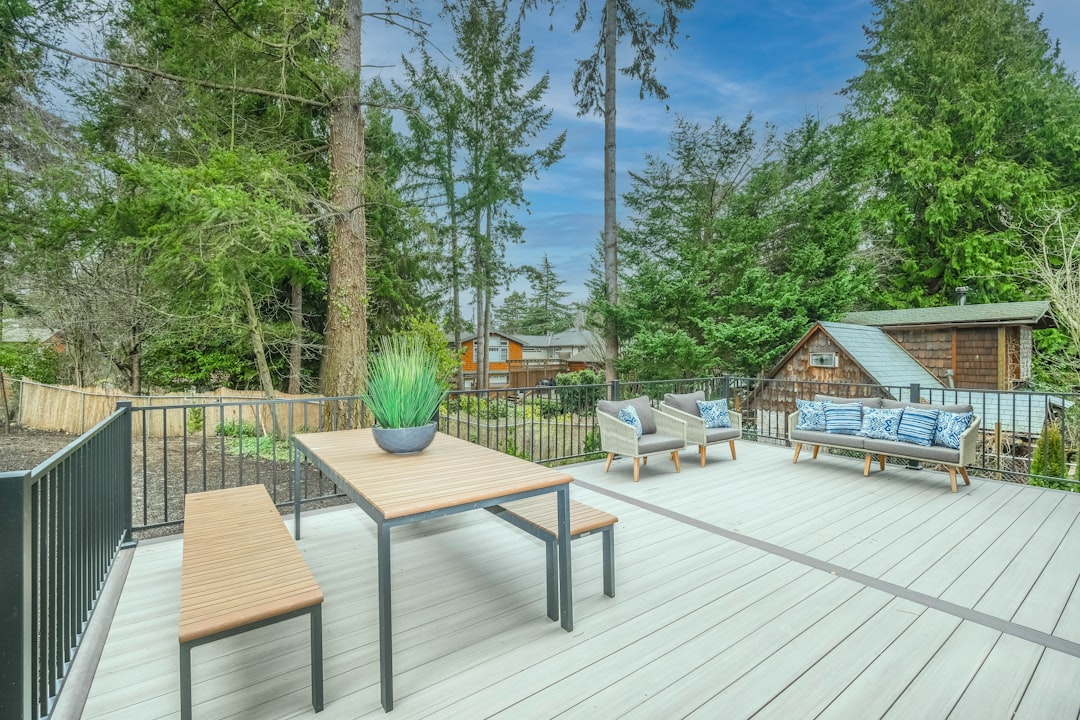
Timber benches built into a deck read as part of the structure. Cantilevered or floating designs look light and modern.
Storage bench
A bench with a lift-up or hinged lid for cushions and garden bits — needs ventilation and drainage so the inside doesn’t grow mould.
Get the dimensions right
Comfort comes down to a few numbers. As sensible rules of thumb:
- Seat height: around 40–45 cm for comfortable sitting.
- Seat depth: around 40–50 cm without cushions; deeper if you want a lounging bench with thick cushions.
- Backrest: a slight recline (a few degrees off vertical) is far more comfortable than a straight back, if space allows.
- Length: allow roughly 60 cm per person.
Materials that last outdoors here
- Hardwood (chengal, balau): warm, comfortable and proven outdoors in our climate; needs occasional oiling to keep its colour. Ideal for the seat surface.
- Concrete or masonry: durable base for seating walls and planter benches; can be rendered, tiled or capped in timber.
- Composite: low-maintenance seat slats that won’t splinter or rot.
- Stone caps: handsome and tough on a seating wall, though dark stone gets hot in the sun.
A common, durable approach is a masonry or concrete carcass with a timber seat top — robust underneath, warm and comfortable on top. Our timber structures team builds these to last, and the masonry base is handled as part of civil and hardscape works.
Drainage is the detail people forget
This is where built-in seating fails in Singapore. Any planter section must have drainage holes, a free-draining medium and ideally a way for water to escape without staining the floor below. A storage bench needs ventilation and weep holes or it grows mould inside. Even a plain seat should shed water — slatted timber tops with gaps drain and dry far better than a solid sealed surface that holds puddles. For planter benches against a wall, make sure water draining from the soil can’t track into the wall. Getting these details right keeps the seating dry, hygienic and long-lasting. If the seat connects to a deck or terrace, coordinate it with the area’s drainage so everything sheds water together.
The Singapore angle
Our climate shapes every choice. Constant humidity means any trapped moisture grows mould, so ventilation and drainage in benches and planters are essential. Heavy rain means seat tops should be slatted or sloped to shed water and dry quickly. The strong afternoon sun makes dark stone or metal seats too hot to use, so timber or shaded positions are kinder. Fast plant growth in planter benches means choosing species suited to the planter’s depth and exposure, and planning for easy trimming. For condominium and strata homes, any built-in or fixed structure in a PES typically needs MCST or managing-agent approval, so check before building. We design seating that suits how you’ll actually use the space and survives the weather it’ll face.
What it costs, roughly
Cost varies with size, materials and complexity, so treat any figure as indicative. A simple timber bench built into an existing deck sits at the lower end; a rendered masonry seating wall with stone caps and integrated planters sits higher, especially once drainage and planting are included. The base construction and drainage are where the durability lives, so they’re worth doing properly. A site visit gives the most accurate guide.
Frequently asked questions
What is the best material for built-in garden seating in Singapore?
A masonry or concrete base with a hardwood timber seat top is a popular, durable combination — tough underneath and comfortable on top. Composite seat slats are a good low-maintenance alternative. Avoid dark stone or metal seats in full sun as they get hot.
How do I stop a planter bench from rotting or growing mould?
Drainage and ventilation are key. The planter section needs drainage holes and a free-draining medium, the seat should shed water rather than pool it, and any enclosed storage needs weep holes and airflow. Slatted timber tops dry far better than sealed solid surfaces.
What’s a comfortable height for a garden bench?
Around 40–45 cm seat height with a seat depth of roughly 40–50 cm suits most people. A slight backrest recline adds a lot of comfort. Allow about 60 cm of length per person.
Do I need approval for built-in seating in a condo?
Fixed structures in a PES usually need MCST or managing-agent approval, so check before you build. Loose, movable seating generally doesn’t, but anything built in or attached is best cleared first.
Want a planter bench or built-in seating that makes the most of your space? We design and build bespoke outdoor seating across Singapore, with the base and drainage done properly. Explore our decking and structures service or contact us for a quote.