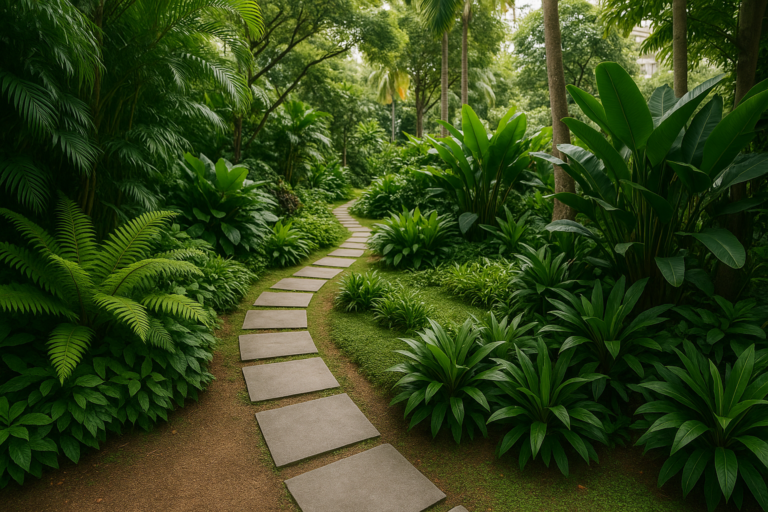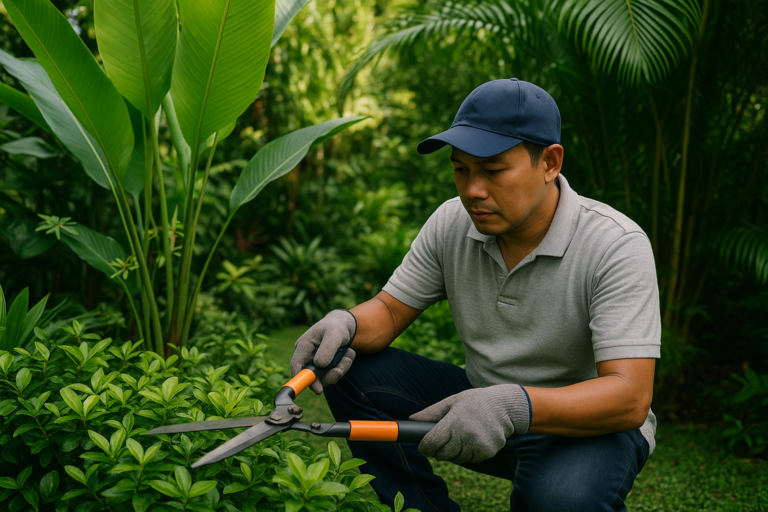

Building an eco friendly garden is easier in Singapore than you might think — and it usually saves money and effort too. A greener garden uses less water and fewer chemicals, supports local wildlife, and relies on sustainable materials and smart design rather than constant intervention. Done well, it is lower-maintenance and lower-cost, not a compromise.
This guide is for homeowners and property managers who want a more sustainable garden without sacrificing how it looks. You will learn practical ways to save water, choose the right plants, support biodiversity, cut waste and use eco-conscious materials, all suited to our tropical climate.
Save water (and let the rain help)
Water is the obvious place to start, and our climate offers a built-in advantage: it rains a lot. The trick is using that water well and wasting less.
Practical water-saving steps
- Harvest rainwater in a barrel or tank to water beds and pots between downpours — free water that would otherwise run off.
- Water efficiently with drip or targeted irrigation that delivers water to the roots rather than spraying it into the air to evaporate. A well-designed irrigation system uses far less water than hand-watering or sprinklers, and only when needed.
- Mulch generously to lock moisture into the soil and cut watering frequency.
- Water early or late to reduce evaporation in the heat of the day.
Choose the right plants
Plant choice is the single biggest driver of how sustainable a garden is. The right plants need less water, fewer chemicals and less work.
- Favour native and well-adapted species. Plants suited to our climate thrive with little intervention, unlike thirsty exotics that struggle and need propping up.
- Pick the right plant for the spot — sun-lovers in sun, shade plants in shade — so nothing is stressed and prone to pests.
- Plant for layers and density. A fuller, layered planting shades the soil, suppresses weeds and supports more wildlife than sparse beds.
- Reduce thirsty lawn where it serves no purpose, replacing some turf with planted beds or groundcover that need less water and mowing.
Support wildlife and biodiversity
A garden that welcomes birds, butterflies, bees and other creatures is healthier and more alive — and Singapore’s “City in Nature” ambitions make this especially worthwhile.
- Plant for pollinators — flowering and nectar-rich plants draw butterflies and bees, which in turn keep the garden productive.
- Grow host plants for butterflies if you want them to breed, not just visit.
- Add a water source — even a shallow dish or small feature gives wildlife somewhere to drink (keep moving or refreshed water to avoid breeding mosquitoes).
- Go easy on chemicals — broad pesticides kill the beneficial insects too. Favour natural pest control and tolerate a little imperfection.
Cut waste and feed the soil
A sustainable garden recycles its own resources instead of importing inputs and exporting waste.
- Compost garden and kitchen scraps into free, soil-improving material — this also cuts what you send to disposal.
- Improve soil with organic matter rather than relying on synthetic fertilisers; healthy soil holds water and feeds plants naturally.
- Reuse and recycle materials where possible — repurposed pots, reclaimed timber and salvaged stone reduce the footprint of a project.
- Mulch with garden clippings to close the loop and feed the soil as they break down.
Sustainable materials and hardscaping
The hard elements of a garden have an environmental footprint too, so material choices matter.
- Use permeable surfaces — gravel, permeable paving and planted joints let rain soak into the ground rather than running off, easing drainage and recharging soil. See our civil and hardscape works.
- Choose responsibly-sourced timber for decking and structures, and maintain it so it lasts rather than needing replacement.
- Add greenery to walls and vertical surfaces — a green wall or vertical garden increases planting in tight spaces, helps cool the building and improves the air.
- Prioritise durability. The greenest material is often the one you do not have to replace, so build well once.
A Singapore angle: City in Nature, climate and drainage
Singapore is unusually well placed for eco-friendly gardening. The national “City in Nature” direction actively encourages greenery, biodiversity and sustainable design, so a green garden is very much in step with the wider city. Our heavy rainfall makes rainwater harvesting genuinely useful and permeable surfaces practical, since they help manage stormwater rather than overwhelming drains. The same rainfall and humidity mean drainage must be handled thoughtfully — sustainable surfaces and good drainage works go hand in hand here. And because plants grow so fast, choosing well-adapted species and dense planting keeps maintenance and inputs down, which is both greener and easier. A sustainable garden in Singapore is rarely the harder choice; usually it is the smarter one.
Frequently asked questions
How can I make my garden more eco-friendly in Singapore?
Start with the basics: save water through rainwater harvesting, efficient irrigation and mulching; choose native, well-adapted plants that need little intervention; compost waste and feed the soil organically; plant for pollinators; and use permeable, durable, responsibly-sourced materials. Most of these also cut cost and effort, so a greener garden is rarely a sacrifice.
What plants are best for a sustainable garden here?
Native and climate-adapted species are best because they thrive with minimal water, chemicals and fuss, unlike thirsty exotics. Choose the right plant for each spot’s light and moisture, plant densely in layers to shade the soil and support wildlife, and reduce thirsty lawn where it is not needed.
Is rainwater harvesting worth it in Singapore?
Yes — with our frequent, heavy rainfall, a barrel or tank collects plenty of free water that would otherwise run off, which you can use on beds and pots between downpours. It reduces mains water use and pairs well with permeable surfaces and good drainage to manage stormwater on site.
Does an eco-friendly garden cost more?
Not usually over time. Some sustainable choices, like quality permeable paving or an efficient irrigation system, have upfront cost, but eco gardens generally use less water, fewer chemicals and less maintenance, and well-adapted plants and durable materials mean less replacement. The greener approach is often the more economical one in the long run.
Want a garden that is greener in every sense — lower-impact, lower-maintenance and full of life? We design and build sustainable gardens across Singapore. Explore our outdoor landscape services or get in touch to plan an eco-friendly garden for your property.