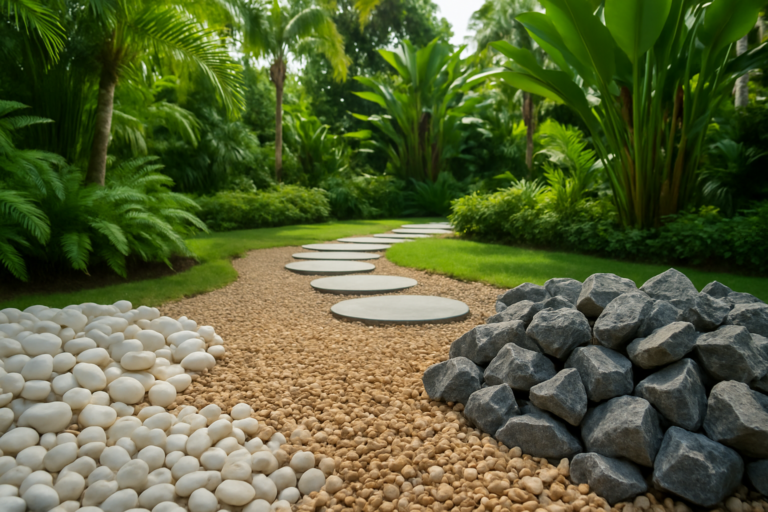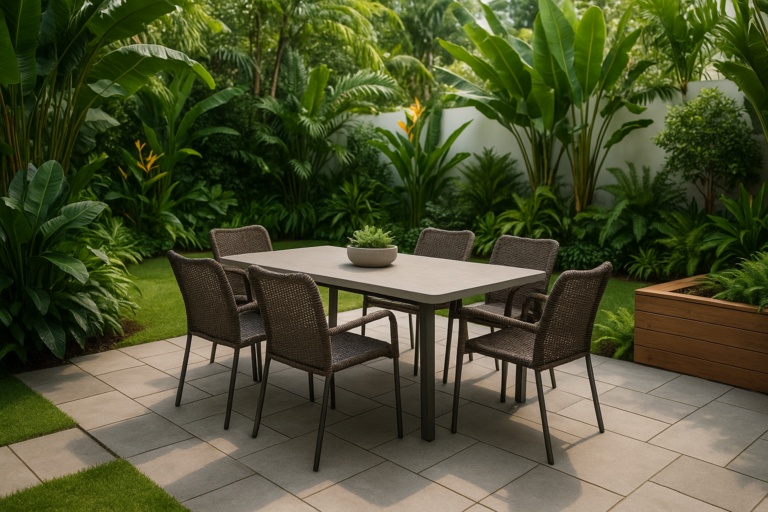

Garden focal points are the secret behind gardens that feel designed rather than merely planted. A focal point is anything that deliberately draws the eye — a statue, a striking pot, a water feature, a specimen plant — and gives a space a clear sense of purpose and direction. Without one, even a well-stocked garden can feel busy and aimless; with one, the whole composition snaps into focus. For Singapore gardens of any size, learning to use focal points well is one of the most powerful design skills you can apply.
This guide explains what garden focal points do, the main types to consider, where to place them, and how to make them work in our particular climate and property types.
What a focal point does
A focal point earns its place by doing several jobs at once.
- It directs the eye, giving the viewer somewhere to look and a sense of order.
- It creates structure, anchoring a planting scheme around a clear centrepiece.
- It adds personality, expressing your taste in a way that planting alone cannot.
- It draws you through the space, tempting you down a path or around a corner to see more.
The best gardens often use a few focal points — one main centrepiece and a couple of secondary ones — to lead the eye on a journey rather than presenting everything at once.
Types of garden focal points
There is no single “right” focal point; the best choice depends on your garden’s style and your taste. Here are the main options.
Statues and sculpture
A statue or piece of sculpture brings a deliberate, artistic note. From classical figures to modern abstract pieces, sculpture suits formal and contemporary gardens alike and gives a strong, year-round focal point that never needs watering.
Statement pots and containers
A large, beautiful pot — planted or left empty as an object in its own right — is one of the most versatile focal points. It works on a balcony, a courtyard or a large garden, and you can move it to refresh the look. A single oversized container often has far more impact than several small ones. Custom planter boxes and soft-scaping can create a bespoke statement piece sized exactly for your space.
Water features
The sight and sound of moving water is a powerful draw, adding a calming, sensory dimension that no static object can match. A water feature makes an excellent centrepiece and helps mask traffic and urban noise — a real bonus in built-up Singapore.
Specimen plants
A single, striking plant — an architectural specimen, a sculptural tree or a bold tropical feature plant — can be the focal point itself, growing more impressive over time. This is often the most natural-feeling choice in a planting-led garden.
Built features
An archway, a pergola, a feature wall or a beautifully built seat can all serve as focal points, giving structure and a destination within the garden.
Where to place a focal point
Placement is everything — the right object in the wrong spot loses all its power. A few principles guide good positioning.
- At the end of a sightline. Place a focal point where the eye naturally travels — at the end of a path, framed by an archway, or directly in view from the patio or a key window.
- To draw you onward. Position something just visible around a corner to tempt people deeper into the garden.
- With breathing room. Give a focal point space around it so it reads clearly rather than getting lost among busy planting.
- Considered from indoors. Think about the views from inside the house — a focal point framed by a living-room window works hard year-round.
The Singapore angle: climate and setting
Our climate and living patterns shape which focal points work best. Constant heat, humidity and heavy rain are hard on materials, so choose pieces that weather well — quality stone, suitable metals and weather-resistant finishes last far better than materials that corrode, fade or grow mouldy quickly. Anything you install outdoors here needs to take year-round exposure in its stride.
Property type matters too. Many Singapore homes garden in compact courtyards, on balconies or in modest landed plots, where a single well-chosen focal point has more impact than in a sprawling garden. In small spaces, one strong centrepiece is usually better than several competing features. Water features deserve a special mention: their cooling sound and movement are especially welcome in our heat and useful for softening urban noise, but they need proper installation and circulation, and standing water must be managed to avoid becoming a mosquito breeding spot. A well-designed feature keeps water moving and is easy to maintain. For courtyards and condos, a thoughtfully placed focal point can transform a small space — something an outdoor landscape designer can help you get exactly right.
Lighting your focal point
A focal point should not switch off at sunset. Well-placed lighting lets a statue, specimen plant or water feature continue to draw the eye after dark, which matters in Singapore where so much outdoor living happens in the cooler evening hours. Subtle uplighting or a gentle wash can make a feature even more dramatic at night than by day, and extends the enjoyment of the garden into the times you most use it. Integrating lighting from the start, as part of the overall design, gives the cleanest, most effective result.
Making focal points work together
The art of using focal points lies in composition — choosing the right pieces, placing them where they lead the eye, giving them space, suiting them to the climate, and lighting them well. Done thoughtfully, they give a garden the structure and personality that turn a collection of plants into a designed space. Because focal points work best when planned alongside paths, planting and sightlines, they reward an integrated design. A full outdoor landscape and construction approach ensures your features, planting and structure all pull together — and quality civil and hardscape works provide the bases, walls and built features that many focal points rely on.
Frequently asked questions
What is a good focal point for a small Singapore garden?
In a small garden, courtyard or balcony, a single strong centrepiece usually works best — a large statement pot, a striking specimen plant, or a compact water feature. One well-chosen focal point with space around it has far more impact than several competing features crammed into a small area.
How many focal points should a garden have?
It depends on the size, but a common approach is one main focal point and one or two secondary ones that lead the eye through the space. Too many competing features cancel each other out and create the very busyness a focal point is meant to resolve, so restraint usually pays off.
Are water features a good idea in Singapore’s climate?
They can be excellent — moving water cools, calms and helps mask urban noise, all welcome in our setting. The key is proper installation with good circulation and easy maintenance, and managing the water so it does not stagnate and breed mosquitoes. A well-designed feature keeps water moving and is straightforward to look after.
Where should I position a garden focal point?
Place it where the eye naturally travels — at the end of a path, framed by an archway, or in clear view from the patio or a main window — with enough space around it to stand out. Consider the views from indoors too, so the feature works year-round, and light it so it continues to draw the eye after dark.
If you want to give your garden real structure and character with a well-chosen focal point, we can help you select, place and build the right feature for your space. See our outdoor landscape services or get in touch to discuss your garden.