Well-built garden steps singapore homeowners can use safely in all weather do more than connect two levels; they shape how you move through and experience the garden. Whether you are dealing with a gentle slope, a steep bank or a change in level between a deck and a lawn, getting the dimensions, materials and drainage right is the difference between steps that feel effortless and ones that are awkward or dangerous. This guide covers the essentials.
Steps that are too steep, too shallow or slippery after rain are a real hazard in our climate, so it is worth planning them properly rather than improvising.
Get the dimensions right first
Comfortable, safe steps follow consistent proportions. The two measurements that matter are the riser (the vertical height of each step) and the tread (the horizontal depth you stand on).
- Riser: around 12 to 17 centimetres works for most garden steps. Lower risers feel relaxed for a stroll; keep them consistent throughout the flight.
- Tread: a generous 30 centimetres or more is comfortable outdoors and feels natural to walk.
- Consistency: every step in a flight should be the same height. Uneven risers are the leading cause of trips.
- Width: at least 0.9 metres for one person; wider feels gracious and lets two pass.
For long flights, break them up with a landing every so often to give a rest and somewhere to pause. A handrail is wise for anyone less steady, and essential for steep or frequently-used steps.
Materials for garden steps
Stone and porcelain
Natural stone and outdoor porcelain make handsome, hard-wearing treads. Choose a textured, anti-slip finish rather than a smooth polish, which becomes lethal when wet here.
Concrete
Poured or precast concrete is strong, versatile and economical for a solid flight. It can be finished with a broom texture, exposed aggregate or a tiled top for grip and looks.
Brick and pavers
Brick risers with paver or stone treads give a traditional, textured look and good grip. They suit informal and cottage-style gardens.
Timber and sleepers
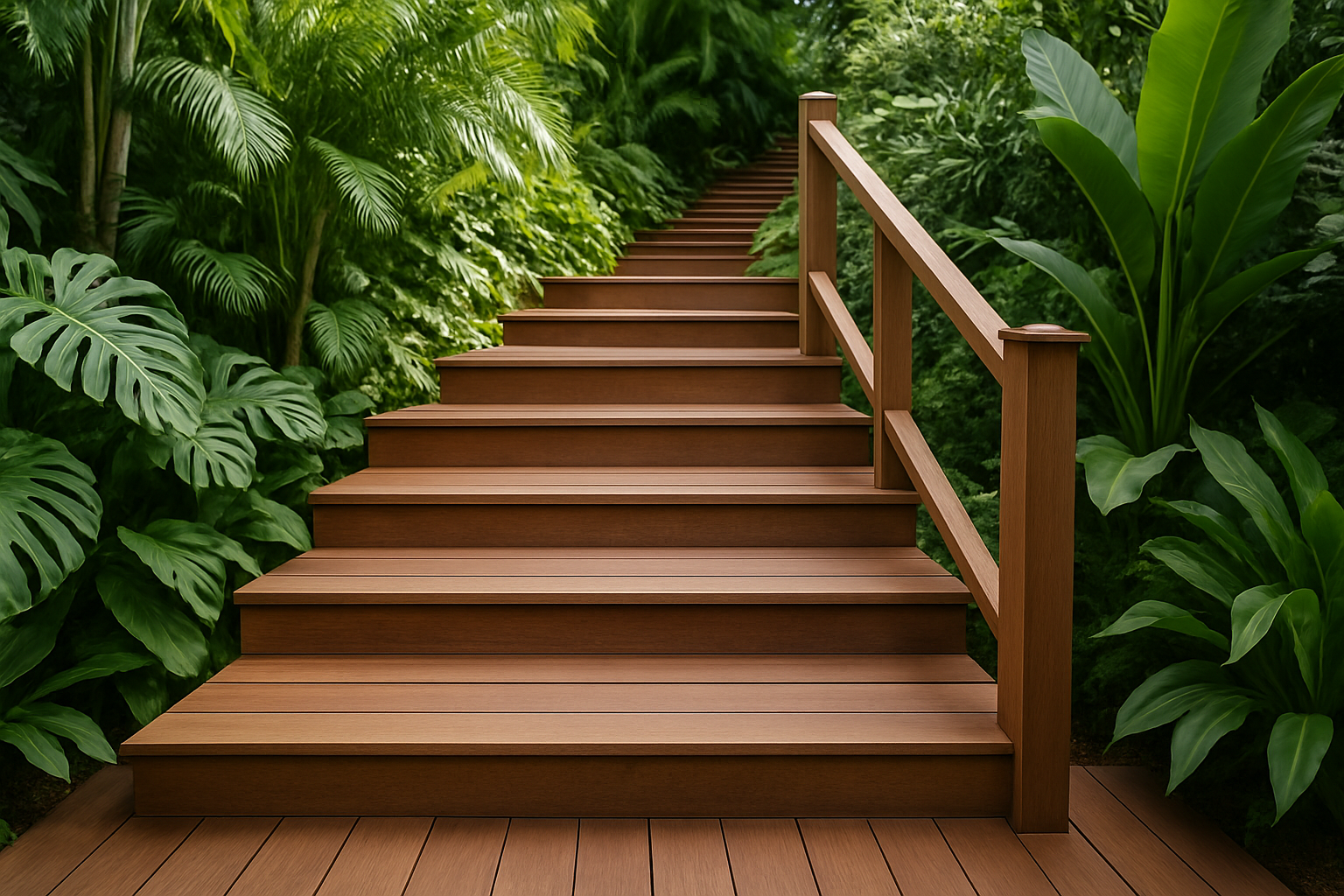
Durable hardwood sleepers make natural steps on a slope, ideal for a relaxed garden path. Use chengal or balau and add an anti-slip strip on the tread, as timber gets slippery with algae in our damp shade.
Drainage and the slip factor
This is where Singapore’s climate demands attention. Constant rain and humidity mean steps grow algae and stay wet, so anti-slip surfaces and proper drainage are not optional.
- Give each tread a very slight forward fall, just a couple of degrees, so water runs off rather than pooling.
- Specify textured, anti-slip finishes on all treads, and consider grooved nosings or strips on timber and smooth stone.
- Make sure water shedding off the steps has somewhere to go, not into a puddle at the bottom that breeds mosquitoes.
- Clean treads periodically to remove the algae and moss that build up in shaded, damp spots.
If your steps sit on a slope where water collects, pairing them with proper drainage works stops the surrounding ground turning boggy and undermining the structure.
Steps on a slope: structure matters
On anything more than a gentle gradient, steps need a stable foundation and often a retaining element to hold back soil. Skipping the groundwork leads to steps that crack, sink or slide over time, especially after our heavy rains saturate the soil. Cut the slope into firm bearing ground, lay proper footings, and where the bank is steep, integrate retaining walls or terracing into the design.
This structural side is best handled professionally. Our civil and hardscape works team builds footings, retaining walls and step flights that stay put. For a relaxed timber or sleeper staircase that ties into decking, our timber decking and structures can integrate the steps with the rest of your outdoor space.
Lighting and finishing touches
Outdoor steps are used after dark too, so discreet step lighting greatly improves safety. Recessed riser lights, or low-level path lights beside the flight, mark each edge clearly. Planting along the sides softens hard edges, and a handrail in matching timber or metal adds both safety and style. Keep planting trimmed so it never overhangs and hides the step edge.
Frequently asked questions
What is a comfortable height for a garden step?
A riser of about 12 to 17 centimetres is comfortable for most outdoor steps, paired with a tread depth of 30 centimetres or more. The most important rule is consistency: every step in the flight must be the same height, as uneven risers are the main cause of trips.
How do I stop garden steps being slippery?
Choose textured, anti-slip finishes for treads rather than smooth polished surfaces. Give each tread a slight forward fall so water runs off, add grooved nosings or strips to timber and smooth stone, and clean off algae and moss regularly, since they build up fast in our damp, shaded spots.
Do garden steps need a handrail?
A handrail is strongly recommended for steep flights, long flights, and anywhere used by children or older family members. Even on gentler steps it adds confidence and safety, particularly when surfaces are wet, which is most of the time in our climate.
Can I build steps on a steep slope myself?
Gentle, informal sleeper steps are achievable for a keen DIYer, but steep slopes need proper footings and often retaining walls to stop the steps sinking or sliding after heavy rain. For anything substantial, professional groundwork is the safer and longer-lasting choice.
Planning steps, a staircase or a terraced slope for your garden? Get in touch for a quote and we will design and build a safe, good-looking flight suited to your site and Singapore’s weather.