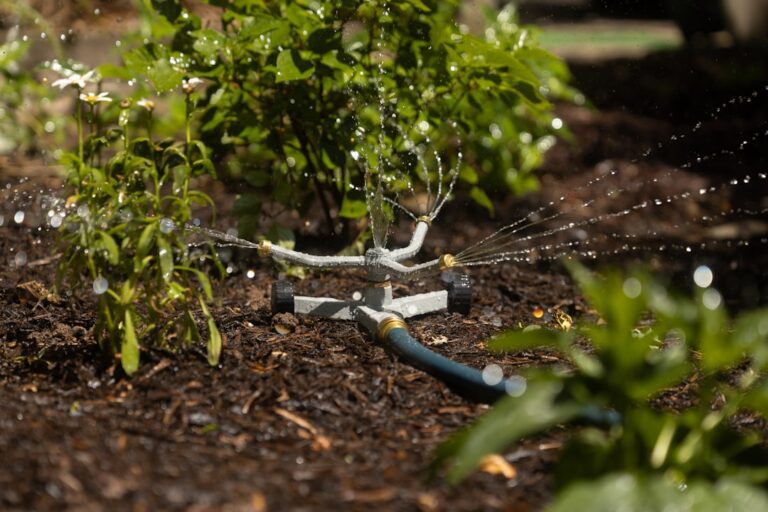

The hand watering vs automatic irrigation question comes up for almost every Singapore garden owner sooner or later. Should you water by hand with a hose or can, or install an automated system that does it for you? Both keep plants alive, but they suit different gardens, budgets and lifestyles. This guide compares the two honestly so you can choose the right approach — or the right mix of both.
It is for homeowners weighing up whether automation is worth it, and for property managers comparing options for larger grounds. You will learn the real trade-offs in cost, water use, convenience and plant health, with our climate firmly in mind.
Hand watering: the case for it
Watering by hand is the simplest approach and still the right one for many gardens.
Where it works well
- Small gardens, balconies and potted collections where the watering takes only a few minutes.
- Mixed planting with varied needs, where you want to give each plant exactly what it needs.
- People who enjoy the time outside and the chance to inspect plants closely.
The advantages
Hand watering costs nothing to set up, gives you complete control plant by plant, and gets you up close to spot pests, disease or dryness early. For containers and small spaces, it is often the most sensible choice.
The drawbacks
It depends entirely on you being there and remembering — a real problem when you travel or get busy. It is easy to water unevenly, too shallowly, or at the wrong time of day. And for a large garden it becomes a daily chore that eats time and is often skipped in our heat, leaving plants to suffer.
Automated irrigation: the case for it
An automated system delivers water on a schedule through sprinklers, drippers or both, controlled by a timer.
Where it works well
- Larger gardens and lawns where hand watering is impractical.
- Busy households and frequent travellers who cannot water reliably.
- Plantings that need consistency, such as new turf and beds during establishment.
The advantages
Automation delivers consistent, even watering at the optimal time of day without you lifting a finger, which keeps plants healthier and frees up your time. With drip irrigation and a rain sensor, a well-designed system can actually use water more efficiently than haphazard hand watering, targeting roots and skipping watering after rain. It also keeps plants thriving while you are away.
The drawbacks
There is an upfront cost to design and install, and a system needs occasional maintenance — heads clog, lines leak, controllers need adjusting. A “set and forget” system left unchecked can also waste water or overwater, so it is not entirely hands-off. Our irrigation services cover both installation and the ongoing upkeep that keeps a system efficient.
Comparing the two at a glance
- Setup cost: hand watering is free; automation has an install cost.
- Ongoing effort: hand watering is daily work; automation is largely hands-off with periodic checks.
- Water efficiency: a good drip system with a rain sensor can beat hand watering; a poorly managed system can waste more.
- Reliability when away: automation wins comfortably.
- Control and inspection: hand watering keeps you closely in touch with each plant.
- Best for scale: hand watering suits small spaces; automation suits larger gardens and lawns.
The Singapore angle: heat, rain and the case for automation
Our climate sharpens the trade-off. The heat means plants dry quickly, so consistency matters and missed waterings in a dry spell do real damage — an argument for automation, especially for lawns and larger gardens. At the same time, frequent heavy rain means a system that waters blindly on a schedule wastes water, which is why a rain sensor (or a willingness to pause the controller in wet weather) is essential here to keep an automated system efficient.
For many Singapore homes the best answer is a hybrid: automate the lawn and the main beds for consistency and convenience, and hand water pots, special plants and anything with unusual needs. Whichever you choose, watering is only one part of a healthy garden — pairing it with regular landscape maintenance keeps planting in the condition that lets it make the most of the water it gets.
How to decide
- Size up the garden. A few pots and a small bed? Hand watering is fine. A lawn and extensive beds? Automation pays off.
- Be honest about your time and travel. If you are often away or busy, automation protects your plants.
- Consider the planting. New turf and establishing beds benefit hugely from consistent automated watering.
- Think long term. The install cost of automation is offset over time by saved effort, healthier plants and, with good design, efficient water use.
Frequently asked questions
Is automated irrigation worth it for a small garden?
For a genuinely small garden — a few pots and a modest bed — hand watering is usually quick and perfectly adequate, and automation may be more than you need. As gardens get larger, include a lawn, or belong to busy or frequently absent owners, automation starts to pay off in time saved and healthier, more consistently watered plants. A hybrid approach often suits in-between cases.
Does automatic watering use more water than hand watering?
Not necessarily — it depends on the system and how it is managed. A well-designed drip system with a rain sensor can use water more efficiently than hand watering by targeting roots, watering at the right time, and skipping watering after rain. A neglected “set and forget” system, on the other hand, can waste water. The efficiency comes from good design and a little upkeep.
Can I combine hand watering and an automatic system?
Yes, and it is often the best of both worlds. Many Singapore homes automate the lawn and main beds for consistency and convenience, then hand water pots, containers and plants with special needs. This gives reliable coverage where it matters most while keeping the personal control and close inspection that hand watering offers for trickier plants.
Do automated systems work during the rainy weather here?
They can, but they should be set up to respond to rain rather than ignore it. Without a rain sensor or manual pausing, a system will water even after a downpour, wasting water and risking overwatering. With a rain sensor fitted, the system pauses when it has rained, which is why this is a near-essential addition for automated irrigation in Singapore.
Trying to decide between hand watering and an automated system, or want a setup tailored to your garden? We design, install and maintain efficient irrigation suited to the local climate. See our irrigation services or contact us for advice and a quote.