
Choosing between watering methods sounds trivial until you’ve spent a month dragging a hose around in the heat or watched half your water run off the soil. In Singapore’s climate — hot, humid and fast-drying for pots, yet rainy enough to make overwatering easy — how you water matters as much as how often. The right method saves water, time and plants.
This guide compares the three main watering methods for Singapore gardens — the humble watering can, the garden hose and automated irrigation — on effort, water efficiency, cost and results. By the end you’ll know which suits your garden, or which combination makes the most sense.
The watering can: precise but laborious
The watering can is the most controlled method. You water exactly where it’s needed, at the base of each plant, with no waste on paths or walls.
Where it shines
- Pots, containers and balconies — precise, gentle and ideal for small spaces.
- Seedlings and delicate plants that need a soft, targeted drink.
- Spot-watering the one thirsty plant without soaking everything.
The downsides
It’s slow and physically demanding. For anything bigger than a balcony or a few beds, refilling and lugging a can in our heat becomes a chore you’ll skip — and skipped watering kills plants. It’s also easy to under-water, splashing the surface without soaking the root zone.
The garden hose: fast and flexible
A hose covers ground quickly and reaches the far corners of a garden. With a good nozzle you can switch from a gentle shower for beds to a stronger flow for a thirsty shrub.
Where it shines
- Medium gardens where a can is too slow but full irrigation is overkill.
- Quick top-ups and reaching awkward spots.
- Washing down paving and general garden tasks beyond watering.
The downsides
A hose can be wasteful — water runs off if you move too fast, and overhead spraying wets foliage, which invites fungal disease in our humidity. It still needs you to be there, every time, which is the real catch for busy households. And it’s easy to over-water beds while under-watering pots if you rush.
Automated irrigation: consistent and efficient
An installed irrigation system delivers water automatically, consistently and — when designed well — very efficiently. There are two main types worth knowing.
Drip irrigation
Drip lines deliver water slowly to the soil at the root zone, with minimal evaporation or runoff. It’s the most water-efficient method and keeps foliage dry, reducing disease — excellent for beds, hedges and containers.
Sprinklers / micro-spray
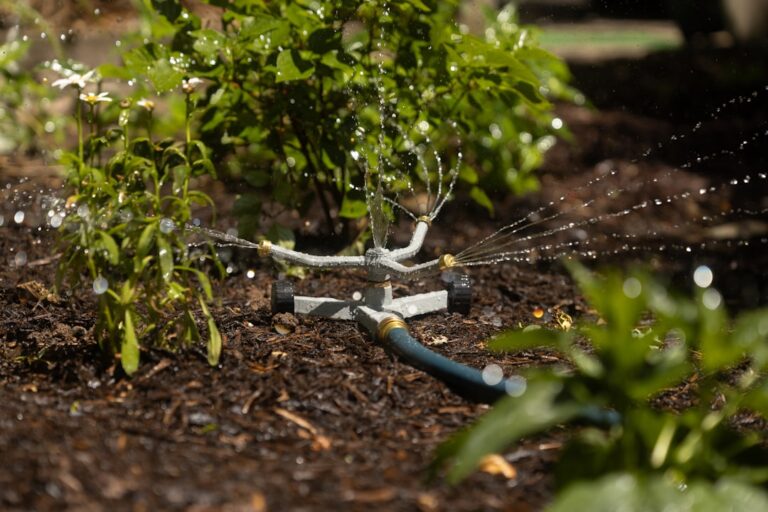
Better suited to lawns and larger open areas, sprinklers cover broad ground but lose more to evaporation and wet the foliage, so timing (early morning) matters.
Where it shines
- Larger gardens where manual watering is impractical.
- Busy owners and frequent travellers who can’t water by hand reliably.
- Consistent results — every plant gets the right amount, every day.
- Commercial and condo landscapes that must stay green with minimal labour.
The Singapore advantage: rain sensors
The big risk with automation in our climate is watering on top of rain. A controller with a rain sensor automatically skips cycles after a downpour, solving the overwatering trap that catches so many gardeners here. This alone makes well-designed automation more reliable than manual watering for avoiding root rot.
Comparing cost, water use and effort
- Upfront cost: watering can is cheapest, hose is modest, irrigation is the biggest initial outlay.
- Water efficiency: drip irrigation is the most efficient, the can is efficient but easy to under-deliver, and a hose can be wasteful if used carelessly.
- Effort: irrigation is near-zero once installed; the can and hose demand your time every single watering.
- Best results: automation gives the most consistent outcome, especially for larger or unattended gardens.
As a rough guide, automated irrigation costs more to install but saves water and labour over time, while a can or hose suits small gardens or anyone who enjoys hands-on watering.
Which should you choose?
Most gardens do best with a sensible mix. A balcony or compact courtyard rarely needs more than a good watering can. A medium landed garden might pair a hose for general use with a small drip line for thirsty beds and pots. A large garden, a frequently empty home, or a commercial or condo landscape benefits most from a well-designed automated system with a rain sensor. If you’re unsure, our irrigation services can assess your garden and recommend the right method or combination, and our landscape maintenance team keeps everything running and your plants thriving.
Frequently asked questions
What’s the most water-efficient way to water a garden?
Drip irrigation is the most efficient, delivering water slowly to the root zone with little evaporation or runoff, and keeping foliage dry. A watering can is also efficient but easy to under-deliver, while a hose can waste water through runoff and overspray if used in a hurry.
Is automated irrigation worth it in Singapore given all the rain?
Yes, especially with a rain sensor, which automatically skips watering after a downpour. That solves the overwatering risk our rain creates and gives consistent results without daily effort. For larger gardens or homes that are often empty, automation is more reliable and water-wise than manual watering.
Can I just use a hose for everything?
You can, but it has trade-offs. A hose is fast and flexible for medium gardens, yet it needs you present every time, can waste water through runoff, and wets foliage in ways that invite disease in our humidity. Many gardens combine a hose for general use with drip lines for beds and pots.
What’s best for watering pots and a balcony?
For a few pots, a watering can is precise, gentle and inexpensive. If you have many containers or travel often, a small drip system tuned to pots keeps them watered automatically — pots dry out fastest in our heat, so consistency matters most for container plants.
Not sure which watering method suits your garden? We assess your space and recommend the most efficient approach for our climate, from simple drip lines to fully automated systems. Explore our irrigation services or contact us for a quote.