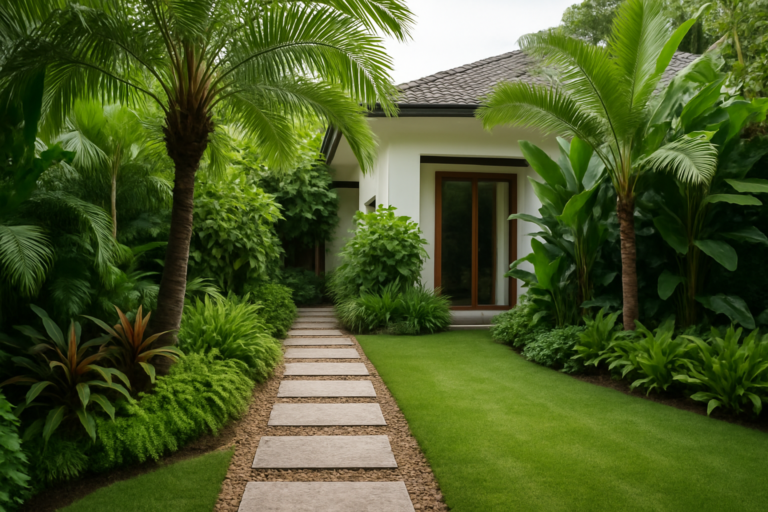

Understanding hardscaping vs softscaping is the quickest way to make sense of how a good garden is actually put together. Every well-designed outdoor space is a blend of the two — the hard, built elements and the living, planted ones — and getting the balance right is what separates a garden that simply looks nice from one that works beautifully and lasts.
This guide is for homeowners planning a garden or renovation who want to understand the building blocks before they spend. We will define both terms clearly, show how they work together, and cover costs, upkeep and the climate factors that matter most in Singapore.
What is hardscaping?
Hardscaping is everything in your garden that is built rather than grown — the hard, permanent structure. It includes:
- Paving, paths and driveways
- Patios, decking and terraces
- Retaining walls, steps and kerbing
- Pergolas, trellises and built structures
- Water features, fixed planters and drainage
Hardscaping gives a garden its bones: it defines how you move through the space, where you sit, and how the whole thing holds together. It is the part that needs proper engineering and groundwork, covered by services like civil and hardscape works and timber decking and structures.
What is softscaping?
Softscaping is the living, growing side of the garden — everything that was once or is still planted:
- Trees, shrubs and hedges
- Flowering plants and groundcovers
- Lawns and turf
- Climbers, ferns and ornamental grasses
- Soil, mulch and compost
Softscaping brings colour, softness, scent and life. It changes with the seasons, grows over time, and is what makes a garden feel alive rather than like an outdoor room. It also needs ongoing care, which is where landscape maintenance comes in.
How they work together
The magic is in the balance, not in choosing one over the other.
Hardscaping without softscaping
An all-paved, all-built space feels stark, hot and lifeless — more car park than garden. Hard surfaces also shed water rather than absorbing it, which matters a great deal in our rainy climate.
Softscaping without hardscaping
An all-planted space, while lush, can feel shapeless and impractical — nowhere firm to sit, no clear paths, and mud after every storm. Without structure, a garden lacks usability.
A good design uses hardscaping to create function and structure, then softens and enlivens it with planting. A common rule of thumb is to let planting be the star and use hard elements to frame and support it, though the right ratio depends on how you want to use the space.
Cost and maintenance: how they differ
The two behave very differently over a garden’s life.
- Upfront cost. Hardscaping usually carries the higher initial cost — materials, groundwork and skilled labour add up. As a rough guide, built elements like quality decking, paving and walls are typically the bigger line items in a project.
- Ongoing cost and effort. Softscaping is generally cheaper to install but needs continuous care — mowing, pruning, feeding, replacing. Hardscaping needs far less attention, mostly cleaning and the occasional repair.
- Lifespan. Well-built hardscaping lasts many years; softscaping evolves, with some plants needing replacement over time.
In short, hardscaping front-loads the cost and effort; softscaping spreads it out. A sensible budget plans for both.
The Singapore angle: climate-driven balance
Our climate shapes the hardscaping vs softscaping decision in specific ways. Heavy rainfall means you cannot simply pave everything — too much hard surface overwhelms drainage and causes pooling and runoff. Permeable solutions, generous planting and proper drainage works built into the hardscaping keep water moving. At the same time, our intense sun and humidity mean materials must be chosen for durability: timber needs to be suited to the tropics, and surfaces should not become dangerously slippery when wet.
On the soft side, our year-round growing season means plants grow fast and lush — wonderful for impact, but it does mean softscaping needs regular upkeep to stay sharp. Property type matters too: landed homes can balance generous planting with paths, patios and decking, while condo residents often work with a smaller ratio of fixed elements (a deck or planters) and lean on container softscaping. Whatever the setting, the winning combination here is structured hardscaping that manages water, paired with planting suited to our heat and humidity.
Frequently asked questions
What is the ideal ratio of hardscaping to softscaping?
There is no single correct figure — it depends on how you use the space and the look you want. Many designers aim to let planting dominate visually while using hard elements to frame and support it. In Singapore, drainage is a real constraint, so resist the urge to over-pave; keeping ample planted, permeable area helps manage our heavy rain.
Which costs more, hardscaping or softscaping?
Hardscaping usually costs more upfront because of materials, groundwork and skilled labour. Softscaping is typically cheaper to install but costs more over time in ongoing maintenance and occasional replacement. A realistic budget accounts for both the initial build and the long-term care.
Should I do hardscaping or softscaping first?
Hardscaping generally goes first. The built structure, levels and drainage need to be in place before planting, since installing paving or decking later would disturb established plants. Getting the bones right first means the softscaping can be added cleanly on top.
Can too much hardscaping cause problems in Singapore?
Yes. Excessive hard, impermeable surface sheds rainwater instead of absorbing it, which can overwhelm drainage and cause pooling, runoff and heat build-up. Balancing hard areas with planting and permeable solutions, and designing in proper drainage, keeps a garden comfortable and water-wise in our climate.
Planning a garden and want to get the balance of structure and planting right from the start? Our team designs and builds both sides — the hardscaping and the softscaping — as one coordinated whole. Explore our outdoor landscaping and civil and hardscape works services, or get in touch to discuss your project.