Choosing the right plant pot size sounds trivial, but it quietly decides whether a plant thrives or sulks. Go too big and you risk waterlogged soil and root rot; go too small and the plant becomes root-bound and stunted. The pot is not just a container — it controls how much water the soil holds, how the roots breathe, and how fast the plant grows. Get it right and half your plant-care problems disappear.
This guide is for anyone repotting a houseplant or buying a new one and wondering what size to choose. We will cover how to size a pot, why drainage matters more than looks, the differences between pot materials, and a few tips for Singapore’s warm, humid conditions.
The golden rule: go up one size
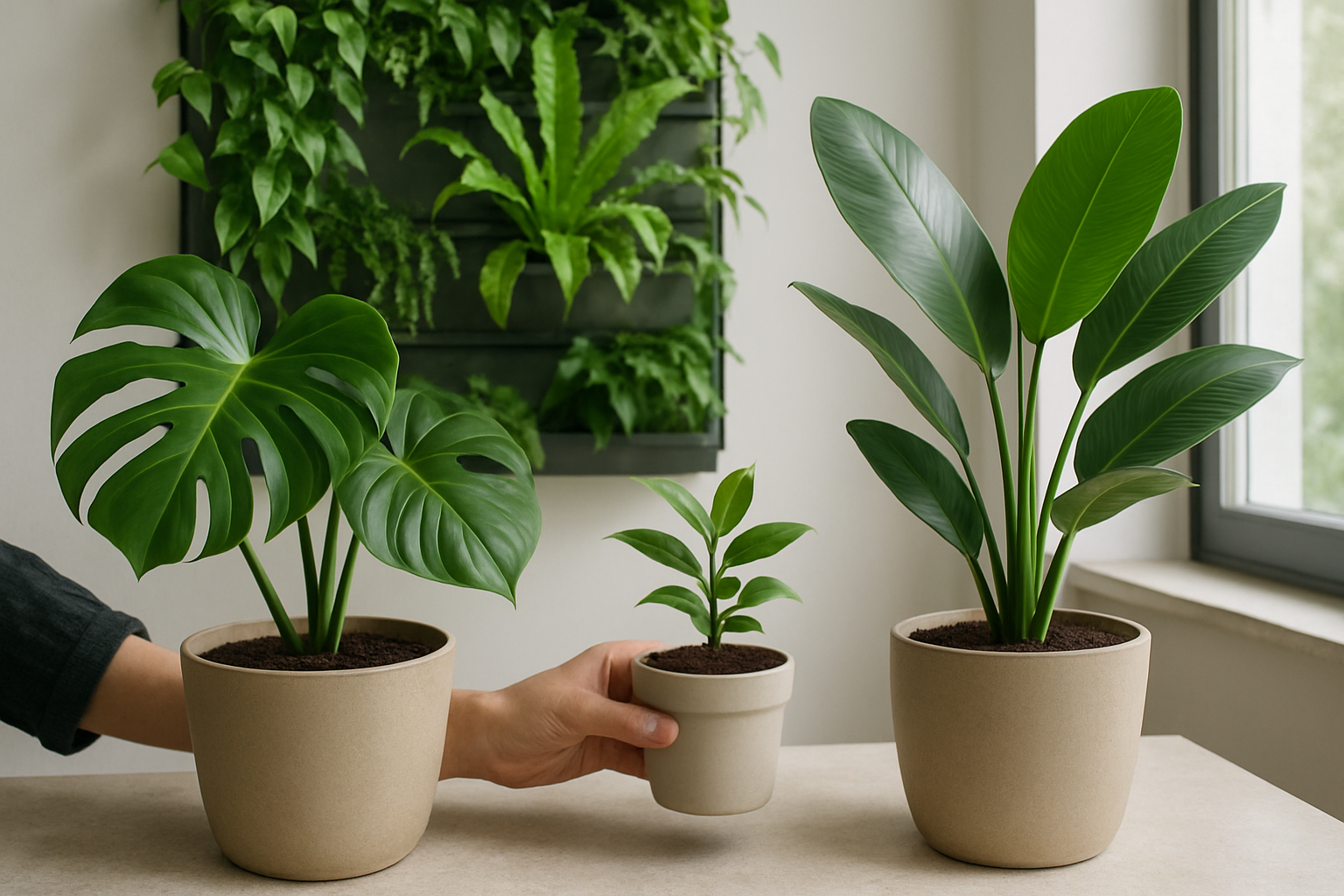
When repotting, the standard advice is to move up just one pot size — typically about 2–5cm wider in diameter than the current pot. This gives the roots a little more room to grow into without drowning them in excess soil.
The reason matters. Soil holds water, and roots drink from the soil they touch. In a pot that is far too large, there is a big volume of soil the roots cannot yet reach, and that soil stays wet for a long time. Constantly soggy soil around the roots is the leading cause of root rot. A modest step up keeps the balance right: enough room to grow, not so much that the soil stays waterlogged.
Quick sizing guide
- Repotting: go up one size, roughly 2–5cm wider in diameter.
- New small plant: match the pot to the root ball, not the eventual size you hope for.
- Fast growers (pothos, philodendron) tolerate a slightly larger jump than slow ones.
- Slow growers and succulents prefer a snug fit.
How to tell a plant needs repotting
Rather than repotting on a schedule, watch the plant. The signs it has outgrown its pot include roots growing out of the drainage holes, roots circling visibly on the surface, water running straight through without soaking in, and growth slowing despite good care. A pot that dries out within a day or two of watering is often too small for the plant inside it.
Drainage matters more than the pretty pot
Whatever size you choose, the single most important feature is drainage. A pot with drainage holes lets excess water escape, which is exactly what prevents root rot. A beautiful ceramic pot with no holes is a trap: water collects at the bottom, the roots sit in it, and the plant slowly declines.
If you love a decorative cover pot without holes, use it as a “cachepot”: keep the plant in a plain plastic nursery pot with drainage holes, and slip that inside the decorative one. Lift the inner pot out to water, let it drain fully, then return it — so water never pools around the roots. This is the easiest way to enjoy good-looking pots without sacrificing plant health.
Pot materials and how they affect watering
Terracotta and unglazed clay
Porous, so they breathe and let soil dry faster. Excellent for plants that hate wet feet — succulents, cacti and anything prone to rot. The trade-off is more frequent watering.
Plastic
Lightweight, cheap and retains moisture longer, so the soil stays damp. Good for thirsty plants and for anyone who tends to under-water. Easy to move and to drill extra holes in if needed.
Glazed ceramic
Holds moisture similarly to plastic and looks good, but check it has drainage holes. Heavier, which helps top-heavy plants stay upright.
Match the material to the plant and your habits: if you tend to overwater, lean towards terracotta; if you forget to water, plastic or glazed ceramic holds moisture longer.
The Singapore angle: humidity, heat and balconies
Our climate changes the calculation in useful ways. Because Singapore is so humid and warm, soil in plastic and glazed pots can stay damp for a long time indoors, which makes overwatering and root rot a real risk. Erring towards a snug pot with good drainage — rather than a generous one — is sensible here, and terracotta is a smart choice for any plant prone to wet feet.
Outdoors and on balconies the opposite pressure appears: sun, wind and reflected heat dry pots out fast, so larger or moisture-retentive pots can save you watering twice a day. Heavy pots also resist being blown over on exposed high-rise balconies. Either way, drainage remains non-negotiable, and on balconies you will want to manage where the run-off goes so it does not drip onto units below. For homeowners and businesses planning planters at scale — built-in boxes, balcony schemes or feature containers — our planter boxes and soft-scaping service handles sizing, drainage and planting properly, and our indoor landscaping team does the same for interiors.
Frequently asked questions
Is it bad to put a small plant in a big pot?
Yes, usually. A pot that is far too large holds a lot of soil the roots cannot yet reach, and that soil stays wet for a long time, which can lead to root rot. It is better to go up just one size at a time so the roots can fill the space steadily.
How much bigger should a new pot be when repotting?
Aim for roughly 2–5cm larger in diameter than the current pot — one size up. Fast-growing plants can handle the upper end of that range, while slow growers and succulents prefer a snug fit. The goal is a little extra room without a large volume of permanently wet soil.
Can I use a pot without drainage holes?
It is risky, because water collects at the bottom and the roots sit in it. The simplest solution is to keep the plant in a plastic nursery pot with holes and place that inside the decorative pot. Lift it out to water, let it drain, and return it so water never pools at the roots.
Does pot material really matter in Singapore?
It does. In our humid climate, plastic and glazed pots keep soil damp for a long time, so they suit thirsty plants but raise the risk of overwatering for others. Porous terracotta dries faster and is a safer choice for plants prone to root rot. Outdoors, moisture-retentive pots reduce how often you need to water.
Planning planters, balcony containers or a fully landscaped interior and want the sizing, drainage and planting done right? Explore our planter boxes and soft-scaping and indoor landscaping services, or get in touch for a quote.