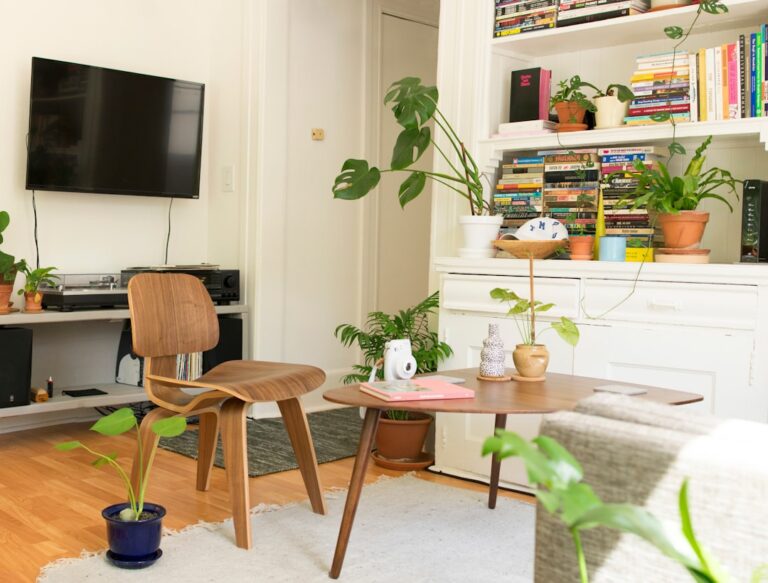

Caring for indoor plants in air con rooms is one of the most common challenges Singapore homeowners face, and it catches a lot of people out. A plant that thrives on a breezy balcony can sulk and brown the moment it moves into a chilly, conditioned living room. The air is drier, the light is dimmer, and there is often a cold draft blowing right over the leaves.
This guide explains why air con is hard on indoor plants, how to adjust your care, and which species genuinely tolerate our climate-controlled homes and offices. It is written for anyone keeping greenery in an HDB flat, condo or office in Singapore.
Why air conditioning stresses indoor plants
Singapore’s air con keeps us comfortable, but it changes three things that plants care about deeply:
- Humidity drops. Air con strips moisture from the air. Most popular houseplants are tropical and used to the high humidity outside — indoors, that sudden dryness shows up as crispy leaf edges and brown tips.
- Temperature falls. Many tropical plants slow down or stress below roughly 18°C. A room kept very cold, especially overnight, can shock them.
- Air moves. A cold draft blowing directly on foliage dries it out fast and can cause patchy browning on the side facing the vent.
The good news is that all three are manageable once you know what to watch for.
Positioning: the easiest fix
Where you place a plant matters more than almost anything else in an air-conditioned room. Keep plants out of the direct airflow from the unit or its vents — a plant sitting under a blasting draft will struggle no matter how well you water it.
At the same time, conditioned rooms are often dim, so push plants towards whatever natural light you have. A spot near a window, set back from the cold air, is usually the sweet spot. Rooms that face north or sit behind tinted glass may need a low-light-tolerant species or a grow light.
Managing humidity in a dry room
Because air con dries the air, raising local humidity around your plants helps enormously. A few practical methods:
- Group plants together. Clustered plants create their own slightly humid micro-climate as they transpire.
- Use a pebble tray. Sit pots on a tray of pebbles with a little water below the pot base — never let the roots sit in water.
- Mist sparingly. A light mist helps some species but won’t fix a very dry room on its own, and over-misting can encourage fungal spots.
- Consider a small humidifier for a room full of fussier plants.
Watering and feeding in conditioned rooms
Here is a counter-intuitive point: plants in cold, air-conditioned rooms usually need less water than the same plant outdoors. Lower temperature and light slow growth, so the soil stays wet longer. The most common way people kill indoor plants in air con rooms is overwatering — drowning roots that simply aren’t drinking much.
Check the top few centimetres of soil with a finger before watering, and only water when it has dried out. Feed lightly during active growth and ease off when the plant is clearly resting. Make sure pots drain freely; standing water in a cool room is a recipe for root rot. Our guide to choosing the right indoor planters and our indoor landscaping service can help you get the drainage and pot pairing right.
Best plants for air-conditioned Singapore rooms
Some plants shrug off dry, cool, dim conditions far better than others. If you want reliable greenery for a conditioned space, these are dependable choices:
- Snake plant (Sansevieria): tolerates low light, irregular watering and dry air remarkably well.
- ZZ plant (Zamioculcas): nearly indestructible, copes with low light and infrequent watering.
- Pothos / money plant (Epipremnum): fast, forgiving and happy trailing from a shelf.
- Aglaonema (Chinese evergreen): handles low light and dry air, with attractive foliage.
- Spider plant (Chlorophytum): adaptable and easy to propagate.
- Cast iron plant (Aspidistra): as tough as its name suggests.
Fussier tropicals like calatheas and ferns can work, but they demand much more humidity attention in a cold room.
The Singapore office angle
Most Singapore offices run cold air con all day and switch it off at night and weekends, creating a temperature swing that plants dislike. Lighting is often artificial and uneven. For workplaces, this is exactly why many businesses opt for professionally maintained greenery or plant rental — species are chosen for the conditions and swapped out before they decline. A well-planned green wall or vertical garden can also bring greenery indoors without surrendering floor space, provided the system is matched to the room’s light and climate.
Frequently asked questions
Can indoor plants survive in air-conditioned rooms in Singapore?
Yes, plenty can — as long as you pick tolerant species, keep them out of direct airflow, give them enough light, and raise humidity around them. Tough plants like snake plants, ZZ plants and pothos handle conditioned rooms with very little fuss.
Why are my plant’s leaves turning brown in an air con room?
Brown, crispy tips and edges usually point to dry air or a cold draft hitting the leaves. Move the plant away from the vent, group it with others, and raise humidity with a pebble tray. If the browning is soft and mushy instead, you may be overwatering.
How often should I water plants in an air-conditioned room?
Less often than you’d think. Cool, dim rooms slow a plant’s water use, so the soil stays damp longer. Check the top few centimetres of soil first and only water once it has dried out — overwatering is the bigger risk indoors.
Should I move my plants outside sometimes?
Giving plants a spell in brighter, more humid conditions — a sheltered balcony or corridor — can help them recover and grow. Just avoid harsh direct afternoon sun and don’t shock them with sudden extremes.
Want greenery indoors that actually lasts in air-conditioned conditions? We design, install and maintain interior planting for homes and offices across Singapore. Discover our indoor landscaping service or get in touch for advice tailored to your space.