A low maintenance front garden is the holy grail for busy Singapore homeowners — a frontage that looks cared-for and welcoming without demanding your weekends. The good news is that “low maintenance” does not mean bare or boring. With the right layout, materials and planting choices, you can have a smart, green entrance that needs only occasional attention rather than constant work.
This guide walks through the principles of designing a front garden that stays looking good with minimal effort, with practical choices suited to our hot, wet climate and the realities of a typical landed or terrace frontage.
Start with the layout, not the plants
The biggest driver of how much work a garden needs is its design, not its plant list. A thoughtful layout reduces maintenance before you plant a single thing.
- Reduce lawn. Grass is one of the highest-maintenance surfaces in Singapore — it grows fast and needs frequent mowing. Replacing some or all of it with planting beds, ground cover or paving cuts the workload dramatically.
- Keep beds simple. Fewer, larger planting areas are easier to tend than lots of fiddly pockets. Clean, defined edges also stop grass and plants from creeping where they should not.
- Plan access. Generous paths and clear surfaces mean less awkward squeezing past plants and easier upkeep.
Choose hardy, slow-growing plants
The plants you pick determine how often you are out there pruning, trimming and replacing. For low maintenance, favour tough, slow-growing tropical species that shrug off heat and humidity.
Good low-effort choices
- Hardy shrubs that need only occasional shaping rather than constant clipping.
- Robust ground covers that knit together and suppress weeds.
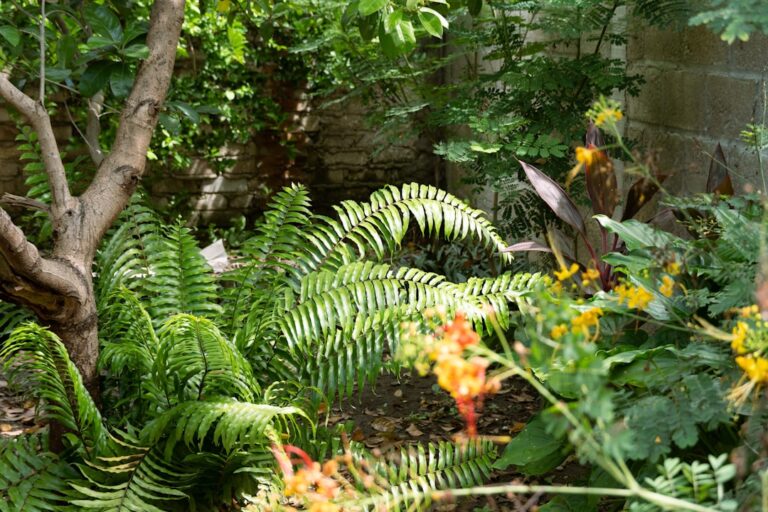
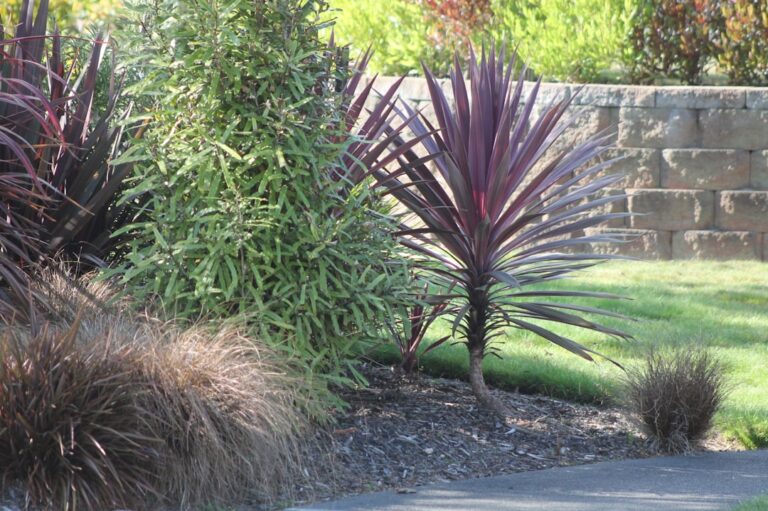
- Architectural foliage plants that hold their shape and look good year-round without flowering cycles to manage.
Avoid plants that need frequent deadheading, staking, or precise clipping to look tidy. Group plants with similar water and light needs together, so caring for one area does not mean juggling very different requirements.
Use mulch and ground cover to beat weeds
Weeding is the chore that eats the most time, and in Singapore’s climate weeds appear quickly. The answer is to leave them nowhere to grow. A generous layer of mulch over planting beds suppresses weeds, holds moisture in the soil and keeps roots cooler. Dense ground-cover planting does the same job living, gradually covering bare soil so weeds cannot get a foothold. Between them, mulch and ground cover can cut weeding to a fraction of what an open bed demands.
The Singapore angle: drainage, heat and rain
Designing for low maintenance here means designing for the tropics. Heavy, frequent rain is the defining factor. If water pools in your front garden, you will spend your time dealing with soggy soil, root rot and washed-out beds — so good drainage is the foundation of any low-effort design. Make sure beds drain freely and that paved areas shed water to the right places rather than towards the house. Where ground is naturally low or prone to pooling, proper drainage works are worth getting right at the start.
Our intense sun also matters. A front garden that faces full afternoon sun needs heat-tolerant plants and surfaces that do not become unbearably hot; a shaded frontage needs shade-lovers. Matching plants to the actual conditions of your frontage means they thrive with less intervention. And because rain drives fast growth, choosing slow-growing species pays off doubly here — they simply need cutting back far less often.
Smart use of hard landscaping
Hard surfaces are the lowest-maintenance element of any garden — they do not grow. Used well, paving, gravel and decking give structure and reduce upkeep without making the space feel cold or barren.
- Quality paving for the driveway and main paths means less surface to maintain and a clean, finished look.
- Gravel or stone areas suit spots where planting struggles, and they drain well.
- A small timber deck or platform can replace a high-maintenance lawn patch with a usable, easy-care surface.
The trick is balance — enough greenery to feel like a garden, enough hard landscaping to keep the work down. Well-executed civil and hardscape works tie the whole frontage together and last for years.
Add automated irrigation if you can
If watering is a chore you would rather skip, a simple automated irrigation system removes it entirely. Set to water beds and pots at the right times, it keeps plants healthy with no daily effort from you — particularly useful if you travel or simply have a packed schedule. For a front garden you want to look after itself as much as possible, irrigation is often the single best upgrade.
Bringing it together with a coherent design
A low-maintenance front garden works best when all these elements are planned together rather than added piecemeal: a sensible layout, hardy planting, good drainage, the right balance of hard and soft surfaces, and perhaps irrigation. A considered outdoor landscape and construction approach makes sure the parts work as a whole — and that the frontage looks designed rather than merely tidy.
Frequently asked questions
What is the lowest-maintenance option for a front garden in Singapore?
A design that minimises lawn, uses hardy slow-growing plants, mulches beds heavily to suppress weeds, and includes quality paving for paths and the driveway. Adding automated irrigation removes watering too. The combination, rather than any single element, is what keeps the work down.
Can a low-maintenance garden still look attractive?
Absolutely. Low maintenance is about smart choices, not sacrifice. Architectural foliage, well-chosen shrubs, clean paving and good ground cover create a smart, green frontage that looks designed and well cared-for — precisely because it does not rely on labour-intensive features.
Is gravel a good idea in Singapore’s climate?
Gravel can work well because it drains freely, which matters with our heavy rain. It suits paths, low-traffic areas and spots where planting struggles. Lay it over a proper base with edging so it stays put and does not spread or sink over time.
Do I really need irrigation for a low-maintenance garden?
You do not strictly need it, but it is one of the most effective ways to cut routine effort, especially if you travel or have a busy schedule. An automated system keeps plants healthy without daily watering, which is often the most repetitive front-garden chore.
If you want a front garden that looks smart and looks after itself, we can design and build one suited to your frontage and your time. See our outdoor landscape and construction services or get in touch for a consultation and quote.