Good tropical garden design starts with one honest observation: Singapore’s climate is generous and unforgiving in equal measure. Plants grow fast, but so do weeds; rain comes hard, and poorly planned beds turn to soup. This guide is for homeowners and property managers who want a garden that looks lush all year without becoming a second job.
We’ll cover how to read your site, choose plants that genuinely suit the heat and humidity, get drainage and soil right from the start, and add the structure that makes a garden feel designed rather than simply planted.
Start by reading your site, not a Pinterest board
Before choosing a single plant, spend time understanding the space you actually have. The most common cause of a struggling garden is the right plant in the wrong place.
- Sun and shade: Note where the sun lands at 9am, noon and 4pm. A west-facing wall bakes; a corner under a mature tree may get two hours of light at best.
- Water movement: After heavy rain, watch where puddles form and how long they linger. Those low spots dictate where you can plant and where you may need drainage.
- Soil: Much of Singapore’s developed land sits on compacted clay or imported fill. Dig a hole, fill it with water, and time how long it takes to drain. Slow drainage changes everything.
- Wind and exposure: High-floor balconies and open landed plots get more wind, which dries out foliage faster than ground-level gardens.
Choosing plants that actually like it here
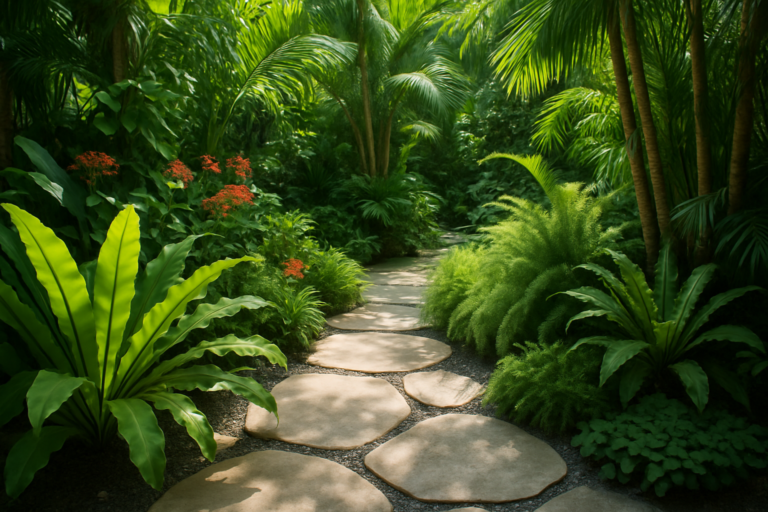
The heart of tropical garden design is layered planting that mimics how greenery grows in nature — canopy, mid-storey, ground cover. This creates depth, fills gaps and shades the soil so it holds moisture and resists weeds.
Reliable tropical performers
- Structure and height: Frangipani, heliconia, traveller’s palm and well-chosen palms give vertical interest and that unmistakable tropical silhouette.
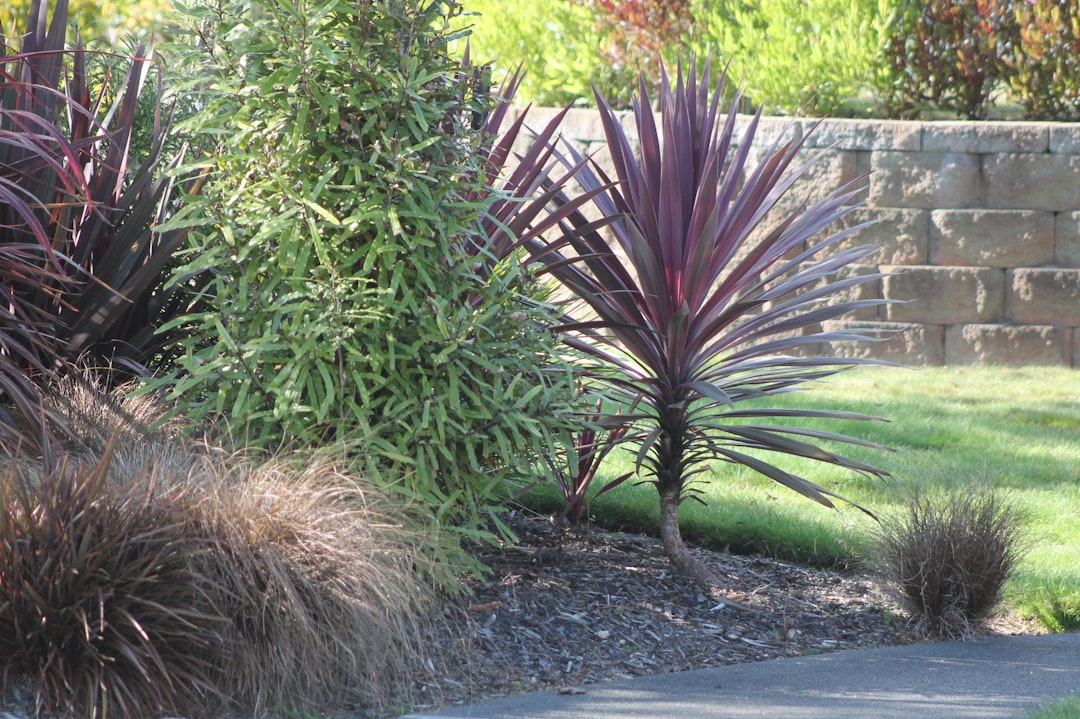
- Mid-layer and colour: Cordyline, ixora, ti plant, calathea and bougainvillea (for hot, sunny spots) carry foliage colour without relying on fussy flowers.
- Ground cover: Spider lily, ophiopogon, sweet potato vine and ferns knit beds together and cut down on weeding and bare-soil splash-back.
Mix leaf shapes and textures rather than chasing flowers. In our climate, bold foliage — broad, glossy, strappy, feathery — does more lasting visual work than blooms that come and go.
Match the plant to the spot
Group plants by their needs so watering and care are simpler. Keep thirsty, shade-loving species together; put drought-tolerant, sun-hardy plants in the exposed beds. A coherent outdoor landscape design plan considers these zones from the outset rather than fixing mismatches later.
Get drainage and soil right first
In Singapore, drainage is not an afterthought — it is the foundation of a healthy tropical garden. Heavy, frequent rain means roots sitting in waterlogged soil will rot, and even tough plants sulk when their feet stay wet.
- Improve the soil: Break up compacted ground and blend in compost and a free-draining mix. Good soil holds enough moisture between rains without staying soggy.
- Build in fall: Beds and paving should slope gently away from the house and towards a drainage point.
- Add subsurface drainage where needed: Low-lying gardens often benefit from agg pipes or a French drain. If you see standing water that lingers for hours, professional garden drainage works will save you replanting the same dead bed twice a year.
- Mulch: A layer of mulch keeps roots cool, locks in moisture and steadily improves the soil as it breaks down.
The Singapore angle: design for the climate you have
Singapore’s hot, humid, rain-heavy weather is consistent year-round, which is a gift — there is no real dormant season, so a well-designed garden can look full and green every month. The trade-off is relentless growth: hedges need trimming more often, fast climbers can swallow a fence, and humidity invites fungal issues on crowded, poorly ventilated planting.
Design with that in mind. Leave room between shrubs for air to move. Choose species that tolerate humidity rather than fighting it. If you’re in a condominium, check with your MCST or managing agent before altering common-area planting or adding structures, and be aware that work involving mature trees may need NParks approval depending on location. For landed homes, plan for how big plants will actually get — that cute palm can become a maintenance and boundary headache in five years.
Add structure so it reads as “designed”
Planting alone rarely makes a garden feel finished. Hardscape and built elements give the eye somewhere to rest and make the green pop.
- Paths and paving: A clear route through the garden organises the space and keeps feet off wet beds.
- Decking and seating: A timber deck or a shaded corner turns a garden from something you look at into somewhere you use. Well-built timber decking and structures handle our weather far better when properly specified and sealed.
- Vertical greenery: Where ground space is tight, a green wall or trellis adds lushness without footprint — ideal for narrow side yards and balconies.
- Lighting: Soft, well-placed lighting extends the garden into the evening and highlights specimen plants and textures.
Plan for low-effort upkeep
The best-designed gardens are the ones that stay good with realistic care. Build maintenance into the design: install an automated irrigation system so watering is consistent, choose slower-growing hedges, and avoid plant choices that need constant deadheading or spraying. A garden that demands two hours of attention every weekend rarely gets it — and it shows within months.
Frequently asked questions
What makes a garden truly “tropical” in design?
It’s the layering and the foliage. A tropical garden builds up in storeys — canopy, mid-level shrubs and ground cover — using bold, varied leaf shapes rather than relying on flowers. That density and texture, combined with lush greens, is what reads as tropical, and it happens to suit Singapore’s climate perfectly.
How do I stop my Singapore garden from looking overgrown?
Choose plants whose mature size fits the space, leave breathing room between them, and set a regular trimming schedule. Our growth rates mean even tidy planting needs attention every few weeks. Grouping plants by vigour also helps, so the fast growers don’t smother slower neighbours.
Do I need to improve the soil before planting?
Almost always, yes. Much developed land here is compacted clay or builder’s fill that drains poorly and lacks nutrients. Loosening the soil and blending in compost and a free-draining mix before planting gives roots the air and drainage they need, and prevents the waterlogging that kills tropical plants from below.
Can I create a tropical garden on a condo balcony?
Yes. Use planter boxes with good drainage, choose wind-tolerant and container-friendly species, and add a green wall or trellis for vertical lushness. The same layering principles apply at a smaller scale, and an automatic drip system keeps containers watered in the heat.
Thinking about transforming your outdoor space? Our team designs and builds tropical gardens across Singapore, getting the soil, drainage and planting right from day one. Explore our landscape design and build services or get in touch for a no-obligation consultation — we’ll help you create a garden that thrives in our climate, not despite it.