If you want a garden that looks good without constant fuss, native plants Singapore species are one of the smartest places to start. Plants that evolved in our climate are already built for the heat, the humidity and the sudden downpours, so they need less coaxing, less watering and far fewer rescue missions than imported ornamentals that sulk the moment the weather turns.
This guide is for homeowners and property managers who want a resilient, good-looking garden with realistic upkeep. We will cover why natives work so well here, which species are worth planting, and how to put them together into a planting scheme that more or less looks after itself.
Why native plants suit Singapore gardens
Singapore sits a degree north of the equator, which means hot, humid days all year and rainfall that arrives in earnest during the monsoon months. Plants native to this region have spent a very long time adapting to exactly those conditions. The practical payoff for you is real:
- Less watering. Established natives generally cope with our wet-dry swings without daily attention.
- Fewer pest problems. Local plants tend to shrug off the insects and fungal issues that plague stressed exotics.
- Better for wildlife. Native flowers and fruit feed local birds, butterflies and bees, which adds life and movement to a garden.
- A genuine sense of place. A garden planted with regional species simply belongs where it is.
Native trees and large shrubs
For structure and shade, a few well-chosen woody plants do most of the heavy lifting. The Tembusu is a handsome shade tree with fragrant cream flowers, though it needs space and is better suited to larger landed plots. The Sea Apple (Syzygium grande) and the Penaga Laut (Calophyllum inophyllum) are coastal natives that handle wind and poor soil well.
For smaller gardens, look to Singapore Rhododendron (Melastoma malabathricum), which produces purple flowers almost continuously, or the Simpoh Air, whose large leaves and yellow blooms give a lush, tropical feel. Larger trees should be sited and pruned with care; if you are unsure about placement near boundaries or drains, our tree pruning and care team can advise before you plant.
Native flowering and accent plants
Colour does not have to mean fragile bedding plants that need replacing every few weeks. Several natives flower freely and last for years.
Reliable performers
- Singapore Rhododendron (Sendudok) — purple flowers, edible fruit, tolerant of poor soil.
- Spider Lily (Crinum / Hymenocallis types) — strappy foliage and white blooms, very forgiving.
- Sea Hibiscus — fast, shrubby, with yellow flowers that age to orange.
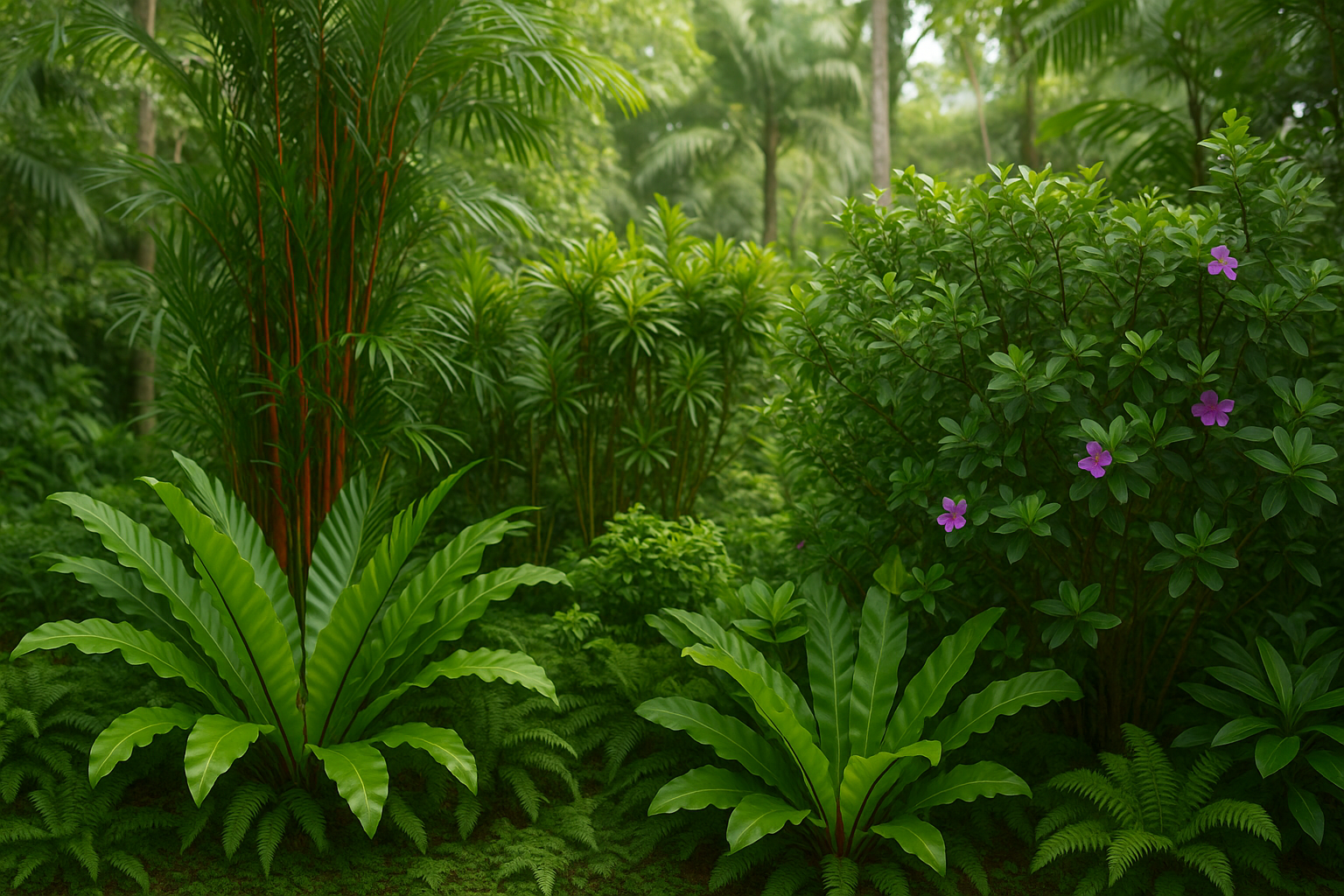
- Native ferns and Bird’s Nest Fern — excellent for shaded, damp corners where little else thrives.
Groundcovers and low-maintenance fillers
The fastest route to a low-effort garden is covering bare soil so weeds never get a foothold. Native and naturalised groundcovers such as Pearl Grass, Wedelia (used carefully, as it spreads) and various native sedges knit together quickly. In shadier spots, mass-planting ferns gives a soft green carpet that suppresses weeds and holds moisture. Pair this with a good layer of mulch and you cut both watering and weeding dramatically.
The Singapore angle: soil, rain and your property type
Two local realities shape how natives perform. First, our heavy rainfall means drainage is everything — even rain-loving plants rot if their roots sit in standing water. Many Singapore gardens are built over compacted construction fill or clay, so improving the soil and ensuring water can escape is often more important than the plant choice itself. If you see pooling after a storm, that needs solving first.
Second, your property type matters. Landed homeowners have the room for native trees and a layered, naturalistic look. Condo residents working with planters or a small patio are better off with native shrubs, ferns and groundcovers in well-drained outdoor landscaping beds. For strata properties, remember that significant tree planting or removal near common areas usually needs MCST sign-off, and some larger works may need approval from the relevant authorities.
Putting a low-maintenance native scheme together
A garden that truly looks after itself comes from good planning, not just good plants. A simple, effective approach:
- Match plants to light. Group sun-lovers together and shade-lovers together; fighting a plant’s needs guarantees ongoing work.
- Layer it. A tree or tall shrub, a mid-layer of flowering shrubs, and a groundcover base — this mimics how plants grow in the wild and leaves no gaps for weeds.
- Sort drainage and soil first. Amend the soil and fix any drainage issues before planting, not after.
- Mulch generously. It feeds the soil, holds moisture and keeps weeds down.
- Set up light irrigation for the first months. Even tough natives need help establishing; once settled, most need very little.
Frequently asked questions
Are native plants really lower maintenance?
Once established, yes — generally noticeably so. The key word is established. For the first few months after planting, even hardy natives need regular watering and a watchful eye while their roots settle in. After that, they typically cope with our climate far better than imported ornamentals, which is where the long-term savings in time and effort come from.
Where can I buy native plants in Singapore?
Specialist nurseries and some larger garden centres stock a growing range of local species, and demand has risen as more people garden with the climate rather than against it. If you want a coordinated planting scheme rather than a handful of pots, a landscaper can source appropriate natives and match them to your conditions.
Will natives look wild or untidy?
Only if you let them. Native does not mean unkempt — with sensible spacing, clear bed edges and occasional trimming, a native garden can look every bit as polished as a conventional one, while feeling more relaxed and alive. The naturalistic style is simply a design choice.
Do native plants attract more insects?
They attract more beneficial wildlife — butterflies, bees and birds — which most homeowners welcome. They are not noticeably worse for nuisance pests; if anything, a healthy, balanced native garden tends to keep pest outbreaks in check naturally.
Thinking about a garden that works with our climate instead of fighting it? Our team can design and build a resilient, low-maintenance scheme using the right mix of native and regional plants for your site. Explore our outdoor landscaping and landscape maintenance services, or get in touch for a no-obligation chat about your garden.