
The first few weeks decide whether a fresh lawn thrives or struggles, which makes new lawn care one of the most important — and most rushed — jobs in the garden. A newly laid turf lawn looks finished the moment it goes down, but underneath it has no anchoring roots yet. Get the early care right and it knits into a thick, durable lawn; get it wrong and you can lose patches that are slow and costly to recover.
This guide explains exactly how to look after a newly laid lawn in Singapore’s climate — watering, foot traffic, the first mow, feeding and the common mistakes to avoid. It is written for homeowners who have just had turf laid and want it to establish properly.
The first two weeks: watering is everything
When turf is laid, it is essentially a carpet of grass with shallow, cut roots resting on the soil. Until those roots grow down into the ground, the turf cannot draw its own moisture and will dry out fast in our heat. Consistent watering is the single most important thing you do.
How to water new turf
- Water immediately after laying, soaking the turf and the soil beneath it.
- Keep it consistently moist for the first week or two — in our climate that usually means watering at least daily, sometimes more in hot spells, until roots establish.
- Water early morning and, if needed, late afternoon, avoiding the midday heat that scorches wet blades.
- Check it is reaching the soil — lift a corner of the turf gently to confirm the ground underneath is damp, not just the surface.
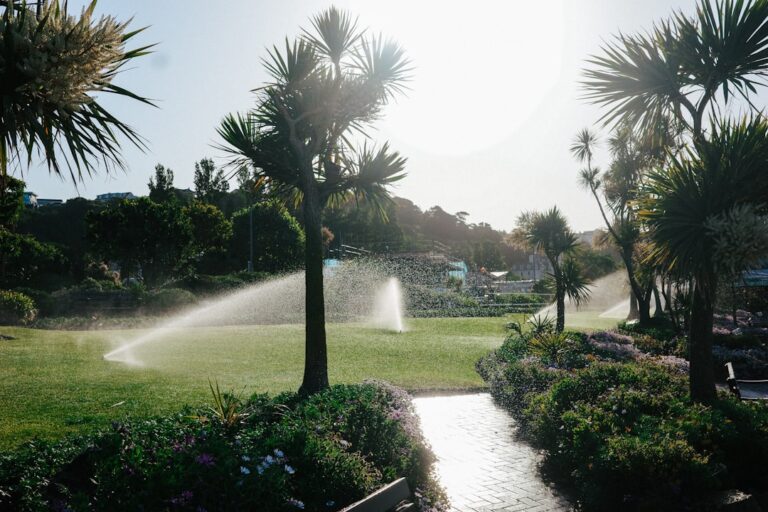
As roots establish over the following weeks, gradually reduce watering frequency while increasing depth, training the roots to grow down in search of moisture. For larger lawns, a properly designed system takes the risk out of this critical period — our irrigation services can install automated watering sized to your lawn so new turf never dries out at the wrong moment.
Keep off the grass
It is tempting to walk on a lovely new lawn, but foot traffic during establishment presses the turf unevenly, creates dips and damages the delicate young roots. Keep people and pets off as much as possible for the first two to three weeks. If you must cross it, lay a plank to spread the weight. The discipline of staying off pays off in an even, well-knitted lawn.
The first mow and beyond
Do not mow too soon. Wait until the turf has rooted in — a gentle tug should meet resistance rather than lifting the turf — which usually takes a couple of weeks or more depending on conditions.
First mow rules
- Make sure mower blades are sharp; blunt blades tear young grass.
- Set the height high for the first cut and only take the tips off — never scalp new turf.
- Follow the one-third rule: never remove more than a third of the blade height at once.
- Mow when the grass is dry to avoid tearing and rutting.
Over the following weeks, gradually lower the height to your target as the lawn thickens.
Feeding a new lawn
Hold off on heavy fertiliser at first — a good turf supplier lays onto prepared soil that already has nutrients, and a strong feed too early can scorch tender roots. Once the lawn is established, usually after the first few weeks, a balanced lawn fertiliser supports thickening and steady growth. Feed lightly and water it in well. Resist the urge to overfeed in the hope of faster results; it leads to soft, disease-prone growth.
The Singapore angle: heat, rain and fast establishment
Our climate is a double-edged sword for new lawns. The constant warmth means turf can root and establish quickly — often faster than in temperate climates — but the intense sun and heat also dry out fresh turf alarmingly fast, so watering must be diligent. Heavy tropical downpours bring their own risk: if the prepared soil drains poorly, water pools under the new turf, rots the roots and creates soft, failing patches.
Good preparation underneath the turf is what separates a lawn that thrives from one that struggles, and drainage is a big part of that. If your site is prone to pooling, addressing it before or during laying saves a lot of grief — our drainage works can ensure water moves away rather than sitting under the lawn. Once established, regular landscape maintenance keeps the lawn dense and healthy through our demanding year-round growing conditions.
Common new lawn mistakes
- Underwatering in the first weeks — the number one killer of new turf in our heat.
- Walking on it too soon — causes dips, bare patches and uneven establishment.
- Mowing too early or too short — damages roots that have not anchored yet.
- Overfeeding — scorches tender growth and weakens the lawn.
- Ignoring drainage — pooling water rots roots from below.
Frequently asked questions
How often should I water a newly laid lawn?
For the first week or two, keep the turf and the soil beneath it consistently moist — in Singapore’s heat that usually means at least daily, and more during hot spells. As roots establish over the following weeks, gradually water less often but more deeply to encourage deep rooting.
When can I walk on my new lawn?
Keep off it as much as possible for the first two to three weeks while the roots anchor. Early foot traffic causes dips and bare patches and damages young roots. Once a gentle tug on the turf meets firm resistance, the lawn has rooted in and light use is fine.
When should I first mow new turf?
Wait until the turf has rooted in, usually a couple of weeks or more. Test by tugging gently — it should resist rather than lift. For the first cut, set the mower high, use sharp blades, mow when dry and only take the tips off, following the one-third rule.
Why are there brown patches on my new lawn?
The usual causes are uneven watering leaving dry spots, foot traffic during establishment, or water pooling under the turf where drainage is poor. Check that watering reaches the soil evenly, keep traffic off, and confirm the ground is not staying waterlogged after rain.
A new lawn is an investment, and the first few weeks make or break it. If you would like your turf laid on properly prepared, well-draining ground and cared for through establishment, contact us for a site visit and quote and we will help you get a thick, healthy lawn that lasts.