Dethatching a lawn is one of those jobs most homeowners never think about until the grass starts feeling spongy underfoot, patches turn brown, or water sits on the surface instead of soaking in. Done at the right time, dethatching lawn surfaces brings turf back to life by clearing the build-up of dead material choking the soil. Done at the wrong time, it can set healthy grass back by weeks.
This guide explains what thatch actually is, how to know when yours needs removing, and how to do it properly in Singapore’s fast-growing tropical conditions. It is written for homeowners with landed gardens and for anyone caring for a patch of turf at a condo or commercial site.
What is thatch and why does it build up?
Thatch is the layer of dead and living organic matter that sits between the green blades and the soil surface — old stems, roots, runners and clippings that have not yet broken down. A thin layer of around 6mm is normal and even helpful, acting like a mulch that holds a little moisture and cushions the soil.
The trouble starts when thatch builds faster than soil microbes can decompose it. In Singapore, the warmth and rainfall push grass like Cow grass, Zoysia and Pearl grass into vigorous growth, so thatch can accumulate quickly, especially where lawns are heavily fertilised or rarely scarified. Once the layer thickens beyond a centimetre or so, it starts to block water, air and nutrients from reaching the roots.
Signs your lawn needs dethatching
You do not need to guess. A few simple checks will tell you whether thatch has become a problem:
- The spongy test: walk across the lawn. If it feels bouncy or cushioned rather than firm, thatch is likely thick.
- The finger test: push your fingers down to the soil. More than a centimetre of brown, matted fibre above the soil line is a warning sign.
- Water pooling or running off after rain instead of soaking in.
- Shallow roots — grass that lifts away easily because roots are growing into the thatch rather than the soil.
- Patchy colour and slow recovery after mowing or dry spells.
Cut a small wedge of turf with a trowel and look at it side-on. The layered brown band between green and soil is your thatch, and its thickness tells you what to do next.
When to dethatch in Singapore
Timing matters more than tools. Dethatch when the grass is actively growing and able to recover quickly, never when it is stressed. In our climate that usually means during a settled, warmer stretch with reliable rainfall and no extended dry spell forecast. Avoid the height of a dry season when the lawn is already under strain, and avoid working soggy, waterlogged turf after heavy storms, as you will tear it and compact the soil.
Most healthy Singapore lawns only need dethatching once a year, or even less. If you find yourself doing it more often, the real fix is usually elsewhere — over-fertilising, poor drainage or a mowing routine that leaves clippings to mat down.
How to dethatch a lawn, step by step
1. Mow lower than usual
A day or two before, mow the lawn slightly shorter than normal so the rake or scarifier can reach the thatch layer. Do not scalp it down to bare runners.
2. Choose your tool
- Spring-tine or thatch rake — ideal for small lawns and light thatch. Hard work, but precise.
- Powered scarifier or dethatcher — for larger landed lawns or heavy build-up. The blades slice into the thatch and lift it out.
3. Work in passes
Rake or run the machine firmly in one direction, then again at right angles for stubborn areas. You want to pull out the dead brown material, not gouge the soil. Expect to lift a surprising amount of debris.
4. Clear and collect
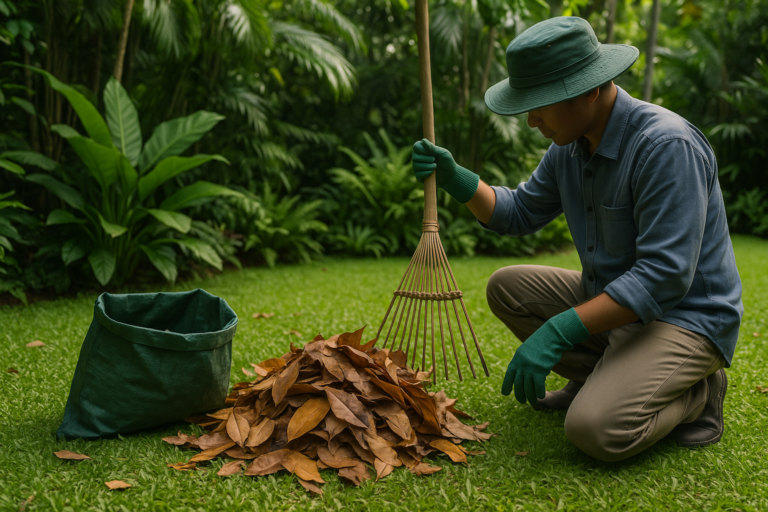
Rake up all the loosened thatch and remove it. Leaving it on the lawn defeats the purpose and invites pests.
5. Aerate if the soil is compacted
Heavy thatch and compaction often go together. Spiking or hollow-tining the lawn afterwards lets air and water reach the roots and speeds recovery.
6. Feed, water and let it recover
Apply a balanced fertiliser, water well, and keep traffic off the lawn for a couple of weeks. New growth will quickly knit the surface back together.
The Singapore climate angle
Our year-round warmth is a double-edged thing for turf. It means grass grows fast and recovers from dethatching quickly — but it also means thatch returns faster than in cooler climates, and the same heat and humidity that drive growth also encourage fungal disease in a thick, damp thatch layer. Good drainage is the quiet partner to dethatching: if water cannot move off the lawn, organic matter stays wet and breaks down slowly, and the problem keeps coming back. For condo and strata lawns, check with your MCST or managing agent before bringing in machinery, as shared green spaces often have their own maintenance contractors and access rules.
If your lawn sits over heavy or poorly draining ground, dethatching alone will not hold. It is worth looking at the bigger picture of soil health and water movement through professional landscape maintenance, and addressing any underlying drainage works so the thatch has a chance to decompose naturally.
Common mistakes to avoid
- Dethatching too aggressively and tearing out healthy grass along with the thatch.
- Doing it during a dry spell, when the lawn cannot recover.
- Skipping the clean-up and leaving debris to rot on the surface.
- Treating the symptom every year instead of fixing over-feeding or drainage.
Frequently asked questions
How often should I dethatch my lawn in Singapore?
For most healthy lawns, once a year is plenty, and some need it even less. If thatch keeps coming back quickly, look at your fertilising and drainage rather than dethatching more often, as those are usually the underlying cause.
Will dethatching damage my grass?
Done correctly and at the right time, no — it removes dead material and helps the lawn breathe. The grass may look thin for a week or two, but it bounces back fast in our warm climate. Damage usually comes from being too aggressive or working a stressed, dry lawn.
What is the difference between dethatching and aerating?
Dethatching removes the layer of dead organic matter sitting on the surface. Aerating relieves compaction below ground by creating holes for air and water. They solve different problems and often work well together, especially on tired, heavily used lawns.
Can I just leave the thatch alone?
A thin layer is fine and even beneficial. It is only when thatch grows thick enough to block water, air and roots that it needs removing. Use the finger test — under a centimetre, leave it be.
Not sure whether your lawn needs dethatching or something more? Our team can assess the turf, soil and drainage and put it right with ongoing landscape maintenance. Get in touch for a no-obligation visit and quote.