Good tree protection during construction is what separates a renovation that keeps its mature trees from one that quietly kills them. The damage is often invisible at first: roots severed by an excavator, soil compacted by stored materials, bark stripped by a passing vehicle. The tree may look fine for a year or two, then decline. This guide explains how to safeguard trees before and during building work on Singapore properties.
It is aimed at homeowners renovating landed houses, contractors, and anyone planning an addition, pool, driveway or extension where established trees are in the way of the works.
Why trees suffer during building work
A mature tree is worth keeping, it gives instant shade, privacy and value that no new planting can match for years. Yet trees are surprisingly fragile around construction. The harm usually comes from four directions:
- Root damage from trenching, excavation and grade changes near the tree.
- Soil compaction from machinery, vehicles and stockpiled materials over the root zone.
- Physical wounds to trunk and branches from equipment knocks.
- Contamination from cement washout, fuel, paint and chemicals soaking into the soil.
Most of a tree’s feeder roots sit in the top half-metre of soil and extend out to, or beyond, the edge of the canopy. That whole area is the working part of the root system, not just the patch right by the trunk.
The root protection zone
The single most useful concept is the tree protection zone, a fenced-off area around the tree that stays off-limits for the duration of the works. As a rule of thumb, it should extend at least to the drip line, the outer edge of the canopy, and ideally beyond for older or significant trees.
What goes inside the zone
Nothing. No machinery, no material storage, no foot traffic, no excavation, no washing out of tools. The ground stays undisturbed. If the soil is bare, a layer of coarse mulch helps cushion against incidental compaction and keeps moisture in.
Marking it out
Use rigid, visible fencing, not flimsy tape that gets ignored. Brief every worker on site that the fence does not move. The most common failure is a zone that is set up correctly, then breached the moment someone needs a convenient place to park or stack bricks.
Protecting the trunk and canopy
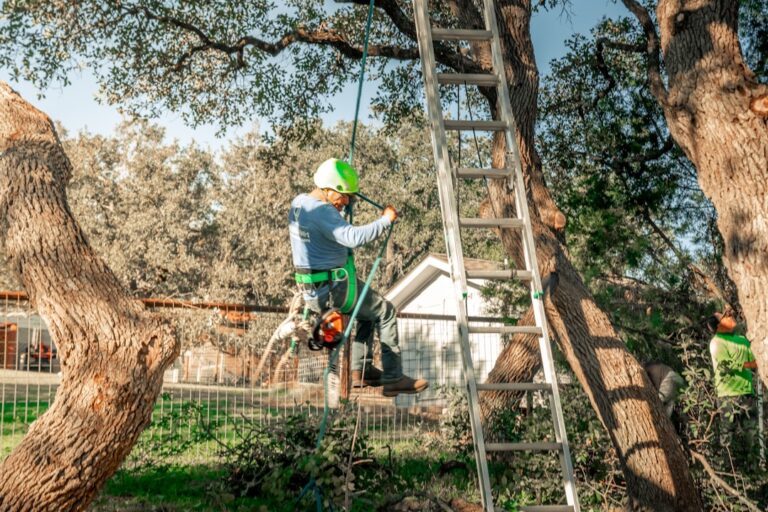
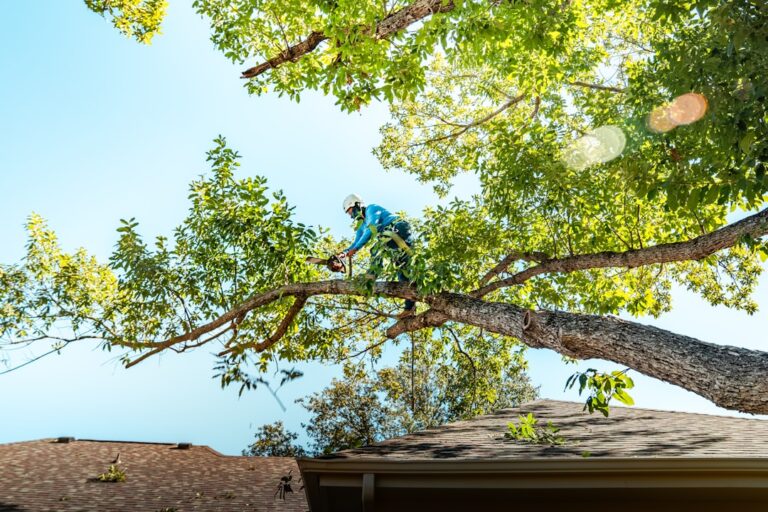
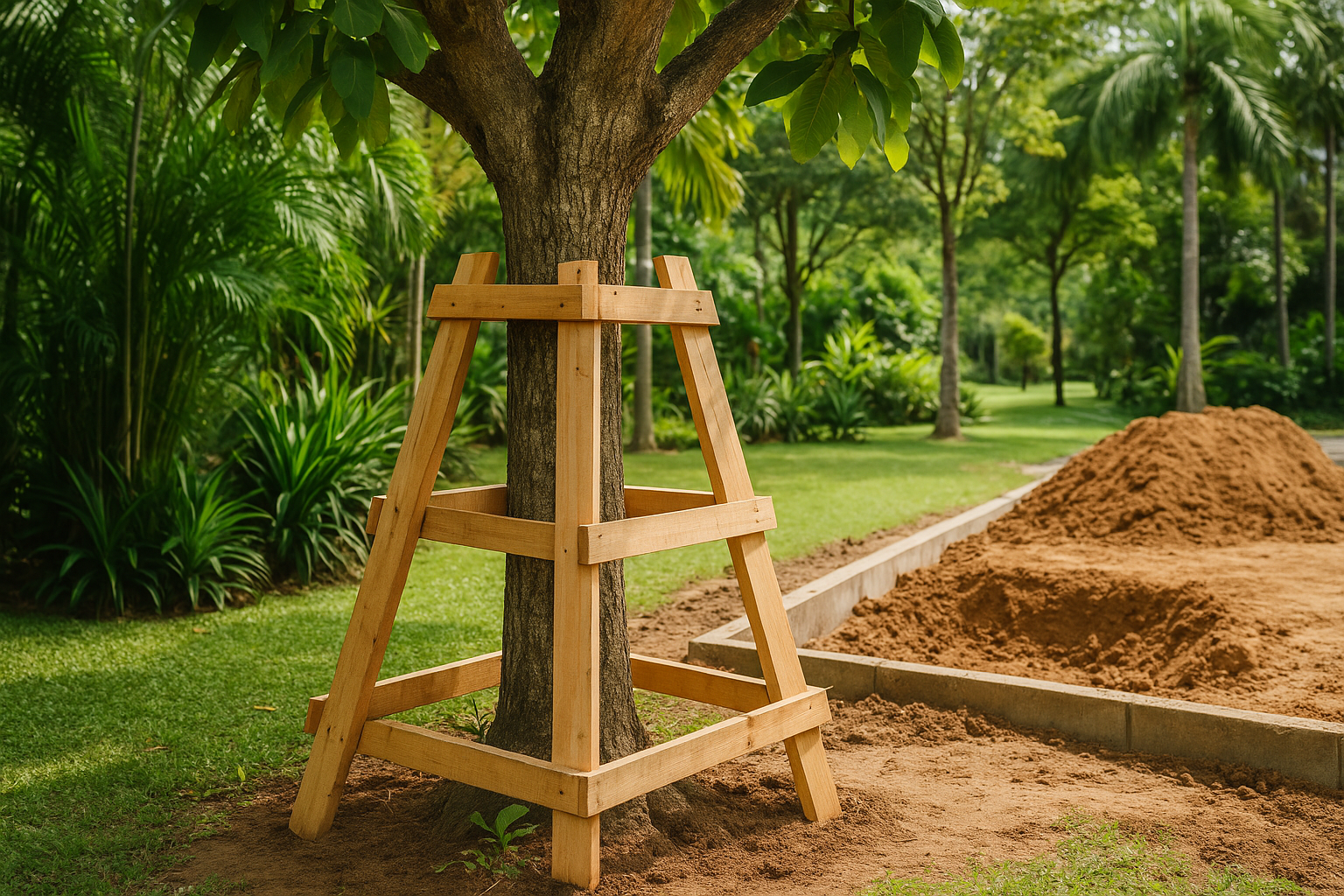
Where the protection zone cannot be as wide as you would like, wrap the trunk with padded timber boarding to guard against knocks from machinery. Lift or tie back low branches that hang into the work path rather than letting them be snapped off. Any pruning to give clearance should be done cleanly by an arborist, not hacked off on the fly, our team handles this as part of professional tree pruning.
Working near roots without killing the tree
Sometimes you genuinely have to work within the root zone, run a service, pour a footing, lay a path. There are gentler ways to do it:
- Hand-dig or air-spade near major roots instead of using a machine bucket, so roots can be exposed and worked around rather than torn through.
- Tunnel or bore under the root zone for pipes and cables rather than open-trenching across it.
- Avoid raising or lowering the soil level over the roots, even adding 100mm of fill can suffocate them.
- Cut roots cleanly if unavoidable, with a sharp tool, and only the smaller ones, never sever large structural roots without arborist advice, as it threatens both tree health and stability.
The Singapore angle: approvals and accountability
In Singapore, trees are taken seriously. NParks regulates many trees, particularly larger specimens and those in conservation or tree-lined areas, so you may need approval before pruning, working near, or removing a tree. It is far better to check at the planning stage than to be served with a stop-work order, or a penalty, mid-project. An ISA Certified Arborist can advise on what protection is appropriate and document the tree’s condition before works begin.
Our climate adds urgency. Heavy tropical rain washes contaminants quickly into root zones and erodes disturbed soil, while year-round growth means a stressed tree shows decline faster than in a temperate climate. For landed renovations involving driveways, retaining structures or extensions near trees, coordinating the build with proper tree care and civil and hardscape works from the outset saves expensive mistakes.
A simple protection checklist
- Have an arborist assess and record the condition of trees you intend to keep.
- Check whether approvals are needed before any work near or on them.
- Establish a fenced protection zone to at least the drip line.
- Brief all trades, the fence and rules do not move.
- Hand-dig, bore or air-spade near roots; never machine-trench through them.
- Pad the trunk; tie back or cleanly prune branches in the work path.
- Keep cement washout, fuel and chemicals well clear of the root zone.
- Water the tree through dry spells; disturbed trees are stressed trees.
Frequently asked questions
How far from a tree should construction stay?
As a general guide, keep works outside the drip line, the outer edge of the canopy, and ideally further for old or large trees. The root system commonly extends to and beyond the canopy edge, so protecting only the trunk is not enough. An arborist can set a specific protection radius for your tree.
Can a tree survive having some roots cut?
Often yes, if only smaller feeder roots are affected and the cuts are clean. Severing large structural roots is far riskier, it can both starve the tree and make it unstable. Always get arborist advice before cutting roots thicker than a few centimetres.
My tree looked fine after the renovation but is now dying. Why?
Construction stress often shows up a year or more later. Compacted soil, severed roots or buried trunk bases slowly impair the tree’s ability to take up water and air. By the time the canopy thins, the cause is months old. This is exactly why protection during the works matters so much.
Do I need approval to work near a tree in Singapore?
You may. Many trees are protected, and pruning, removal or working close to them can require NParks approval, especially for larger or significant trees. Check at the planning stage. An accredited arborist can advise on what your specific situation needs.
Planning a renovation with trees you want to keep? Bring an arborist in early, before the machines arrive. We assess, protect and care for trees throughout construction, and coordinate the build around them. Contact us to arrange a pre-works tree assessment.