Choosing garden fencing singapore homeowners will be happy with for years comes down to matching the right material to your need, whether that is privacy, security, keeping pets in or simply defining a boundary attractively. A fence and gate set the tone for the whole property, so it pays to think beyond price and consider how each option holds up in our humid, rainy climate. This guide walks you through materials, gate choices and the practical details that matter.
From a low decorative boundary to a tall privacy screen, the same questions apply: what is the fence for, how much maintenance can you live with, and how will it weather the seasons here?
Start with the job the fence must do
Before picking a style, get clear on the purpose. A boundary marker can be low and open; a privacy screen needs height and density; a security fence needs strength and a proper gate; a pet barrier needs no gaps at the base. Many fences do more than one job, but ranking your priorities keeps you from over- or under-building.
Also consider the outlook. A solid fence gives total privacy but can feel boxed-in on a small plot, while a slatted or planted screen offers privacy with airflow and light, which matters a lot in our heat.
Fencing materials compared
Timber
Timber fences are warm and versatile, from horizontal slat screens to traditional pickets. For our climate, durable hardwood such as chengal or balau, or properly treated softwood, is essential. Keep posts off the ground with galvanised post bases or concrete footings to prevent rot, and expect periodic re-oiling to keep the colour.
Powder-coated aluminium and steel
Metal fencing is strong, slim and low-maintenance. Powder-coated aluminium will not rust and suits modern homes; galvanised steel is robust for security. Good coatings are key, since any chips can let corrosion start in our humidity.
Masonry and composite
A low brick or rendered wall topped with timber or metal gives a solid, permanent boundary with built-in privacy. Composite fencing panels resist rot and need little upkeep, though they cost more upfront.
Living and planted screens
A clipped hedge or a planted trellis is the greenest option and softens a hard boundary. It needs space and regular trimming, but in our climate plants establish fast. A combination of a low fence with planting in front is a popular compromise.
Choosing the gate
The gate is the part you touch every day, so do not treat it as an afterthought.
- Swing gates: simple and reliable; make sure there is clear space for the swing and that hinges are heavy-duty and corrosion-resistant.
- Sliding gates: ideal for driveways where there is no room to swing, and easy to automate.
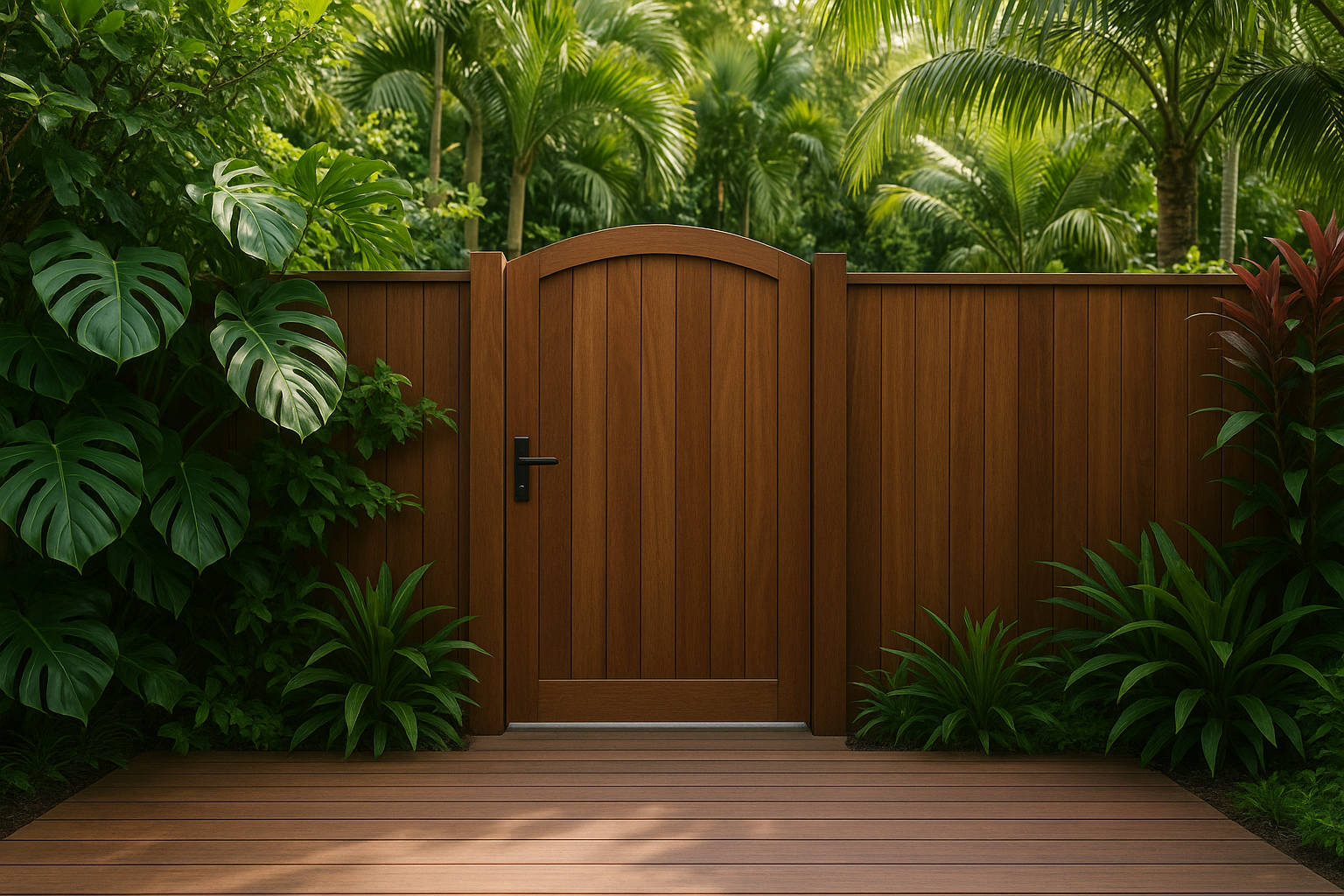
- Pedestrian side gates: a separate person-sized gate saves opening the main gate constantly.
- Automation: motorised gates add convenience and security but need a power supply and proper safety sensors.
Use stainless or hot-dip galvanised hinges, latches and fixings throughout; ordinary hardware rusts and seizes within a season here.
The Singapore climate factor
Our heat, humidity and heavy rainfall are tough on fences. Standing water rots timber posts and corrodes cheap metal, so footings and drainage matter. Set posts in concrete that sheds water, keep timber clear of wet soil, and choose coatings and fixings rated for outdoor and coastal use if you live near the sea. Termites are another consideration for any timber in ground contact, which is one more reason to choose naturally durable hardwood or treated timber and keep it off the ground.
For the timber elements, screens and gates, our timber decking and structures team builds boundary screens and gates designed to last in local conditions. If your fence line involves retaining walls, footings or a low boundary wall, our civil and hardscape works can handle the structural side.
Boundaries, neighbours and approvals
Before building on or near a boundary, confirm exactly where the line is, ideally from your title plan, to avoid disputes. Discuss shared boundaries with your neighbour where relevant. For landed homes there may be height limits and rules about boundary walls and fences, so you may need approval for certain works; it is worth checking before you commit. In a condominium, any change to a boundary or facade will need MCST consent.
Maintenance to expect
- Timber: re-oil or re-stain every year or two to maintain colour and protection.
- Metal: rinse off dirt, and touch up any coating chips promptly to stop rust.
- Hedges: trim regularly, as growth is fast in our climate.
- Gates: oil hinges and check the latch and any automation periodically.
Frequently asked questions
What is the most durable fencing material in Singapore?
Powder-coated aluminium and naturally durable hardwoods such as chengal or balau perform best in our humidity. Aluminium will not rust and needs little upkeep, while quality hardwood lasts for years if kept off wet ground and re-oiled occasionally. Avoid untreated softwood and cheap chrome hardware.
How tall can a garden fence be?
Height limits can apply, particularly for landed homes and boundary walls, so you may need approval for taller or solid boundary structures. Check before building, confirm the boundary line, and discuss shared boundaries with neighbours. Condominium boundaries require MCST consent.
Is a fence or a hedge better for privacy?
A fence gives instant, reliable privacy and security, while a hedge is greener and softer but needs space and regular trimming. Many homeowners combine the two: a fence or low wall for structure with planting in front for a natural, layered look.
Should I automate my gate?
Automation adds real convenience and security, especially for driveway gates, but it needs a power supply, proper safety sensors and occasional servicing. A sliding gate is easiest to automate where there is no room for a swing. Factor the extra cost in from the start.
Looking to install or replace garden fencing and a gate that will last? Request a quote and we will help you choose the right materials, design and build for your boundary and budget.